I received an early gift at the start of the holiday season, the opportunity to sit down with Natalia Tonenka, a Fractional CMO and marketing strategist with a wealth of marketing experience spanning 16+ years and across industries including SaaS, FinTech, eCommerce, and HealthTech.
I’m someone who naturally gravitates toward the “why” in the room and so strategy is especially important to me. If you’ve ever found yourself in a similar position, you’ll know that discussing the value of strategy to impatient business and marketing stakeholders is often the hardest part of the job. It can be comforting and energising to hear how experienced marketers like Natalia approach these conversations.
We also discussed cultural differences in approaching marketing strategy, how to get the most out of Fractional CMOs and how to create a target-setting framework that unifies marketing and CEOs.
Key takeaways
- University isn't obsolete: While tactics change, the economic foundations of marketing taught in universities are essential for moving from a specialist to a C-suite role.
- The Fractional advantage: Founders often trust Fractional CMOs more than in-house hires because the relationship is built on consultancy rather than hierarchy.
- Scenario planning: To manage marketing performance expectations, create three target scenarios: Minimal, Realistic, and Ambitious.
- Cultural velocity: Marketing pacing varies wildly by region. Understanding whether a market prefers “planning for two years” or “building the car while driving” is critical.

The foundation: how do you learn marketing strategy?
Scott: It’s rare to meet someone who starts their career purely in strategy. Usually, marketers evolve into it. How did you get your start?
Natalia: I actually started learning strategy at university. I have a Master's degree from Kyiv National Economics University, where everything was based on strategy.
Marketing today is very different from 16 years ago. Back then, marketing was responsible for the product itself, including pricing, placement and everything else. Today, many companies think marketing is just “advertisements.” They ask, “Why do we need a strategy? Just launch the ads.”
But without understanding your target audience, your mission, and your vision, essentially the “basement” of your house, you can’t choose the right channels. Without that foundation, there is always conflict between marketing and the CEO. The CEO asks, “Why isn't our ad everywhere?” And we have to explain, “Because we don't have the budget for ‘everywhere’.”
Scott: I’ve often questioned the value of university for marketing because the industry moves so fast. But you’ve made me realize that while tactics change, the principles of strategy don't. So I can see the benefits in how studying something like economics will help you become a strategic marketer. Do you think that formal education gave you an edge?
Natalia: If you want to start as a social media manager or a PPC specialist, you might not need a university degree. But if you want to be a CMO, I believe it is a must-have.
University gives you an economic background. When you grow from a specialist to a C-level executive, you need to operate with numbers, analytics, and economics. You need to be able to talk to the finance department on their level.
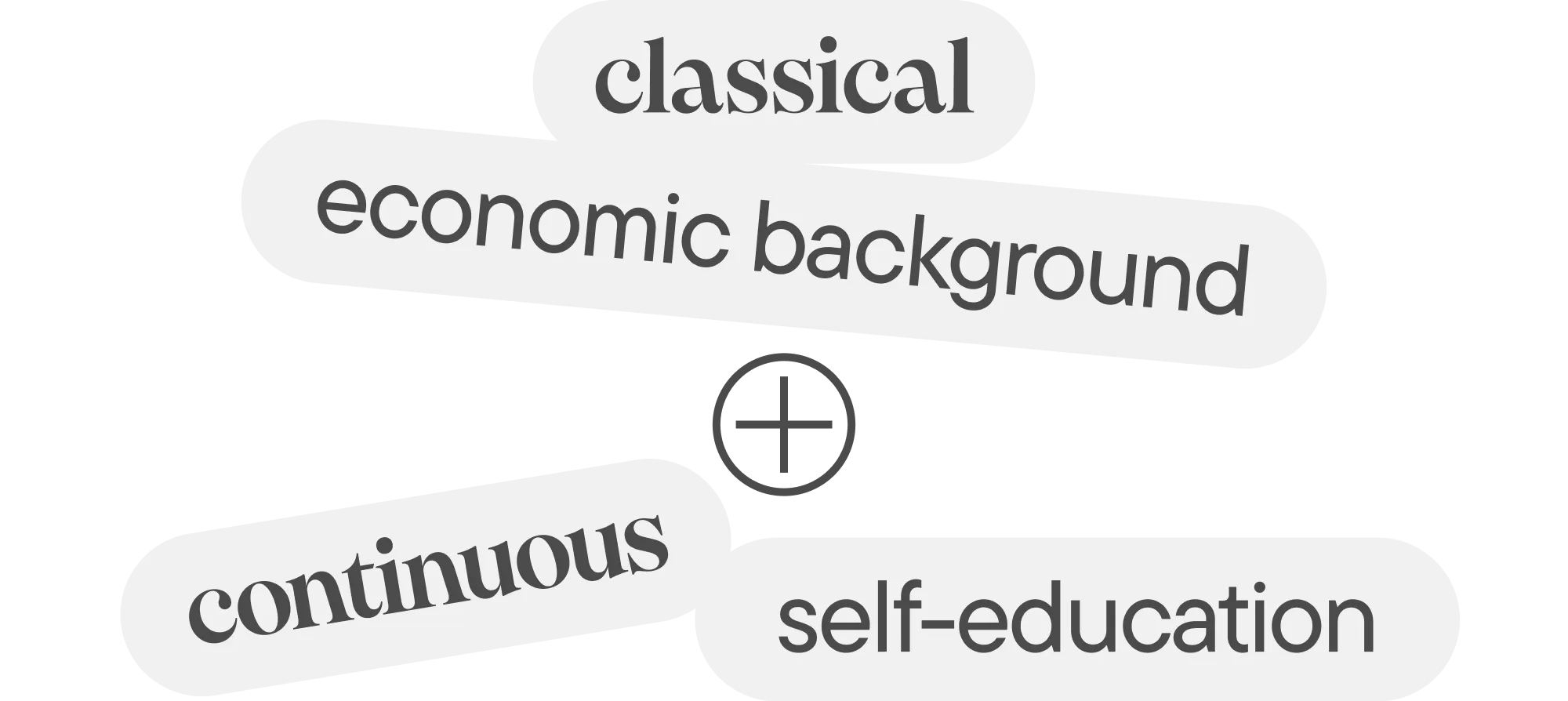
However, it has to be a mix. University can’t teach you the speed of digital changes or AI. The best combination is a classical economic background mixed with continuous self-education.

Navigating the Fractional CMO role
Scott: You work now as a Fractional CMO. I’m interested in the dynamics of that role. Do you find it easier to get buy-in for strategy as an external consultant than as an in-house employee?
Natalia: It’s funny, but yes. When founders pay you as a fractional specialist, they tend to trust you more. When you are inside the company, there is sometimes a feeling that because they are your “boss,” they can manipulate the information or the direction more easily.
Scott: What is the biggest challenge you face when entering a new company?
Natalia: The demand for immediate results without the necessary groundwork.
I once worked with a well-funded startup where the goal was to launch the brand in 10 days. When I joined, we didn’t have a brand identity. We didn’t have a strategy. We didn’t have positioning. We had three days to launch and the goal was to be number one on the market immediately.
It is always a fight between the founder's desire for speed and the CMO’s need for an optimal path. There is no magic formula to survive that, other than experience and perhaps a few sleepless nights.

Scott: For founders reading this who are thinking of hiring a Fractional CMO, how can they get the best out of that relationship?
Natalia: Two things: Trust and access.
I need access to everything, especially sales data, unit economics, and customer feedback. Sometimes founders will say, “We need to increase sales by 300%,” but they won't share the full historical data. You cannot micromanage a Fractional CMO. You have to support them with total transparency.
Budgeting and setting targets
Scott: How do you approach conversations about required budgets?
Natalia: I hate when suppliers ask, “How much budget do you have?” I never ask that. Instead, I ask for the KPIs.
If you tell me you need 5,000 sales, and I know our conversion rate is 10% and our CAC (Customer Acquisition Cost) is $X, I can calculate the required budget myself. It’s just about making sure I have the right information.
From there, I match the budget to reality. If a client says they aren't ready to pay for brand awareness and only want PPC, I have to be honest and say, “Okay, you will spend €5,000 and earn €7,000. That’s fine. But if you want to earn billions, you have to invest millions.”
Scott: Do you ever launch a strategy without targets?
Natalia: Never. It’s always part of the process.
Scott: And how do you handle it when a founder has unrealistic targets?
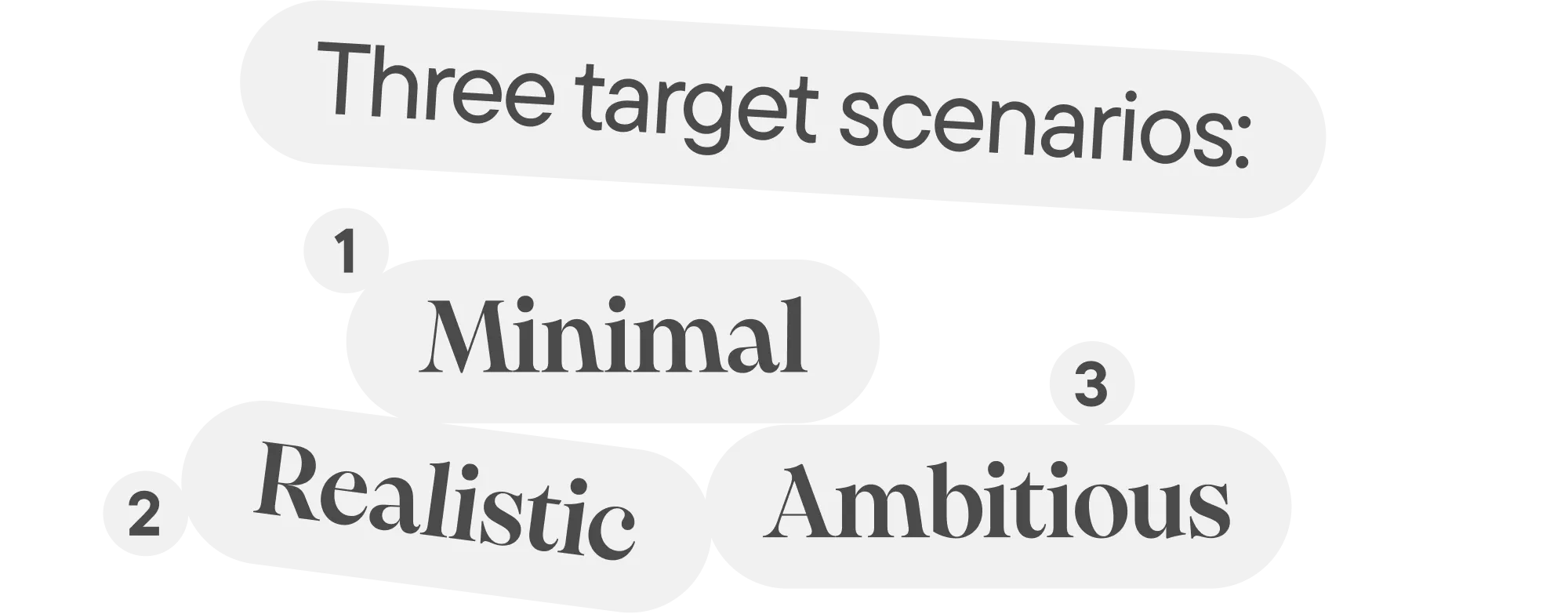
Natalia: I create three target scenarios: Minimal, Realistic, and Ambitious.
This helps manage expectations. The nightmare scenario for a marketing department is when a founder wants to increase the targets by 5x, but keep the budget exactly the same. That breaks a team. By showing three scenarios, we can agree on what is actually feasible with the resources we have.
Cultural differences in approaching strategy
Scott: You’ve worked with teams across many different countries. Do you notice a difference in how these cultures approach strategy?
Natalia: Absolutely. In Germany, planning is a lifestyle. They plan everything. They have vacations booked for the next two years. They don’t hurry. They build for the long term.
In Ukraine, we are always driving the car and building it at the same moment. It is a very fast-paced approach.
I remember being on a call in a German agency with a large American client. The numbers were down, and the cost per result was high. In Ukraine, if your CAC is 10% higher than the target, you fix it now. But in that meeting, the attitude was calm: “It’s high today, but in three months it will be lower. We will do our best.”
It was a shock to me, but it taught me that different markets have different tolerances for risk and speed and all of this helps me to become a more well-rounded strategist.

AI as the researcher, not the replacement
Scott: Finally, how does AI fit into your strategy development process?
Natalia: I use AI tools primarily for research related to audience, market information and trends. What used to take me hours of searching on the open Internet now takes minutes. It’s also great for creating structural outlines. If I’m preparing a lecture or a presentation, I’ll use AI to suggest a flow.
But I will never use AI to replace speaking to customers. I still love speaking to customers and gain a lot of useful information from one to one customer conversations.
AI has no idea what our specific customers are thinking or feeling right now.
Natalia recommends…
Here are Natalia’s recommended business, marketing and strategy resources to help you on your journeys in creating successful marketing strategies.
Books:
- Positioning: The Battle for Your Mind by Al Ries and Jack Trout
- Blue Ocean Strategy by W. Chan Kim and Renée Mauborgne
- This Is Marketing by Seth Godin
- Building a StoryBrand by Donald Miller
- Crossing the Chasm by Geoffrey A. Moore
- Good Strategy / Bad Strategy by Richard Rumelt
- Traction by Gabriel Weinberg & Justin Mares
- Hooked: How to Build Habit-Forming Products, by Nir Eyal
- Business Model Generation by Alex Osterwalder
- Hacking Growth, by Sean Ellis and Morgan Brown
Podcasts: