Blog

← All posts
Ad Performance
January 28, 2026

How to use Meta value optimization to maximize conversion value

by
Sara Alimehmeti

Meta has designed a group of value-focused tools—known as the Meta value suite—to help advertisers optimize based on what matters most to their business, not just the number of conversions.

  • Value optimization: Lets you bid toward users likely to generate higher value purchases.
  • Value rules: Adjust how conversion value is interpreted (based on user characteristics).
  • Incremental attribution: Focuses on conversions driven by ad exposure, to identify those that wouldn’t have happened without the ad.

Together, these tools help Meta make smarter decisions and suggest personalized solutions for each business objective. 

In this article, we focus on value optimization. We’ll explain how it works, how to set it up, the difference between value optimization and app event optimization (AEO), challenges to bear in mind, and how VO fits with other Meta tools.

Key takeaways

  • Meta value optimization helps you maximize conversion value by prioritizing users who are more likely to drive higher overall conversion value.
  • You can optimize “value” based on revenue, profit margin, or non-purchase event values, so VO can match your own definition of ROAS.
  • VO is best used when your goal is improving ROAS, especially if you sell products with different margins, have higher AOVs, or assign value to non-purchase events.
  • Pairing VO with value rules gives Meta more information, so it can prioritize the customers and markets that truly impact your bottom line.

What is value optimization in Meta?

Meta value optimization is a smart bidding strategy that uses machine learning to forecast how much ROAS a person is likely to generate. Then, it automatically delivers ads to people who are expected to bring in the highest overall revenue—not just the highest number of conversions.

In other words, instead of optimizing for the cheapest purchase, Meta optimizes for the most valuable customer.

Here are the best scenarios to use value optimization, according to Meta:

  • Optimizing for ROAS based on revenue: If your goal is to increase revenue, not just lower CPA, value optimization helps Meta prioritize people who generate higher purchase value. Meta reports an average 12% higher ROAS when advertisers use VO instead of simply maximizing conversions.
  • Optimizing for ROAS based on profit margin: Not all products have the same influence on your bottom line. Value optimization becomes stronger when paired with profit data sent through Conversions API (CAPI), because this lets Meta bid harder for customers who purchase higher-margin products (even if they don’t have the highest price).
  • Optimizing for ROAS based on non-purchase events (first purchase, subscription start, etc): You can still use VO if your value is tied to, for example, a free trial or subscription signup. Meta now lets you apply the maximum value of conversions to any event, so you can optimize for the highest-value outcomes, not just purchases.

How value optimization works

Meta predicts conversion value using these core inputs:

On-platform behavior: Meta analyzes all the actions people take on the platform, such as past purchases, clicks, device type, browsing patterns, and creatives interacted with. This builds a “value likelihood” model for each user.

Off-platform conversion data (Pixel + CAPI): This is just as important as the information Meta gets directly on the platform.

  • Meta Pixel (formerly Facebook Pixel) is a snippet of code that tracks user behavior in the browser (page views, adds to cart, purchases, etc).
  • Conversions API sends conversion data directly from your server to Meta.

Meta recommends “cleaning” the data signal sent from the Meta Pixel and CAPI to improve ad optimization and performance. This gives the system a clearer view of what high value looks like in your business.

CAPI also helps overcome data loss due to ad blockers and browser restrictions by sending events directly from your server to Meta.

Bïrch Hub

Bïrch Hub simplifies this process by acting as a first-party server gateway. 

Events are collected within your own server environment and then sent to Meta via CAPI. This improves event coverage, attribution accuracy, and the quality of value signals feeding value optimization. 

At the same time, with more complete data, Meta’s algorithm can better identify relevant, high-quality audiences and optimize delivery.

Creative performance: The system also learns from the messages you emphasize. For example, if your ads consistently highlight discounts, Meta’s system learns to prioritize users and outcomes associated with lower-value conversions. 

Historical campaign performance: The system needs a consistent volume of historical conversion data to optimize—especially during a campaign’s initial learning phase. That’s why it’s best to avoid switching strategies too often, as the system can’t learn.

When to use value optimization instead of app event optimization 

App event optimization and value optimization are both Meta optimization tools—but they serve different purposes. 

AEO finds users who are likely to complete an action (for example, sign up or add to cart), focusing on volume. VO finds users who are likely to spend more, prioritizing the quality of conversion and revenue rather than volume.

Here’s a simple comparison:

App event optimization Value optimization
Best for Apps or businesses that need users to complete a specific action (e.g., register, add to wishlist, add to cart, start a trial) Businesses focused on revenue, ROAS, or LTV, where the value of each conversion matters more than the number of conversions
Pros • Easy to scale early user activity
• Useful when purchase volume is too low for VO
• Helps apps build strong event funnels
• Drives more profitable conversions
• Improves ROAS by prioritizing high-value customers
• Reduces wasted spend on low-value buyers
Cons • Ignores conversion value
• Can attract low-spending users
• Not ideal when ROAS is the goal
• Requires accurate purchase value tracking
• Needs consistent purchase volume
• More volatile during the learning phase
Examples An app optimizing for signups or free trials, even if those users may not become high spenders An e-commerce brand bidding more for users likely to spend $200+ rather than optimizing for cheap purchases

Type: App event optimization

Best for: Apps or businesses that need users to complete a specific action (e.g., register, add to wishlist, add to cart, start a trial)

Pros:
• Easy to scale early user activity
• Useful when purchase volume is too low for VO
• Helps apps build strong event funnels

Cons:
• Ignores conversion value
• Can attract low-spending users
• Not ideal when ROAS is the goal

Examples: An app optimizing for signups or free trials, even if those users may not become high spenders

Type: Value optimization

Best for: Businesses focused on revenue, ROAS, or LTV, where the value of each conversion matters more than the number of conversions

Pros:
• Drives more profitable conversions
• Improves ROAS by prioritizing high-value customers
• Reduces wasted spend on low-value buyers

Cons:
• Requires accurate purchase value tracking
• Needs consistent purchase volume
• More volatile during the learning phase

Examples: An e-commerce brand bidding more for users likely to spend $200+ rather than optimizing for cheap purchases

How to set up VO: step-by-step

Setting up value optimization in Ads Manager is simple when your Pixel, CAPI, and purchase events are sending consistent values.

Step 1: Create a sales campaign

Create a new ad selecting “Sales” as the campaign objective. You no longer need to choose a campaign setup, as Advantage+ shopping campaigns is on by default.

Step 2: Choose your conversion location and event

At the ad set level:

  • Conversion location: website
  • Conversion event: purchase

Step 3: Select “Conversion value” in optimization & delivery

If you don’t see this option, it means there’s not yet enough recent purchase value data, or the purchase event isn’t passing value consistently.

Step 4: Choose your bid strategy

You’ll typically see:

  • Highest value (default and recommended when starting)
  • A ROAS target option (available for some accounts)

For most advertisers, starting with the Highest value bid strategy gives Meta more room to learn. Strict ROAS targets early on can constrain bidding, delivery, and optimization.

Step 5: Set budget and attribution

Value optimization needs enough data to learn patterns.

We suggest aiming for 30–50 purchases per week. Most advertisers see their best performance once they hit around 30 attributed purchases with at least five distinct values over 7–14 days.

Step 6: Align creatives with higher-value outcomes

Value optimization doesn’t decide what to optimize for on its own. It learns from your signals.

If your creatives promote deep discounts, low-value products, and one-off purchases, Meta will optimize toward those outcomes—even with VO enabled.

Step 7: Launch and monitor value, not just CPA

After launch: 

  • Expect more variation early on than with standard conversion optimization.
  • Focus on total conversion value, ROAS, and value per purchase.
Note: If you’re running iOS app campaigns with SKAdNetwork, you’ll also need to enable “maximize value of conversions” and value sets in Events Manager for the relevant events. This gives Meta enough value ranges to learn from iOS 14.5+ traffic.

Challenges to watch for when using value optimization

We’ve shortlisted some of the common mistakes advertisers make when optimizing for value.

1. Turning on value optimization without healthy data

Value optimization is only as good as the signal you’re feeding it. Before you start using value optimization:

  • Check Pixel vs. CAPI mismatches.
  • Make sure the value field is always populated.
  • Validate purchase values in Events Manager.

2. Running value optimization without a clear value proposition

Value optimization works best when Meta can distinguish between low-value and high-value outcomes. For example, if your offering, pricing, or messaging don’t clearly communicate why certain conversions matter more, VO won’t have a strong signal to work with.

Without a clear direction, Meta will optimize toward easy, low-value purchases rather than the conversions that actually drive growth. You can fix this by featuring high-ticket products, long-term value, or premium outcomes.

3. Treating value optimization as a one-time switch

A common misconception is that switching from standard conversion optimization to value optimization is a final step. In reality, VO is sensitive to seasonality, product mix, promotions, and changing user behavior.

Running VO without adjusting creative, structure, or value rules over time often leads to decay—not because VO stopped working, but because the value signals changed and no longer reflect current priorities.

VO performs best when it’s part of an iterative system, not a static setup.

Treat Meta value optimization as an ongoing process. Review purchase value distribution regularly, refresh creatives tied to high-value outcomes, and update value rules when margins or business priorities change.

4. Expecting immediate stability from value optimization

Value optimization changes how Meta bids, often prioritizing fewer but more expensive opportunities early on. This can create short-term volatility, especially when compared directly to conversion-optimized campaigns.

Killing VO too early is one of the most common reasons teams never see its long-term benefits.

Give VO time to learn. Evaluate performance over a meaningful window and focus on trends in total conversion value and ROAS rather than short-term CPA swings. Use value-based reporting to understand who Meta is reaching and why, instead of reacting to daily fluctuations.

How to combine VO with value rules for maximum impact

Meta value optimization works best when the value signals it learns from already reflect your business priorities.

If Meta is optimizing toward raw purchase value but your margins vary by product, geography, or customer type, the system may drive ROAS even while underperforming commercially.

That’s where value rules come in. 

  • Use value rules to adjust the reported conversion value so it reflects true business value (margin, LTV proxies, or strategic markets).
  • Then run value optimization on top of those adjusted values, so bidding decisions are aligned with what you actually want to grow.

For more mature accounts, VO + value rules unlock several advanced use cases:

  • Apply value adjustments to regions where revenue looks strong, but margins or retention differ—then let VO prioritize buyers within those corrected signals.
  • Down-weight low-margin or promo-heavy products while preserving volume, and let value optimization seek higher-value buyers within the remaining pool.
  • Increase the value of conversions historically associated with stronger repeat behavior, even if first-purchase revenue is similar.

Value rules help steer broad automation in Advantage+ campaigns toward profitable outcomes, while VO handles bidding efficiency at scale.

A typical VO + value rules workflow looks like this:

  • Meta recommends cleaning your purchase values (Pixel + CAPI) first.
  • Apply value rules. Adjust conversion values based on margin, geography, or strategic importance.
  • Turn on value optimization. Optimize for conversion value at the ad set or Advantage+ campaign level.
  • Monitor which creatives and audiences pull high-value users. 
  • Iterate on the creative and structure. 

While VO optimizes ad delivery inside Meta, Bïrch Explorer gives you a clear view of which creatives, audiences, and segments are actually driving high-value customers. 
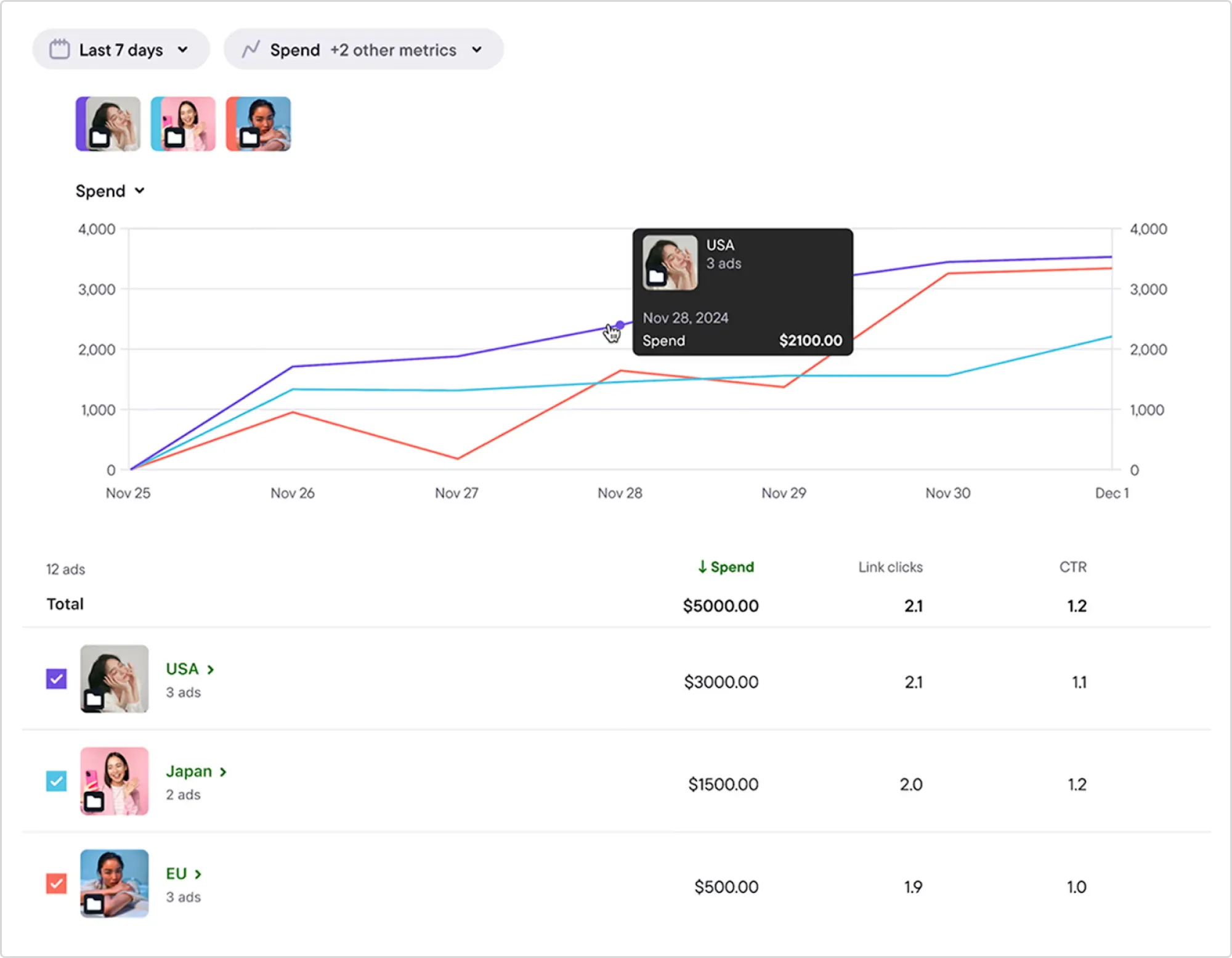
Bïrch Explorer

Explorer lets you break down performance based on the filters you choose, so you can immediately spot the progress or regression of your ads and scale them faster.

From conversion volume to real business value

Most advertisers eventually hit the same wall: conversions without meaningful growth.

Value optimization can help you escape that cycle by helping Meta prioritize customers who contribute real commercial value, not just low-cost wins.

But VO is shaped by the signals it learns from—the value data you pass through Pixel and CAPI, the adjustments you apply with value rules, and the way your creative communicates what “high value” actually looks like.

When those inputs are incomplete or misaligned, even a well-configured campaign can optimize toward outcomes that look strong in-platform but underperform commercially.

The strongest results come when you treat VO as a system, not a setting. Clean value data, clear value priorities, and creative that reinforces high-value intent all help Meta’s automation make better decisions over time.

And while VO handles bidding and delivery inside Meta, tools like Bïrch help you see which campaigns, audiences, and creatives are genuinely driving high-value customers. That visibility makes it easier to refine signals, spot regressions early, and scale what’s actually contributing to growth.

Explore Bïrch with a 14-day free trial

FAQs

Meta has designed a group of value-focused tools—known as the Meta value suite—to help advertisers optimize based on what matters most to their business, not just the number of conversions.

  • Value optimization: Lets you bid toward users likely to generate higher value purchases.
  • Value rules: Adjust how conversion value is interpreted (based on user characteristics).
  • Incremental attribution: Focuses on conversions driven by ad exposure, to identify those that wouldn’t have happened without the ad.

Together, these tools help Meta make smarter decisions and suggest personalized solutions for each business objective. 

In this article, we focus on value optimization. We’ll explain how it works, how to set it up, the difference between value optimization and app event optimization (AEO), challenges to bear in mind, and how VO fits with other Meta tools.

Key takeaways

  • Meta value optimization helps you maximize conversion value by prioritizing users who are more likely to drive higher overall conversion value.
  • You can optimize “value” based on revenue, profit margin, or non-purchase event values, so VO can match your own definition of ROAS.
  • VO is best used when your goal is improving ROAS, especially if you sell products with different margins, have higher AOVs, or assign value to non-purchase events.
  • Pairing VO with value rules gives Meta more information, so it can prioritize the customers and markets that truly impact your bottom line.

What is value optimization in Meta?

Meta value optimization is a smart bidding strategy that uses machine learning to forecast how much ROAS a person is likely to generate. Then, it automatically delivers ads to people who are expected to bring in the highest overall revenue—not just the highest number of conversions.

In other words, instead of optimizing for the cheapest purchase, Meta optimizes for the most valuable customer.

Here are the best scenarios to use value optimization, according to Meta:

  • Optimizing for ROAS based on revenue: If your goal is to increase revenue, not just lower CPA, value optimization helps Meta prioritize people who generate higher purchase value. Meta reports an average 12% higher ROAS when advertisers use VO instead of simply maximizing conversions.
  • Optimizing for ROAS based on profit margin: Not all products have the same influence on your bottom line. Value optimization becomes stronger when paired with profit data sent through Conversions API (CAPI), because this lets Meta bid harder for customers who purchase higher-margin products (even if they don’t have the highest price).
  • Optimizing for ROAS based on non-purchase events (first purchase, subscription start, etc): You can still use VO if your value is tied to, for example, a free trial or subscription signup. Meta now lets you apply the maximum value of conversions to any event, so you can optimize for the highest-value outcomes, not just purchases.

How value optimization works

Meta predicts conversion value using these core inputs:

On-platform behavior: Meta analyzes all the actions people take on the platform, such as past purchases, clicks, device type, browsing patterns, and creatives interacted with. This builds a “value likelihood” model for each user.

Off-platform conversion data (Pixel + CAPI): This is just as important as the information Meta gets directly on the platform.

  • Meta Pixel (formerly Facebook Pixel) is a snippet of code that tracks user behavior in the browser (page views, adds to cart, purchases, etc).
  • Conversions API sends conversion data directly from your server to Meta.

Meta recommends “cleaning” the data signal sent from the Meta Pixel and CAPI to improve ad optimization and performance. This gives the system a clearer view of what high value looks like in your business.

CAPI also helps overcome data loss due to ad blockers and browser restrictions by sending events directly from your server to Meta.

Bïrch Hub

Bïrch Hub simplifies this process by acting as a first-party server gateway. 

Events are collected within your own server environment and then sent to Meta via CAPI. This improves event coverage, attribution accuracy, and the quality of value signals feeding value optimization. 

At the same time, with more complete data, Meta’s algorithm can better identify relevant, high-quality audiences and optimize delivery.

Creative performance: The system also learns from the messages you emphasize. For example, if your ads consistently highlight discounts, Meta’s system learns to prioritize users and outcomes associated with lower-value conversions. 

Historical campaign performance: The system needs a consistent volume of historical conversion data to optimize—especially during a campaign’s initial learning phase. That’s why it’s best to avoid switching strategies too often, as the system can’t learn.

When to use value optimization instead of app event optimization 

App event optimization and value optimization are both Meta optimization tools—but they serve different purposes. 

AEO finds users who are likely to complete an action (for example, sign up or add to cart), focusing on volume. VO finds users who are likely to spend more, prioritizing the quality of conversion and revenue rather than volume.

Here’s a simple comparison:

App event optimization Value optimization
Best for Apps or businesses that need users to complete a specific action (e.g., register, add to wishlist, add to cart, start a trial) Businesses focused on revenue, ROAS, or LTV, where the value of each conversion matters more than the number of conversions
Pros • Easy to scale early user activity
• Useful when purchase volume is too low for VO
• Helps apps build strong event funnels
• Drives more profitable conversions
• Improves ROAS by prioritizing high-value customers
• Reduces wasted spend on low-value buyers
Cons • Ignores conversion value
• Can attract low-spending users
• Not ideal when ROAS is the goal
• Requires accurate purchase value tracking
• Needs consistent purchase volume
• More volatile during the learning phase
Examples An app optimizing for signups or free trials, even if those users may not become high spenders An e-commerce brand bidding more for users likely to spend $200+ rather than optimizing for cheap purchases

Type: App event optimization

Best for: Apps or businesses that need users to complete a specific action (e.g., register, add to wishlist, add to cart, start a trial)

Pros:
• Easy to scale early user activity
• Useful when purchase volume is too low for VO
• Helps apps build strong event funnels

Cons:
• Ignores conversion value
• Can attract low-spending users
• Not ideal when ROAS is the goal

Examples: An app optimizing for signups or free trials, even if those users may not become high spenders

Type: Value optimization

Best for: Businesses focused on revenue, ROAS, or LTV, where the value of each conversion matters more than the number of conversions

Pros:
• Drives more profitable conversions
• Improves ROAS by prioritizing high-value customers
• Reduces wasted spend on low-value buyers

Cons:
• Requires accurate purchase value tracking
• Needs consistent purchase volume
• More volatile during the learning phase

Examples: An e-commerce brand bidding more for users likely to spend $200+ rather than optimizing for cheap purchases

How to set up VO: step-by-step

Setting up value optimization in Ads Manager is simple when your Pixel, CAPI, and purchase events are sending consistent values.

Step 1: Create a sales campaign

Create a new ad selecting “Sales” as the campaign objective. You no longer need to choose a campaign setup, as Advantage+ shopping campaigns is on by default.

Step 2: Choose your conversion location and event

At the ad set level:

  • Conversion location: website
  • Conversion event: purchase

Step 3: Select “Conversion value” in optimization & delivery

If you don’t see this option, it means there’s not yet enough recent purchase value data, or the purchase event isn’t passing value consistently.

Step 4: Choose your bid strategy

You’ll typically see:

  • Highest value (default and recommended when starting)
  • A ROAS target option (available for some accounts)

For most advertisers, starting with the Highest value bid strategy gives Meta more room to learn. Strict ROAS targets early on can constrain bidding, delivery, and optimization.

Step 5: Set budget and attribution

Value optimization needs enough data to learn patterns.

We suggest aiming for 30–50 purchases per week. Most advertisers see their best performance once they hit around 30 attributed purchases with at least five distinct values over 7–14 days.

Step 6: Align creatives with higher-value outcomes

Value optimization doesn’t decide what to optimize for on its own. It learns from your signals.

If your creatives promote deep discounts, low-value products, and one-off purchases, Meta will optimize toward those outcomes—even with VO enabled.

Step 7: Launch and monitor value, not just CPA

After launch: 

  • Expect more variation early on than with standard conversion optimization.
  • Focus on total conversion value, ROAS, and value per purchase.
Note: If you’re running iOS app campaigns with SKAdNetwork, you’ll also need to enable “maximize value of conversions” and value sets in Events Manager for the relevant events. This gives Meta enough value ranges to learn from iOS 14.5+ traffic.

Challenges to watch for when using value optimization

We’ve shortlisted some of the common mistakes advertisers make when optimizing for value.

1. Turning on value optimization without healthy data

Value optimization is only as good as the signal you’re feeding it. Before you start using value optimization:

  • Check Pixel vs. CAPI mismatches.
  • Make sure the value field is always populated.
  • Validate purchase values in Events Manager.

2. Running value optimization without a clear value proposition

Value optimization works best when Meta can distinguish between low-value and high-value outcomes. For example, if your offering, pricing, or messaging don’t clearly communicate why certain conversions matter more, VO won’t have a strong signal to work with.

Without a clear direction, Meta will optimize toward easy, low-value purchases rather than the conversions that actually drive growth. You can fix this by featuring high-ticket products, long-term value, or premium outcomes.

3. Treating value optimization as a one-time switch

A common misconception is that switching from standard conversion optimization to value optimization is a final step. In reality, VO is sensitive to seasonality, product mix, promotions, and changing user behavior.

Running VO without adjusting creative, structure, or value rules over time often leads to decay—not because VO stopped working, but because the value signals changed and no longer reflect current priorities.

VO performs best when it’s part of an iterative system, not a static setup.

Treat Meta value optimization as an ongoing process. Review purchase value distribution regularly, refresh creatives tied to high-value outcomes, and update value rules when margins or business priorities change.

4. Expecting immediate stability from value optimization

Value optimization changes how Meta bids, often prioritizing fewer but more expensive opportunities early on. This can create short-term volatility, especially when compared directly to conversion-optimized campaigns.

Killing VO too early is one of the most common reasons teams never see its long-term benefits.

Give VO time to learn. Evaluate performance over a meaningful window and focus on trends in total conversion value and ROAS rather than short-term CPA swings. Use value-based reporting to understand who Meta is reaching and why, instead of reacting to daily fluctuations.

How to combine VO with value rules for maximum impact

Meta value optimization works best when the value signals it learns from already reflect your business priorities.

If Meta is optimizing toward raw purchase value but your margins vary by product, geography, or customer type, the system may drive ROAS even while underperforming commercially.

That’s where value rules come in. 

  • Use value rules to adjust the reported conversion value so it reflects true business value (margin, LTV proxies, or strategic markets).
  • Then run value optimization on top of those adjusted values, so bidding decisions are aligned with what you actually want to grow.

For more mature accounts, VO + value rules unlock several advanced use cases:

  • Apply value adjustments to regions where revenue looks strong, but margins or retention differ—then let VO prioritize buyers within those corrected signals.
  • Down-weight low-margin or promo-heavy products while preserving volume, and let value optimization seek higher-value buyers within the remaining pool.
  • Increase the value of conversions historically associated with stronger repeat behavior, even if first-purchase revenue is similar.

Value rules help steer broad automation in Advantage+ campaigns toward profitable outcomes, while VO handles bidding efficiency at scale.

A typical VO + value rules workflow looks like this:

  • Meta recommends cleaning your purchase values (Pixel + CAPI) first.
  • Apply value rules. Adjust conversion values based on margin, geography, or strategic importance.
  • Turn on value optimization. Optimize for conversion value at the ad set or Advantage+ campaign level.
  • Monitor which creatives and audiences pull high-value users. 
  • Iterate on the creative and structure. 

While VO optimizes ad delivery inside Meta, Bïrch Explorer gives you a clear view of which creatives, audiences, and segments are actually driving high-value customers. 

Bïrch Explorer

Explorer lets you break down performance based on the filters you choose, so you can immediately spot the progress or regression of your ads and scale them faster.

From conversion volume to real business value

Most advertisers eventually hit the same wall: conversions without meaningful growth.

Value optimization can help you escape that cycle by helping Meta prioritize customers who contribute real commercial value, not just low-cost wins.

But VO is shaped by the signals it learns from—the value data you pass through Pixel and CAPI, the adjustments you apply with value rules, and the way your creative communicates what “high value” actually looks like.

When those inputs are incomplete or misaligned, even a well-configured campaign can optimize toward outcomes that look strong in-platform but underperform commercially.

The strongest results come when you treat VO as a system, not a setting. Clean value data, clear value priorities, and creative that reinforces high-value intent all help Meta’s automation make better decisions over time.

And while VO handles bidding and delivery inside Meta, tools like Bïrch help you see which campaigns, audiences, and creatives are genuinely driving high-value customers. That visibility makes it easier to refine signals, spot regressions early, and scale what’s actually contributing to growth.

Explore Bïrch with a 14-day free trial

FAQs

What is Meta’s value optimization?

Meta value optimization is a smart bidding method that helps Meta find people who will generate higher value for your business, instead of focusing on the number of conversions.

Does value optimization work well with value rules?

Value optimization and value rules work best together. Value rules reshape your conversion value based on your priorities (margin, device, geography, etc.), and VO optimizes on top of those corrected values.

How does VO differ from AEO?

AEO focuses on getting you the highest volume for a specific action. It’s best when you need more activity in your funnel and don’t have purchases yet. Value optimization shifts the focus to conversion quality, weighting delivery toward users with higher predicted purchase value or lifetime value instead of treating all conversions equally.

Can value optimization optimize for more than purchase value?

Yes, Meta now allows VO to optimize for more than purchase value. It can optimize for any event value, including non-purchase events like first-time buyers or subscription setups, by assigning values to different events or actions.

Do I need a minimum number of purchases for value optimization to work?

VO needs a steady flow of value events to recognize patterns—typically, around 30 attributed purchases with at least five distinct values over 7–14 days.

What happened to Revealbot?

Revealbot has a new look and a new name—we’re now Bïrch! The change highlights our focus on bringing together the best of automation and creative teamwork.

Sara Alimehmeti
is a content writer with five years of experience publishing content for the Business, Marketing, and Travel domains. She specialises in writing articles, blogs, and social media posts that help brands communicate their voice and stay engaged with the audience.

Get started with Bïrch product

14
days free trial
Cancel anytime
No credit card required