Third-party cookie deprecation didn’t happen all at once. It unfolded gradually and unevenly across browsers.
Safari and Firefox already block third-party cookies by default. Chrome has delayed removing them completely while it introduces Privacy Sandbox APIs. That has left performance teams operating in a mixed environment, with some traffic being cookieless and some still relying on browser-based tracking.
When tracking declines gradually across browsers and devices, performance becomes harder to interpret. Retargeting audiences get smaller, attribution windows tighten, and reported ROAS slowly drifts away from real revenue.
This guide looks at how each major browser has handled third-party cookies, what’s happening with Chrome, and the changes performance teams can make to keep reporting stable.
Key takeaways
Third-party cookie deprecation is an uneven shift that is already affecting attribution reliability across browsers.
Safari and Firefox block third-party cookies by default, and Chrome is transitioning. This means tracking stability depends heavily on your traffic mix.
Signal loss rarely shows up as a sudden drop in reported performance. You’re more likely to see attribution drift, shrinking retargeting pools, and widening gaps between platform reporting and backend revenue.
As modeled conversions increase, performance interpretation requires more context and validation than before.
Pixel-only setups are increasingly fragile. Reinforcing them with server-side routing improves signal durability and match quality.
In 2026, you can gain a competitive advantage by controlling your measurement infrastructure rather than relying on browser defaults.
Why third-party cookies are dying
Third-party cookies were designed for basic session management, not modern advertising. Over time, ad platforms turned them into the foundation of cross-site tracking, retargeting, and multi-touch attribution.
That expansion created pressure.
Privacy regulations such as GDPR and CCPA raised standards for consent and transparency, meaning users became more aware of cross-site tracking practices. Browsers responded by positioning privacy as a competitive advantage, and blocking third-party cookies became part of that strategy.
From a technical standpoint, third-party cookies are fragile because they exist entirely within the browser. Browsers decide whether to allow them, restrict them, shorten their lifespan, or remove them altogether.
Once major browsers began limiting cross-site tracking, the tracking infrastructure performance marketers relied on became weaker. Measurement gaps didn’t appear overnight, but control shifted away from advertisers and toward browser-level policies.
Measurement is moving closer to first-party data and server-side infrastructure. Performance teams now manage more of the tracking layer themselves, rather than relying on browser storage to preserve identifiers.
That redistribution of control, more than the cookie itself, is what is redefining performance measurement.
Browser-by-browser deprecation timeline
Each browser moved at its own pace when phasing out third-party cookies. That’s why tracking reliability depends heavily on where your traffic originates.
Safari
Apple began restricting cross-site tracking in 2017 when it introduced Intelligent Tracking Prevention (ITP). It tightened those rules over the following years. By 2020, it had blocked third-party cookies by default.
Safari also shortened the lifespan of certain first-party cookies, reducing attribution windows even further. For brands with meaningful iOS and macOS traffic, traditional cross-site tracking has been constrained for years.
Firefox
Mozilla followed a similar path. In 2019, Firefox enabled Enhanced Tracking Protection by default, automatically blocking third-party tracking cookies for most users.
While Firefox represents a smaller share of global traffic, the move signaled that browser-level restrictions were becoming standard.
Chrome
Chrome is still the most closely watched case because it represents the largest share of global browser traffic.
In 2020, Google announced plans to phase out third-party cookies within two years. This was later postponed multiple times as the Privacy Sandbox was developed—a framework designed to replace cross-site tracking with privacy-preserving APIs.
As of 2026, Chrome continues to transition rather than enforce universal default blocking across all users. Some environments restrict third-party cookies, while others still allow them under specific conditions shaped by consent, testing cohorts, and regional policy.
That phased approach creates inconsistency. Third-party cookies may still function in certain Chrome environments, but they no longer provide uniform reliability.
Other browsers
Microsoft Edge, built on Chromium, broadly follows Chrome’s architecture but adds additional tracking-prevention layers in certain configurations.
Privacy-focused browsers like Brave block third-party trackers aggressively by default.
Mobile in-app browsers and embedded webviews introduce further variability, especially when combined with privacy controls at operating system level.
The 2026 landscape
Most teams now operate in a mixed attribution environment. Some conversions are captured deterministically, while others are reconstructed through modeling. The balance varies depending on browser mix and consent rates, which makes performance interpretation less straightforward than it used to be.
Reported ROAS doesn’t always move in sync with revenue. Retargeting pools fluctuate beyond what traffic alone would suggest. Platform dashboards still provide direction, but they no longer offer complete visibility into the customer journey.
For example, a user might click an ad on Safari, browse without converting, and return later through Chrome to complete a purchase. Depending on how your tracking is configured, that journey may fragment across browsers or disappear from platform reporting entirely. Revenue increases, but the conversion may not be attributed back to the original ad.
Ad platforms have adapted by leaning more heavily on aggregation and probabilistic attribution methods. Those systems keep campaigns running, but the challenge is that transparency drops. So, when performance shifts, it becomes harder to separate changing demand from changing measurement.
Teams that maintain stability in this environment share one characteristic: they treat tracking as infrastructure rather than configuration.
Instead of just assuming attribution is accurate, they validate it. Instead of relying entirely on client-side pixels, they reinforce event delivery. Instead of reacting to reporting gaps, they design systems that minimize them.
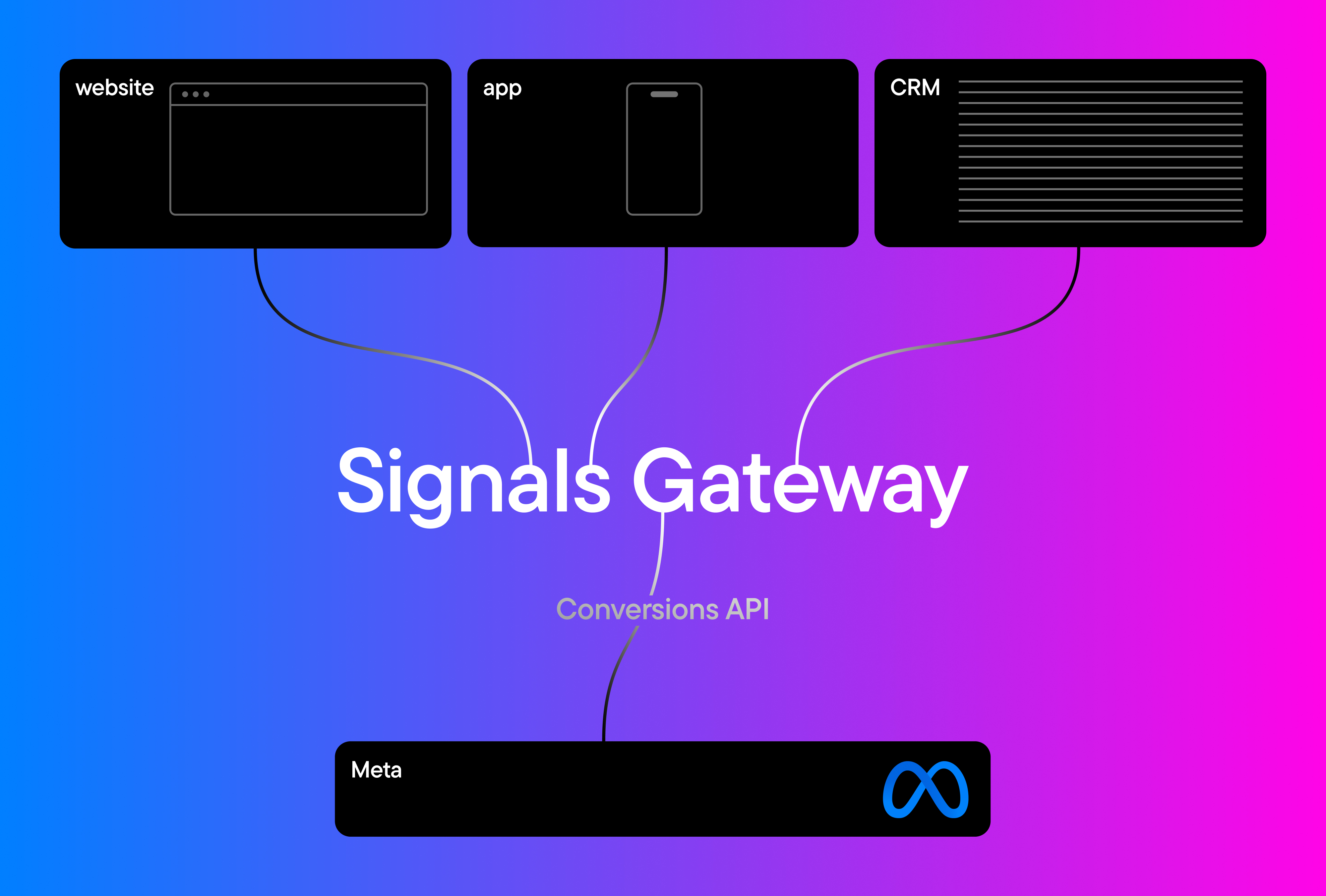
Meta Signals Gateway
In 2026, performance results increasingly depend on signal quality and governance, not just creative or bidding strategy.
Alternatives to third-party tracking
As third-party cookies become less reliable, you’ll want to reduce dependence on browser-controlled attribution and strengthen the parts of your stack that you control.
First-party data as the foundation
Durable identifiers matter more than anonymous browser storage. When users authenticate, subscribe, or purchase, you generate first-party data that improves match rates and strengthens attribution continuity across platforms.
The more directly you connect activity to known customer profiles, the less volatility browser restrictions introduce into reporting.
Strong first-party data won’t eliminate attribution gaps, but it can help your performance become less reliant on cross-site identifiers.
Server-side event routing
Even with strong identifiers, relying exclusively on client-side pixels exposes event delivery to browser limitations and configuration inconsistencies.
Server-side tracking reinforces how conversion data is processed and transmitted. When you route events through a controlled environment before forwarding them to ad platforms, you can improve consistency, reduce discrepancies, and stabilize match quality across browsers and accounts.
Consider a purchase event triggered on a browser with strict tracking restrictions. A client-side pixel may fire, but part of the payload may be blocked or limited. The result is that you get a lower event-matching rate within the ad platform.
The platform records the conversion, but struggles to associate it with the original ad. But, when server-side routing reinforces that same event, more complete identifiers reach the platform. That improves match quality and reduces reporting gaps.
This approach does not bypass privacy requirements—a common misconception. It strengthens signal durability within them.
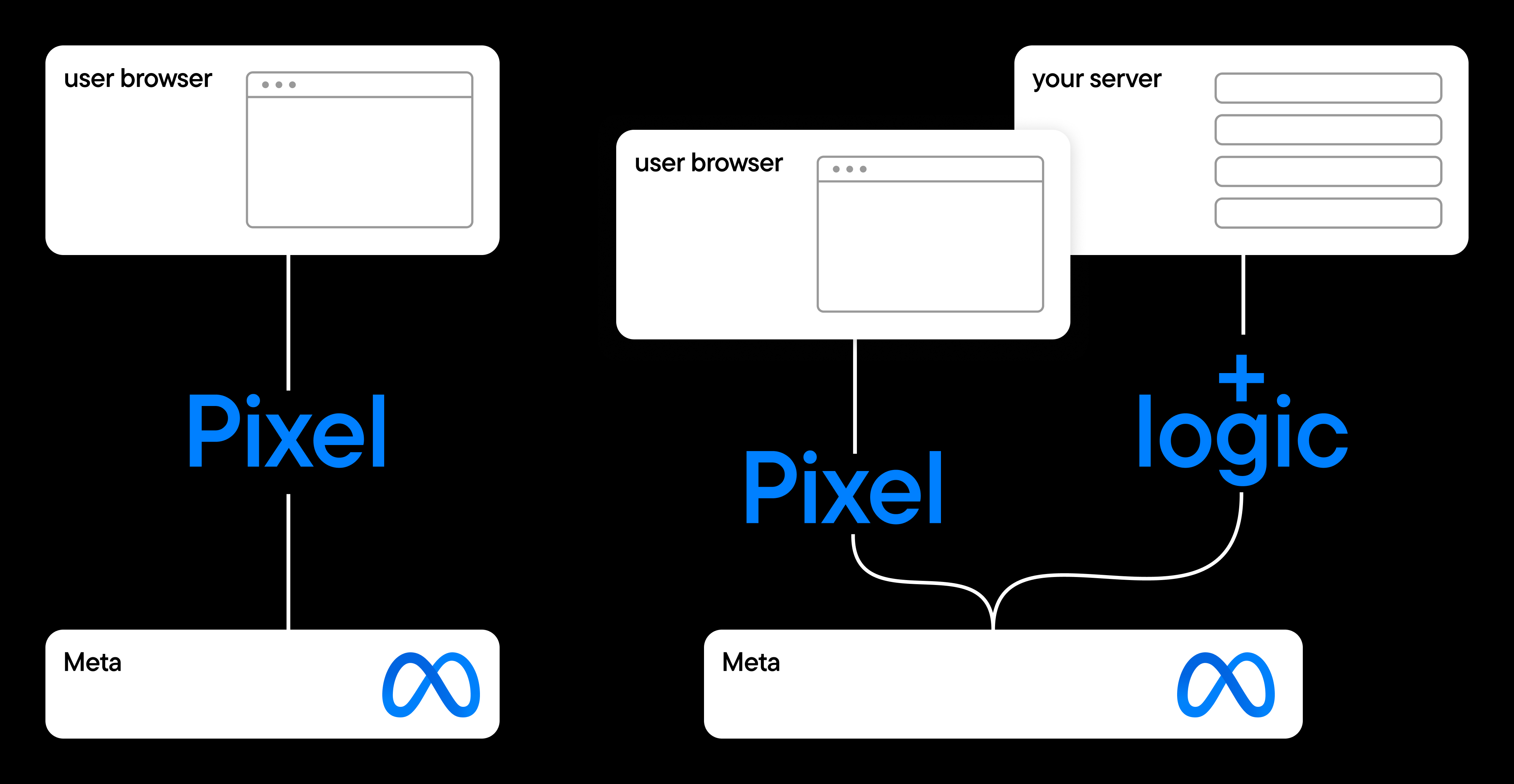
Meta Pixel vs hybrid setup
Hybrid tracking architecture
The most stable setups combine both layers. Client-side pixels continue to provide real-time optimization feedback, while server-side infrastructure reinforces event integrity and reduces loss.
The goal is to prevent browser tracking from becoming a single point of failure—not eliminate it entirely.
It’s best to validate your current setup before making structural changes. Compare platform-reported conversions with backend revenue over longer timeframes and review performance by browser. Persistent gaps typically signal structural tracking weaknesses rather than campaign inefficiency.
This is the infrastructure challenge Birch Hub was built to address.
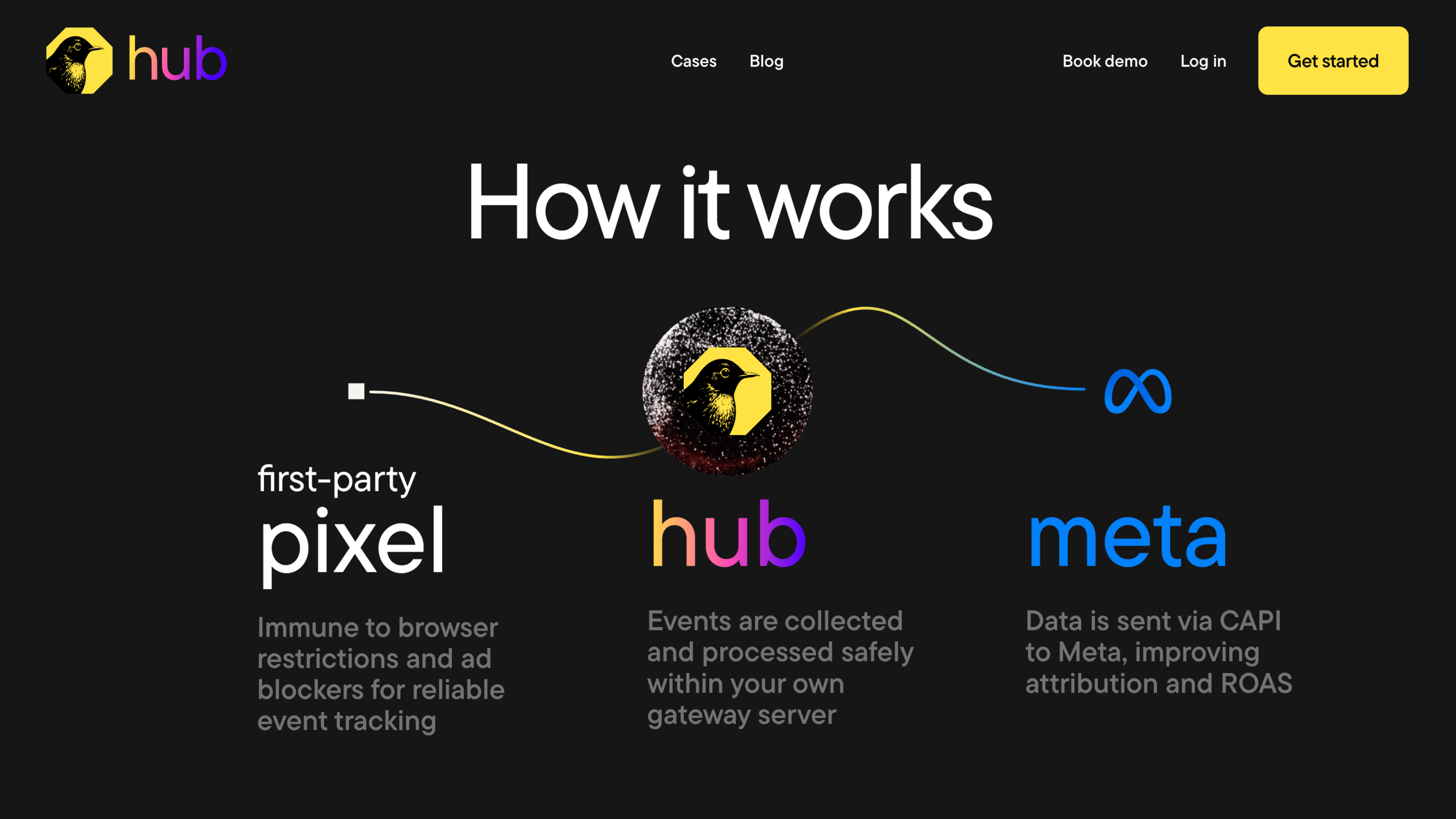
Hub centralizes how events are defined, processed, and routed across platforms. Instead of managing fragmented pixel configurations and separate server-side builds, the Hub lets teams standardize tracking logic in one place. That reduces configuration drift, improves match consistency, and simplifies ongoing monitoring—particularly helpful in multi-account environments.
Discover Birch Hub
Key considerations for marketers
As more of your tracking moves into infrastructure you control, interpreting performance needs to become more focused. Platforms still report conversions and ROAS, but those numbers now depend more heavily on modeling, attribution logic, and signal coverage.
It’s a good idea to keep these structural changes in mind:
Modeled conversions will continue to grow: As deterministic signals decrease, platforms compensate with estimation. Understanding how much of your reporting is modeled helps you interpret volatility more accurately.
Cross-platform discrepancies are now normal:Meta, Google, and your backend systems each measure and attribute conversions differently, which leads to reporting gaps.
Attribution windows are effectively shorter than they appear: Even if platforms display longer windows, browser restrictions and consent limitations reduce the portion of the customer journey that’s observable.
Audience scale is less predictable: Audience pools built on browser behavior are smaller and less complete, which increases frequency pressure and makes creative efficiency more important.
Signal quality directly influences optimization: Algorithms learn, bid, and scale based on the data they receive. When that data is incomplete or inconsistent, optimization becomes less reliable.
Infrastructure requires governance: Server-side routing and first-party data systems need defined ownership, regular validation, and clear documentation. Without that, tracking logic may drift and inconsistencies can multiply across accounts.
Incrementality testing is gaining importance:Structured lift testing and experimental validation provide clearer performance insights than dashboard comparisons alone.
Common misconceptions
Because cookie deprecation has unfolded gradually, it’s often misunderstood.
One misconception is that third-party cookies have already disappeared everywhere. Safari and Firefox block them by default, while Chrome is still transitioning. The result is uneven reliability, which makes the impact harder to diagnose.
Another belief is that Google has reversed its plans. Although Chrome has postponed the full phase-out several times, its shift toward the Privacy Sandbox still signals a move away from traditional cross-site tracking. The timeline changed, but not the direction.
Some advertisers assume that analytics tools or platform modeling fully compensate for signal loss. Modeling can fill gaps, but it doesn’t restore deterministic visibility into the customer journey.
There’s also confusion around server-side tracking. It doesn’t bypass privacy requirements. Consent and regulatory obligations still apply. Server-side infrastructure changes how events are processed and delivered, not whether they can be collected.
The most persistent misconception is that disruption will be obvious. In practice, degradation is incremental, so reporting tends to drift instead of failing outright. And drift can be trickier to detect than a clear break.
The shift from browser tracking to infrastructure control
Third-party cookie deprecation has not been a single event. It has unfolded browser by browser, creating an uneven measurement environment where tracking reliability depends heavily on traffic mix, consent rates, and setup quality.
As cross-site identifiers weaken, performance stability depends less on browser storage and more on how your tracking is structured. If measurement still relies primarily on client-side pixels, parts of your data pipeline remain exposed to browser restrictions and configuration drift.
Strengthening your setup with first-party data and server-side routing improves event consistency and match quality across browsers. It also reduces the reporting gaps that emerge when platforms rely more heavily on modeling.
Birch Hub was built for this transition. By centralizing how events are defined, processed, and routed across platforms, it helps performance teams standardize tracking logic, reduce discrepancies, and maintain reliable attribution without adding operational complexity.
As third-party cookies continue to fade, the teams that adapt their measurement infrastructure will interpret performance more accurately and scale with greater confidence.
Explore Birch with a 14-day free trial
Third-party cookie deprecation didn’t happen all at once. It unfolded gradually and unevenly across browsers.
Safari and Firefox already block third-party cookies by default. Chrome has delayed removing them completely while it introduces Privacy Sandbox APIs. That has left performance teams operating in a mixed environment, with some traffic being cookieless and some still relying on browser-based tracking.
When tracking declines gradually across browsers and devices, performance becomes harder to interpret. Retargeting audiences get smaller, attribution windows tighten, and reported ROAS slowly drifts away from real revenue.
This guide looks at how each major browser has handled third-party cookies, what’s happening with Chrome, and the changes performance teams can make to keep reporting stable.
Key takeaways
Third-party cookie deprecation is an uneven shift that is already affecting attribution reliability across browsers.
Safari and Firefox block third-party cookies by default, and Chrome is transitioning. This means tracking stability depends heavily on your traffic mix.
Signal loss rarely shows up as a sudden drop in reported performance. You’re more likely to see attribution drift, shrinking retargeting pools, and widening gaps between platform reporting and backend revenue.
As modeled conversions increase, performance interpretation requires more context and validation than before.
Pixel-only setups are increasingly fragile. Reinforcing them with server-side routing improves signal durability and match quality.
In 2026, you can gain a competitive advantage by controlling your measurement infrastructure rather than relying on browser defaults.
Why third-party cookies are dying
Third-party cookies were designed for basic session management, not modern advertising. Over time, ad platforms turned them into the foundation of cross-site tracking, retargeting, and multi-touch attribution.
That expansion created pressure.
Privacy regulations such as GDPR and CCPA raised standards for consent and transparency, meaning users became more aware of cross-site tracking practices. Browsers responded by positioning privacy as a competitive advantage, and blocking third-party cookies became part of that strategy.
From a technical standpoint, third-party cookies are fragile because they exist entirely within the browser. Browsers decide whether to allow them, restrict them, shorten their lifespan, or remove them altogether.
Once major browsers began limiting cross-site tracking, the tracking infrastructure performance marketers relied on became weaker. Measurement gaps didn’t appear overnight, but control shifted away from advertisers and toward browser-level policies.
Measurement is moving closer to first-party data and server-side infrastructure. Performance teams now manage more of the tracking layer themselves, rather than relying on browser storage to preserve identifiers.
That redistribution of control, more than the cookie itself, is what is redefining performance measurement.
Browser-by-browser deprecation timeline
Each browser moved at its own pace when phasing out third-party cookies. That’s why tracking reliability depends heavily on where your traffic originates.
Safari
Apple began restricting cross-site tracking in 2017 when it introduced Intelligent Tracking Prevention (ITP). It tightened those rules over the following years. By 2020, it had blocked third-party cookies by default.
Safari also shortened the lifespan of certain first-party cookies, reducing attribution windows even further. For brands with meaningful iOS and macOS traffic, traditional cross-site tracking has been constrained for years.
Firefox
Mozilla followed a similar path. In 2019, Firefox enabled Enhanced Tracking Protection by default, automatically blocking third-party tracking cookies for most users.
While Firefox represents a smaller share of global traffic, the move signaled that browser-level restrictions were becoming standard.
Chrome
Chrome is still the most closely watched case because it represents the largest share of global browser traffic.
In 2020, Google announced plans to phase out third-party cookies within two years. This was later postponed multiple times as the Privacy Sandbox was developed—a framework designed to replace cross-site tracking with privacy-preserving APIs.
As of 2026, Chrome continues to transition rather than enforce universal default blocking across all users. Some environments restrict third-party cookies, while others still allow them under specific conditions shaped by consent, testing cohorts, and regional policy.
That phased approach creates inconsistency. Third-party cookies may still function in certain Chrome environments, but they no longer provide uniform reliability.
Other browsers
Microsoft Edge, built on Chromium, broadly follows Chrome’s architecture but adds additional tracking-prevention layers in certain configurations.
Privacy-focused browsers like Brave block third-party trackers aggressively by default.
Mobile in-app browsers and embedded webviews introduce further variability, especially when combined with privacy controls at operating system level.
The 2026 landscape
Most teams now operate in a mixed attribution environment. Some conversions are captured deterministically, while others are reconstructed through modeling. The balance varies depending on browser mix and consent rates, which makes performance interpretation less straightforward than it used to be.
Reported ROAS doesn’t always move in sync with revenue. Retargeting pools fluctuate beyond what traffic alone would suggest. Platform dashboards still provide direction, but they no longer offer complete visibility into the customer journey.
For example, a user might click an ad on Safari, browse without converting, and return later through Chrome to complete a purchase. Depending on how your tracking is configured, that journey may fragment across browsers or disappear from platform reporting entirely. Revenue increases, but the conversion may not be attributed back to the original ad.
Ad platforms have adapted by leaning more heavily on aggregation and probabilistic attribution methods. Those systems keep campaigns running, but the challenge is that transparency drops. So, when performance shifts, it becomes harder to separate changing demand from changing measurement.
Teams that maintain stability in this environment share one characteristic: they treat tracking as infrastructure rather than configuration.
Instead of just assuming attribution is accurate, they validate it. Instead of relying entirely on client-side pixels, they reinforce event delivery. Instead of reacting to reporting gaps, they design systems that minimize them.
Meta Signals Gateway
In 2026, performance results increasingly depend on signal quality and governance, not just creative or bidding strategy.
Alternatives to third-party tracking
As third-party cookies become less reliable, you’ll want to reduce dependence on browser-controlled attribution and strengthen the parts of your stack that you control.
First-party data as the foundation
Durable identifiers matter more than anonymous browser storage. When users authenticate, subscribe, or purchase, you generate first-party data that improves match rates and strengthens attribution continuity across platforms.
The more directly you connect activity to known customer profiles, the less volatility browser restrictions introduce into reporting.
Strong first-party data won’t eliminate attribution gaps, but it can help your performance become less reliant on cross-site identifiers.
Server-side event routing
Even with strong identifiers, relying exclusively on client-side pixels exposes event delivery to browser limitations and configuration inconsistencies.
Server-side tracking reinforces how conversion data is processed and transmitted. When you route events through a controlled environment before forwarding them to ad platforms, you can improve consistency, reduce discrepancies, and stabilize match quality across browsers and accounts.
Consider a purchase event triggered on a browser with strict tracking restrictions. A client-side pixel may fire, but part of the payload may be blocked or limited. The result is that you get a lower event-matching rate within the ad platform.
The platform records the conversion, but struggles to associate it with the original ad. But, when server-side routing reinforces that same event, more complete identifiers reach the platform. That improves match quality and reduces reporting gaps.
This approach does not bypass privacy requirements—a common misconception. It strengthens signal durability within them.
Meta Pixel vs hybrid setup
Hybrid tracking architecture
The most stable setups combine both layers. Client-side pixels continue to provide real-time optimization feedback, while server-side infrastructure reinforces event integrity and reduces loss.
The goal is to prevent browser tracking from becoming a single point of failure—not eliminate it entirely.
It’s best to validate your current setup before making structural changes. Compare platform-reported conversions with backend revenue over longer timeframes and review performance by browser. Persistent gaps typically signal structural tracking weaknesses rather than campaign inefficiency.
This is the infrastructure challenge Birch Hub was built to address.
Hub centralizes how events are defined, processed, and routed across platforms. Instead of managing fragmented pixel configurations and separate server-side builds, the Hub lets teams standardize tracking logic in one place. That reduces configuration drift, improves match consistency, and simplifies ongoing monitoring—particularly helpful in multi-account environments.
Discover Birch Hub
Key considerations for marketers
As more of your tracking moves into infrastructure you control, interpreting performance needs to become more focused. Platforms still report conversions and ROAS, but those numbers now depend more heavily on modeling, attribution logic, and signal coverage.
It’s a good idea to keep these structural changes in mind:
Modeled conversions will continue to grow: As deterministic signals decrease, platforms compensate with estimation. Understanding how much of your reporting is modeled helps you interpret volatility more accurately.
Cross-platform discrepancies are now normal:Meta, Google, and your backend systems each measure and attribute conversions differently, which leads to reporting gaps.
Attribution windows are effectively shorter than they appear: Even if platforms display longer windows, browser restrictions and consent limitations reduce the portion of the customer journey that’s observable.
Audience scale is less predictable: Audience pools built on browser behavior are smaller and less complete, which increases frequency pressure and makes creative efficiency more important.
Signal quality directly influences optimization: Algorithms learn, bid, and scale based on the data they receive. When that data is incomplete or inconsistent, optimization becomes less reliable.
Infrastructure requires governance: Server-side routing and first-party data systems need defined ownership, regular validation, and clear documentation. Without that, tracking logic may drift and inconsistencies can multiply across accounts.
Incrementality testing is gaining importance:Structured lift testing and experimental validation provide clearer performance insights than dashboard comparisons alone.
Common misconceptions
Because cookie deprecation has unfolded gradually, it’s often misunderstood.
One misconception is that third-party cookies have already disappeared everywhere. Safari and Firefox block them by default, while Chrome is still transitioning. The result is uneven reliability, which makes the impact harder to diagnose.
Another belief is that Google has reversed its plans. Although Chrome has postponed the full phase-out several times, its shift toward the Privacy Sandbox still signals a move away from traditional cross-site tracking. The timeline changed, but not the direction.
Some advertisers assume that analytics tools or platform modeling fully compensate for signal loss. Modeling can fill gaps, but it doesn’t restore deterministic visibility into the customer journey.
There’s also confusion around server-side tracking. It doesn’t bypass privacy requirements. Consent and regulatory obligations still apply. Server-side infrastructure changes how events are processed and delivered, not whether they can be collected.
The most persistent misconception is that disruption will be obvious. In practice, degradation is incremental, so reporting tends to drift instead of failing outright. And drift can be trickier to detect than a clear break.
The shift from browser tracking to infrastructure control
Third-party cookie deprecation has not been a single event. It has unfolded browser by browser, creating an uneven measurement environment where tracking reliability depends heavily on traffic mix, consent rates, and setup quality.
As cross-site identifiers weaken, performance stability depends less on browser storage and more on how your tracking is structured. If measurement still relies primarily on client-side pixels, parts of your data pipeline remain exposed to browser restrictions and configuration drift.
Strengthening your setup with first-party data and server-side routing improves event consistency and match quality across browsers. It also reduces the reporting gaps that emerge when platforms rely more heavily on modeling.
Birch Hub was built for this transition. By centralizing how events are defined, processed, and routed across platforms, it helps performance teams standardize tracking logic, reduce discrepancies, and maintain reliable attribution without adding operational complexity.
As third-party cookies continue to fade, the teams that adapt their measurement infrastructure will interpret performance more accurately and scale with greater confidence.
There’s no single global cutoff date. Safari and Firefox already block third-party cookies by default, while Chrome is transitioning through its Privacy Sandbox framework. The practical impact depends on your browser mix.
What is Google’s Privacy Sandbox?
Google Privacy Sandbox is a set of browser-based APIs designed to replace traditional third-party cookie tracking with more privacy-preserving mechanisms. Instead of allowing cross-site identifiers, it groups users into broader cohorts or processes certain attribution signals within the browser environment.
Do third-party cookies affect attribution?
Third-party cookies historically enabled cross-site tracking, retargeting, and multi-touch attribution. As platforms become less reliable, they rely more heavily on first-party data and modeled conversions, which can affect how performance is reported.
Does server-side tracking replace third-party cookies?
Server-side tracking does not recreate cross-site browser cookies. Instead, it improves how first-party event data is processed and delivered to ad platforms. It strengthens signal durability and match quality while still operating within privacy and consent requirements.
Is a pixel-only setup still viable?
Pixel-only tracking can still work, particularly in Chrome, but it’s increasingly fragile. As browser restrictions expand, relying exclusively on client-side pixels increases the risk of attribution gaps and reporting discrepancies.
What happened to Revealbot?
Revealbot has a new look and a new name—we’re now Birch! The change highlights our focus on bringing together the best of automation and creative teamwork.
Ana Siu
is a content marketing expert and writer specializing in marketing, technology, and social change. She is a contributor to the Birch Blog and has a background in advertising, journalism, and SaaS.