This year’s Meta Performance Summit made it clear that the platform is moving toward a long-term vision where AI and automation guide almost every part of the advertising process. This vision—what Meta is calling its North Star—is centered around building systems that align development, marketing, and business decisions toward a common, customer-focused objective.
Meta’s 2025 roadmap has reflected this direction closely. Instead of focusing on manual controls, Meta is shifting performance marketing toward smarter optimization, deeper measurement, and outcomes that actually matter to businesses, from profitable growth to customer lifetime value.
We’re seeing a real shift in how campaigns are planned and measured. Instead of hands-on micromanagement, advertisers now set the strategy while Meta’s AI handles the heavy lifting in the background.
How Meta’s new measurement and value tools are redefining what performance means in 2025 and beyond
Key takeaways
Meta’s 2025 updates focus on automation, AI-driven targeting, and measurable business outcomes.
Advantage+ is still at the core of Meta’s ad delivery system, while incremental attribution and value optimization tools redefine how advertisers measure real impact.
New measurement partnerships with Nielsen, Oracle, and Visual IQ connect online campaigns with offline results.
Opportunity score now helps advertisers identify setup issues early, making AI-led optimization more predictable.
Privacy-safe frameworks like Conversion API and private lift keep performance measurement reliable in a post-cookie world.
The next phase is about continuous testing, smarter integrations, and building creative systems that feed the algorithm.
AI-enabled and creative solutions
The expansion of Advantage+ leads campaigns is one of the most important changes to the Advantage+ suite of tools in 2025.
Instead of treating leads as a separate, top-of-funnel action, Meta now runs them through the same automated system used for performance and sales campaigns. For advertisers, this makes the process much more straightforward and simple.
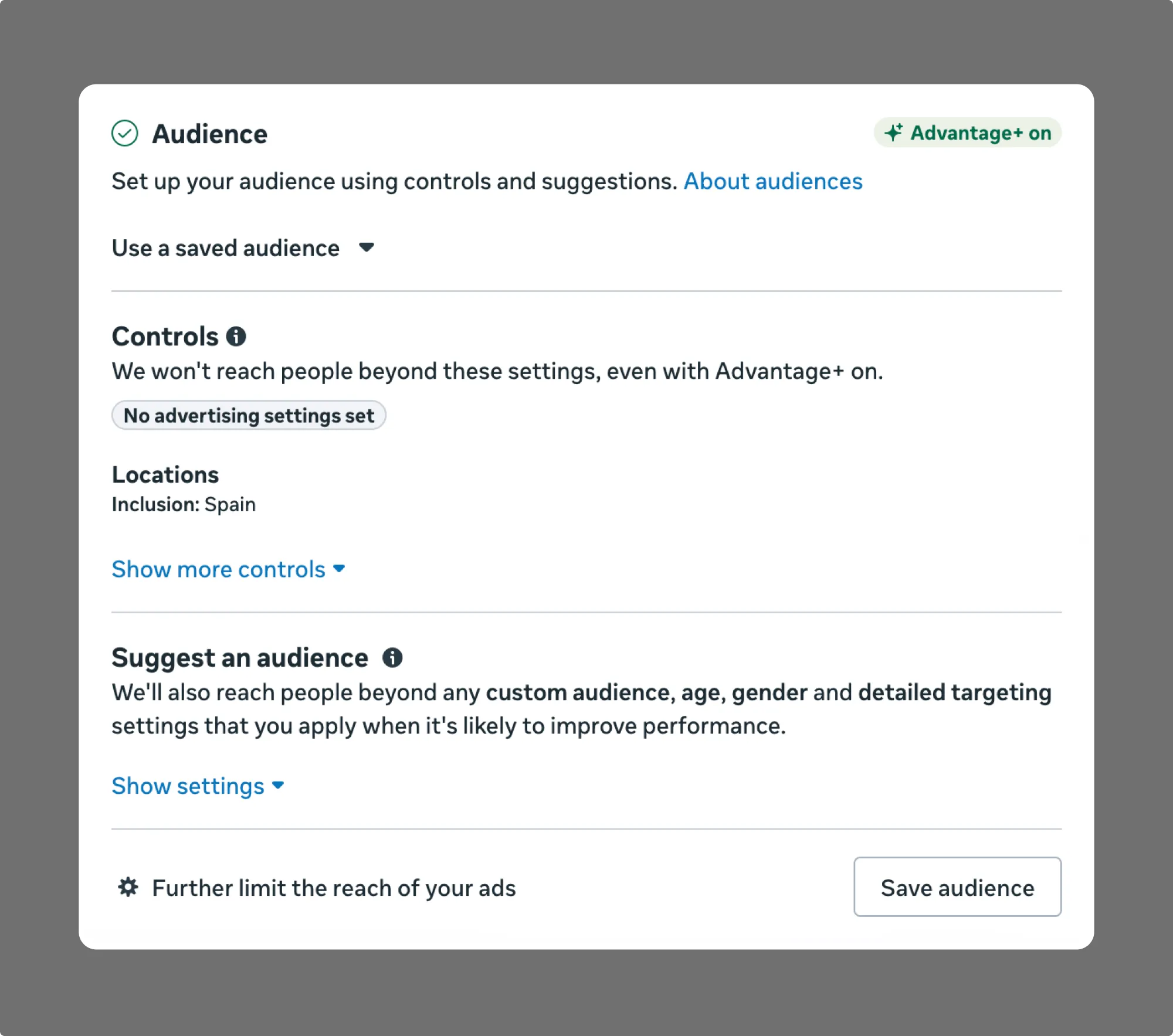
Meta Ads Manager interface showing the Advantage+ audience setup panel
Once Advantage+ is activated, it automatically enables placements, audience targeting, and budget optimization. From there, Meta’s AI system takes over, adjusting delivery and spend based on user behavior and intent signals to reach users who are more likely to convert into high-quality leads.
At the same time, Advantage+ sales campaigns have been updated to offer more flexibility. Campaigns can now include multiple ad sets (each with up to 50 ads) and allow basic audience preferences or exclusions, such as age or gender.
Creative is now tightly linked to Meta’s automation layer. Video, carousel, and collection ads are the formats that drive most results, but the real shift is how these formats behave under Advantage+. They are no longer fixed assets—Meta automatically tests variations, placements, and combinations, then serves the version most likely to engage each audience.
Meta’s creative tools make this even more accessible. From a single image or video, you can generate multiple variations, adjust the background, and set guardrails so the AI stays within brand colors, styles, and visual guidelines.
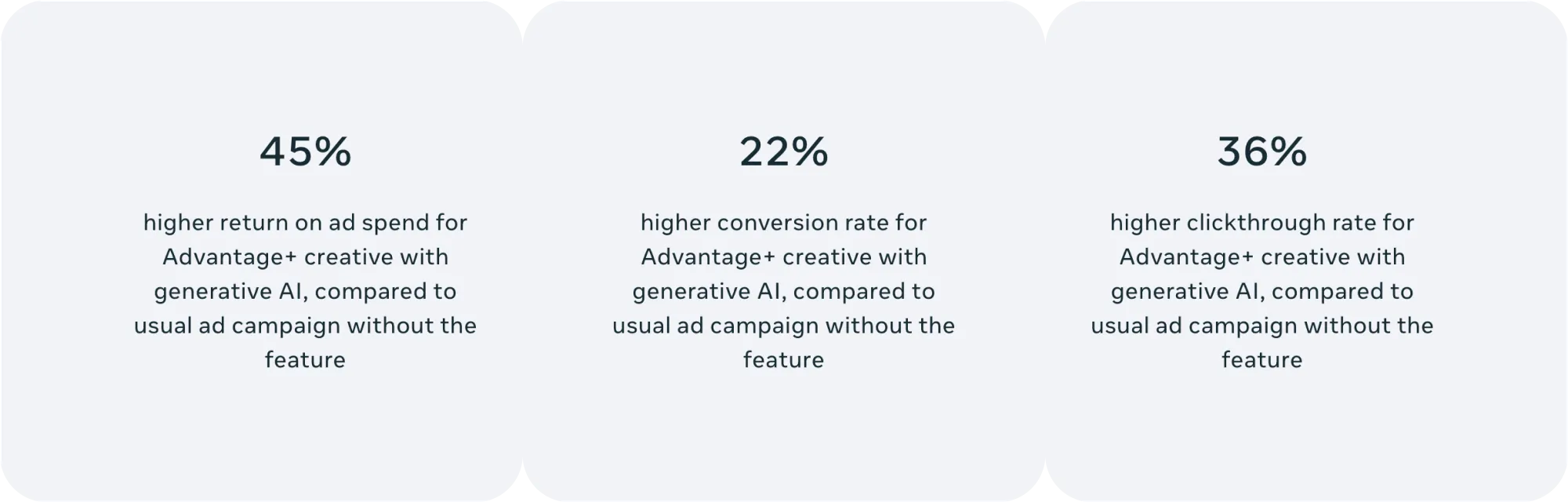
We’re already seeing what this looks like in practice. FULLBEAUTY Brands swapped their plain white catalog backgrounds for AI-generated variations, giving Meta’s system far more creative levers to test. That single change produced a noticeable lift—45% higher ROAS, 22% higher conversion rate, and 36% higher CTR compared to their standard setup.
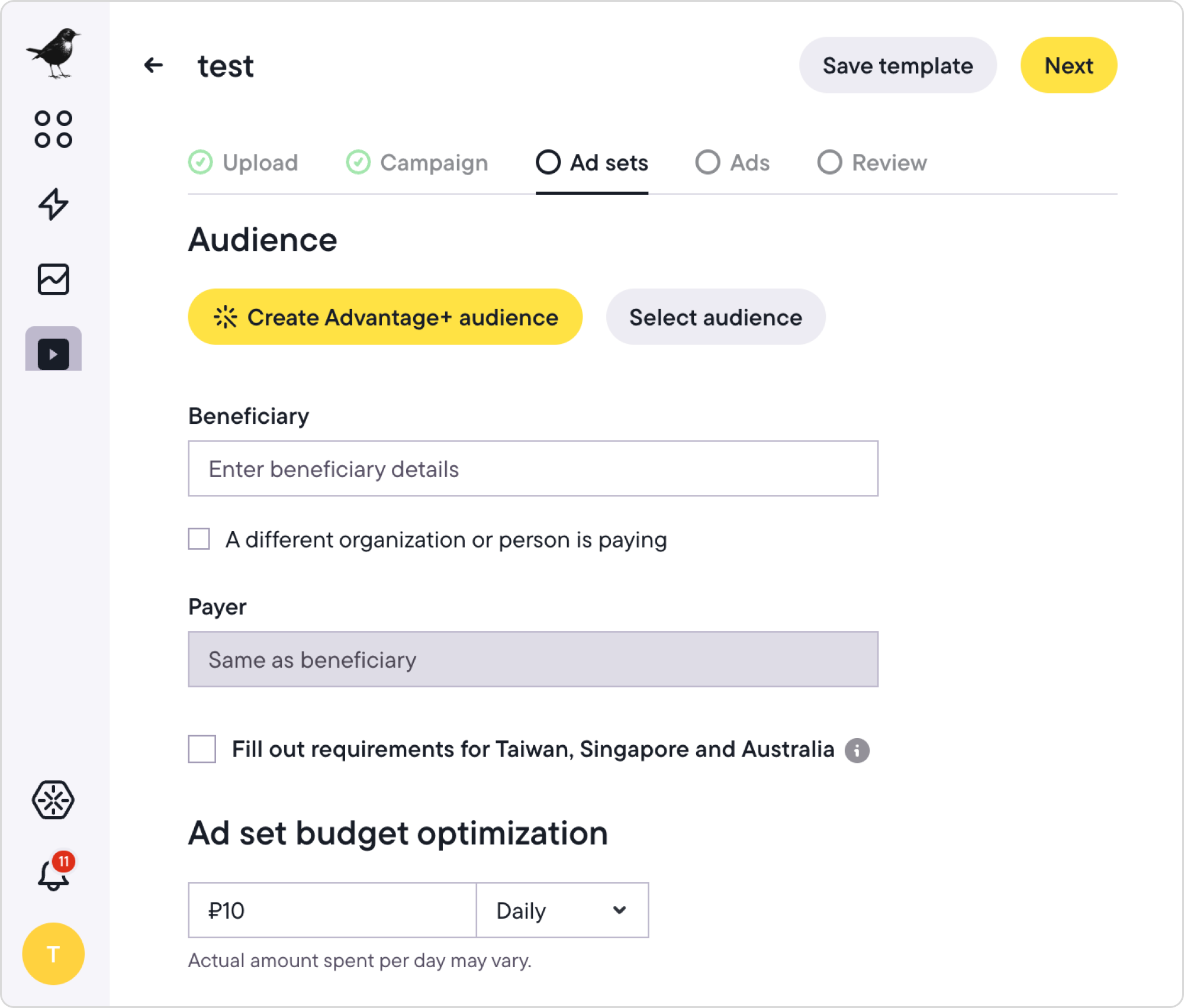
To support this automation shift, Birch has integrated the newest Advantage+ audience tool, giving you the flexibility to launch, monitor, and refine automated campaigns directly inside one platform. It’s designed to complement Meta’s automation, but you keep full visibility and control over targeting and performance.
In practice, this update helps reduce manual setup time and gives you the freedom to focus more on creative strategy and results.
Looking ahead, Meta’s preparing more interactive and immersive formats centered around try-ons and richer virtual experiences that respond to how users interact with ads. These updates point toward a more flexible environment, where campaigns feel more responsive to real user behavior.
Value tools: optimizing for what businesses truly value
To measure performance in 2025, you need to understand why a certain action happened. Did your ads actually influence the decision, or did they simply show up at the right time?
Instead of relying on surface-level metrics, you can use incremental attribution to measure the real impact of automation (including view-through and upper-funnel conversions), not just last-click. Last-click attribution gives full credit to the final ad someone interacts with before converting, which doesn’t always paint the full picture.
By looking at how people who saw your ads behave compared to those who didn’t, you can see which results were genuinely influenced by your campaigns.
This naturally ties into how Meta handles value optimization.
Instead of optimizing for any conversion, value optimization helps you focus on the quality of those conversions. The algorithm learns from your historical purchase data—the order values, repeat behavior, and signals that define a “high-value” customer—and then shows your ads to the people most likely to generate the largest long-term return.
This is particularly powerful because it shifts campaigns from chasing clicks to maximizing real business outcomes such as average order value, customer lifetime value, or subscription renewals.
However, not every sale means the same thing to your business. Value rules let you customize what “value” means for your specific goals, so Meta’s algorithm can prioritize results that actually matter to your bottom line.
You can adjust values based on:
Region
Device type
New vs. returning customers
Or even a product category
Himanshu Agarwal, co-founder of Zenius.co, suggests testing value rule tiers by audience type. For example, assigning higher value to loyalty members (+50%), followed by high-AOV audiences (+30%), and then net-new but high-intent visitors (+10%). This helps the algorithm prioritize users with stronger predicted profitability without relying on expensive lookalikes or manual bid tactics.
He also recommends aligning value rules with product margins. Value signals should reflect the true contribution of each product line—for instance, a lifestyle brand might apply +10% to apparel, +20% to accessories, and +30% to skincare or beauty, encouraging Meta to deliver more of the conversions that drive meaningful profit, not just top-line revenue.
Measurement solutions—getting closer to true impact
Conversion lift is the current standard for measuring incremental value. It shows you how much of your campaign’s success is actually from your ads.
It splits your audience into two groups, then it compares the results. The difference between those two groups is your lift (the conversions that wouldn’t have happened without your ads).
It answers the question “Did my ads cause this result?” rather than “Was my ad simply there when it happened?”
Measurement is only as good as the data behind it. And that data needs to connect across platforms, devices, and channels. That’s why Meta has expanded its network of verified measurement partners to help advertisers understand what’s really working across different media.
Nielsen Catalina Solutions: Most purchases nowadays happen offline, and that’s why connecting digital ads with in-store sales has always been a challenge. Meta’s collaboration with Nielsen Catalina Solutions helps CPG advertisers measure how ads influence real-world sales.
Lift API integration with Oracle Data Cloud: Meta’s Lift API brings more accessibility to lift testing—a method that measures how likely people are to convert after seeing an ad compared to those who didn’t. The integration with Oracle Data Cloud makes these tests available to more advertisers, including small businesses that couldn’t previously run full studies.
Marketing mix modelling integration: For large brands using marketing mix modelling, Meta has rolled out direct integrations with Nielsen, Neustar MarketShare, Analytics Partners, and Marketing Evolution. Through these integrations, you can compare performance across TV, digital, and print.
Multi-touch attribution: Meta is working with Visual IQ and Neustar MarketShare to offer multi-touch attribution.
Mobile measurement: Meta has partnered with platforms like Adjust, Adways Inc., AppsFlyer, Apsalar, CyberZ, Kochava, and Localytics to improve view-through attribution for mobile measurement and app marketers.
Ongoing investments and platform evolution
Meta continues to focus on making AI-driven advertising more predictable, transparent, and easier for advertisers to manage.
One of the clearest examples of this is the 0–100 opportunity score.
Meta introduced this metric to help advertisers understand how well their campaigns are set up to perform. As automation takes over more of the decisions around placements, targeting, and delivery, many advertisers are feeling a gap between the levers they used to control and the ones Meta now handles automatically. The opportunity score was designed to bridge that gap.
Opportunity score display showing a perfect score of 100
Rather than waiting for results to dip, you can see what’s limiting delivery and fix issues early. These signals also strengthen Meta’s AI systems over time, helping them surface more accurate recommendations.
Tools like Conversion API, private lift, and Aggregate Events Measurement allow advertisers to measure real events without relying on invasive tracking. They let advertisers measure conversions in a private way, syncing events directly from servers instead of browser sessions.
This focus on handling safer data goes hand in hand with Meta’s efforts for transparency and stronger infrastructure.
Updated documentation now explains how systems like Advantage+ campaigns, budget optimization, and placement allocation actually work. On the technical side, data models like Lattice and Andromeda continue to improve the precision of ad delivery.
Strategic implications for 2025 and beyond
Automation is the future, which means advertisers will get the best results when they adjust how they approach campaigns. Instead of managing every detail manually, the focus is now on feeding the system with the right inputs.
Meta’s AI tools work best when you give them the freedom to learn and optimize, rather than trying to control every lever. So if you’re used to setting strict audience segments or fixed bidding strategies, this new direction might feel like a shift.
Creative now plays a bigger role than ever. Meta’s automation depends on what you feed it, so the more diverse and consistent your ad assets are, the smarter the algorithm becomes. Meta will figure out what performs more quickly when you test a range of visuals, formats, and messages.
However, even with all this automation, human input still matters. Meta’s tools can decide where and how to show your ads, but they can’t understand the why—why you’re advertising and what your brand stands for.
At the same time, Meta’s platform evolves quickly. What worked three months ago might not hold next quarter, and that’s expected in the AI-driven world. The successful advertisers are those who keep refining their Meta ads optimization process through continuous testing.
As this environment evolves, reporting on cost per result or ROAS alone won’t give you the bigger picture. Meta’s value tools, like value optimization, incremental attribution, and lift studies, are built to help you see the quality of the outcomes, not just the quantity.
Bringing those metrics into the dashboards, supported by advanced ad reporting tools, helps you track incremental conversions, repeat customers, and lifetime value.
Tools like Birch can make a real difference here.
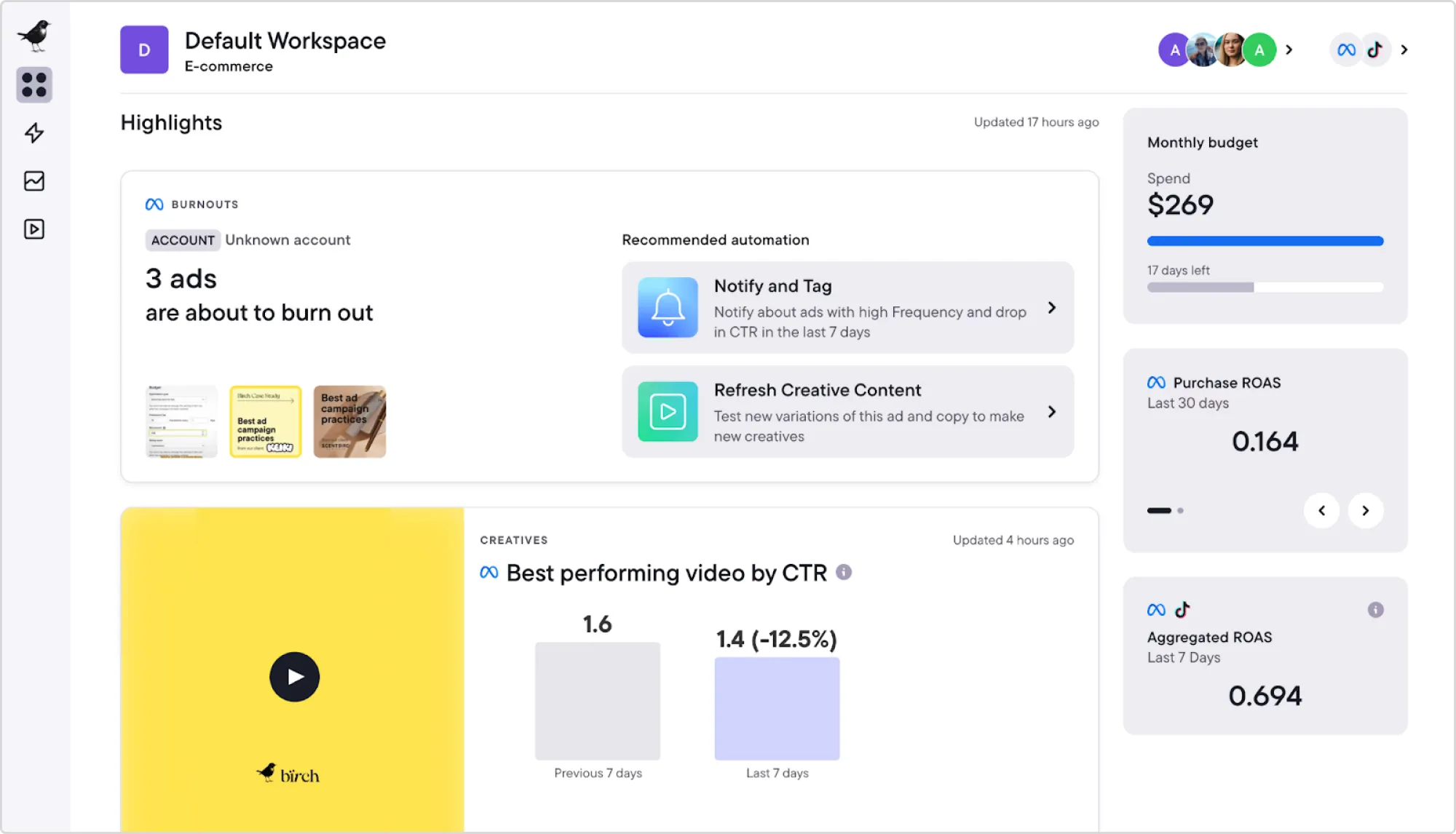
By automating campaign monitoring and surfacing performance patterns across your Meta accounts, Birch helps you act on these insights faster—whether it’s spotting underperforming ad sets, syncing results from WhatsApp-driven funnels, or tracking lift across multiple markets.
Explore Birch with a 14-day free trial
This year’s Meta Performance Summit made it clear that the platform is moving toward a long-term vision where AI and automation guide almost every part of the advertising process. This vision—what Meta is calling its North Star—is centered around building systems that align development, marketing, and business decisions toward a common, customer-focused objective.
Meta’s 2025 roadmap has reflected this direction closely. Instead of focusing on manual controls, Meta is shifting performance marketing toward smarter optimization, deeper measurement, and outcomes that actually matter to businesses, from profitable growth to customer lifetime value.
We’re seeing a real shift in how campaigns are planned and measured. Instead of hands-on micromanagement, advertisers now set the strategy while Meta’s AI handles the heavy lifting in the background.
How Meta’s new measurement and value tools are redefining what performance means in 2025 and beyond
Key takeaways
Meta’s 2025 updates focus on automation, AI-driven targeting, and measurable business outcomes.
Advantage+ is still at the core of Meta’s ad delivery system, while incremental attribution and value optimization tools redefine how advertisers measure real impact.
New measurement partnerships with Nielsen, Oracle, and Visual IQ connect online campaigns with offline results.
Opportunity score now helps advertisers identify setup issues early, making AI-led optimization more predictable.
Privacy-safe frameworks like Conversion API and private lift keep performance measurement reliable in a post-cookie world.
The next phase is about continuous testing, smarter integrations, and building creative systems that feed the algorithm.
AI-enabled and creative solutions
The expansion of Advantage+ leads campaigns is one of the most important changes to the Advantage+ suite of tools in 2025.
Instead of treating leads as a separate, top-of-funnel action, Meta now runs them through the same automated system used for performance and sales campaigns. For advertisers, this makes the process much more straightforward and simple.
Meta Ads Manager interface showing the Advantage+ audience setup panel
Once Advantage+ is activated, it automatically enables placements, audience targeting, and budget optimization. From there, Meta’s AI system takes over, adjusting delivery and spend based on user behavior and intent signals to reach users who are more likely to convert into high-quality leads.
At the same time, Advantage+ sales campaigns have been updated to offer more flexibility. Campaigns can now include multiple ad sets (each with up to 50 ads) and allow basic audience preferences or exclusions, such as age or gender.
Creative is now tightly linked to Meta’s automation layer. Video, carousel, and collection ads are the formats that drive most results, but the real shift is how these formats behave under Advantage+. They are no longer fixed assets—Meta automatically tests variations, placements, and combinations, then serves the version most likely to engage each audience.
Meta’s creative tools make this even more accessible. From a single image or video, you can generate multiple variations, adjust the background, and set guardrails so the AI stays within brand colors, styles, and visual guidelines.
We’re already seeing what this looks like in practice. FULLBEAUTY Brands swapped their plain white catalog backgrounds for AI-generated variations, giving Meta’s system far more creative levers to test. That single change produced a noticeable lift—45% higher ROAS, 22% higher conversion rate, and 36% higher CTR compared to their standard setup.
To support this automation shift, Birch has integrated the newest Advantage+ audience tool, giving you the flexibility to launch, monitor, and refine automated campaigns directly inside one platform. It’s designed to complement Meta’s automation, but you keep full visibility and control over targeting and performance.
In practice, this update helps reduce manual setup time and gives you the freedom to focus more on creative strategy and results.
Looking ahead, Meta’s preparing more interactive and immersive formats centered around try-ons and richer virtual experiences that respond to how users interact with ads. These updates point toward a more flexible environment, where campaigns feel more responsive to real user behavior.
Value tools: optimizing for what businesses truly value
To measure performance in 2025, you need to understand why a certain action happened. Did your ads actually influence the decision, or did they simply show up at the right time?
Instead of relying on surface-level metrics, you can use incremental attribution to measure the real impact of automation (including view-through and upper-funnel conversions), not just last-click. Last-click attribution gives full credit to the final ad someone interacts with before converting, which doesn’t always paint the full picture.
By looking at how people who saw your ads behave compared to those who didn’t, you can see which results were genuinely influenced by your campaigns.
This naturally ties into how Meta handles value optimization.
Instead of optimizing for any conversion, value optimization helps you focus on the quality of those conversions. The algorithm learns from your historical purchase data—the order values, repeat behavior, and signals that define a “high-value” customer—and then shows your ads to the people most likely to generate the largest long-term return.
This is particularly powerful because it shifts campaigns from chasing clicks to maximizing real business outcomes such as average order value, customer lifetime value, or subscription renewals.
However, not every sale means the same thing to your business. Value rules let you customize what “value” means for your specific goals, so Meta’s algorithm can prioritize results that actually matter to your bottom line.
You can adjust values based on:
Region
Device type
New vs. returning customers
Or even a product category
Himanshu Agarwal, co-founder of Zenius.co, suggests testing value rule tiers by audience type. For example, assigning higher value to loyalty members (+50%), followed by high-AOV audiences (+30%), and then net-new but high-intent visitors (+10%). This helps the algorithm prioritize users with stronger predicted profitability without relying on expensive lookalikes or manual bid tactics.
He also recommends aligning value rules with product margins. Value signals should reflect the true contribution of each product line—for instance, a lifestyle brand might apply +10% to apparel, +20% to accessories, and +30% to skincare or beauty, encouraging Meta to deliver more of the conversions that drive meaningful profit, not just top-line revenue.
Measurement solutions—getting closer to true impact
Conversion lift is the current standard for measuring incremental value. It shows you how much of your campaign’s success is actually from your ads.
It splits your audience into two groups, then it compares the results. The difference between those two groups is your lift (the conversions that wouldn’t have happened without your ads).
It answers the question “Did my ads cause this result?” rather than “Was my ad simply there when it happened?”
Measurement is only as good as the data behind it. And that data needs to connect across platforms, devices, and channels. That’s why Meta has expanded its network of verified measurement partners to help advertisers understand what’s really working across different media.
Nielsen Catalina Solutions: Most purchases nowadays happen offline, and that’s why connecting digital ads with in-store sales has always been a challenge. Meta’s collaboration with Nielsen Catalina Solutions helps CPG advertisers measure how ads influence real-world sales.
Lift API integration with Oracle Data Cloud: Meta’s Lift API brings more accessibility to lift testing—a method that measures how likely people are to convert after seeing an ad compared to those who didn’t. The integration with Oracle Data Cloud makes these tests available to more advertisers, including small businesses that couldn’t previously run full studies.
Marketing mix modelling integration: For large brands using marketing mix modelling, Meta has rolled out direct integrations with Nielsen, Neustar MarketShare, Analytics Partners, and Marketing Evolution. Through these integrations, you can compare performance across TV, digital, and print.
Multi-touch attribution: Meta is working with Visual IQ and Neustar MarketShare to offer multi-touch attribution.
Mobile measurement: Meta has partnered with platforms like Adjust, Adways Inc., AppsFlyer, Apsalar, CyberZ, Kochava, and Localytics to improve view-through attribution for mobile measurement and app marketers.
Ongoing investments and platform evolution
Meta continues to focus on making AI-driven advertising more predictable, transparent, and easier for advertisers to manage.
One of the clearest examples of this is the 0–100 opportunity score.
Meta introduced this metric to help advertisers understand how well their campaigns are set up to perform. As automation takes over more of the decisions around placements, targeting, and delivery, many advertisers are feeling a gap between the levers they used to control and the ones Meta now handles automatically. The opportunity score was designed to bridge that gap.
Opportunity score display showing a perfect score of 100
Rather than waiting for results to dip, you can see what’s limiting delivery and fix issues early. These signals also strengthen Meta’s AI systems over time, helping them surface more accurate recommendations.
Tools like Conversion API, private lift, and Aggregate Events Measurement allow advertisers to measure real events without relying on invasive tracking. They let advertisers measure conversions in a private way, syncing events directly from servers instead of browser sessions.
This focus on handling safer data goes hand in hand with Meta’s efforts for transparency and stronger infrastructure.
Updated documentation now explains how systems like Advantage+ campaigns, budget optimization, and placement allocation actually work. On the technical side, data models like Lattice and Andromeda continue to improve the precision of ad delivery.
Strategic implications for 2025 and beyond
Automation is the future, which means advertisers will get the best results when they adjust how they approach campaigns. Instead of managing every detail manually, the focus is now on feeding the system with the right inputs.
Meta’s AI tools work best when you give them the freedom to learn and optimize, rather than trying to control every lever. So if you’re used to setting strict audience segments or fixed bidding strategies, this new direction might feel like a shift.
Creative now plays a bigger role than ever. Meta’s automation depends on what you feed it, so the more diverse and consistent your ad assets are, the smarter the algorithm becomes. Meta will figure out what performs more quickly when you test a range of visuals, formats, and messages.
However, even with all this automation, human input still matters. Meta’s tools can decide where and how to show your ads, but they can’t understand the why—why you’re advertising and what your brand stands for.
At the same time, Meta’s platform evolves quickly. What worked three months ago might not hold next quarter, and that’s expected in the AI-driven world. The successful advertisers are those who keep refining their Meta ads optimization process through continuous testing.
As this environment evolves, reporting on cost per result or ROAS alone won’t give you the bigger picture. Meta’s value tools, like value optimization, incremental attribution, and lift studies, are built to help you see the quality of the outcomes, not just the quantity.
Bringing those metrics into the dashboards, supported by advanced ad reporting tools, helps you track incremental conversions, repeat customers, and lifetime value.
Tools like Birch can make a real difference here.
By automating campaign monitoring and surfacing performance patterns across your Meta accounts, Birch helps you act on these insights faster—whether it’s spotting underperforming ad sets, syncing results from WhatsApp-driven funnels, or tracking lift across multiple markets.
What have been Meta’s biggest marketing updates in 2025?
Meta’s 2025 updates focus on automation, AI-led optimization, and value-based performance measurement. The Advantage+ suite now covers everything from creative generation to lead campaigns, while tools like opportunity score and value rules help advertisers focus on what really drives return.
What is the Meta opportunity score?
The opportunity score evaluates the health of your campaign setup. It reviews elements like creative variety, signal quality, audience breadth, and conversion setup, then suggests practical steps to improve results.
How does incremental attribution differ from last-click measurement?
Last-click attribution gives all credit to the final ad a user interacts with. Incremental attribution measures how many conversions happened because of your ads. It compares a group that saw your ads with a group that didn’t, helping you understand which campaigns truly influenced behavior.
Why is value optimization so important now?
Because not every conversion is worth the same. Value optimization helps Meta’s system focus on customers who drive higher-order values or repeat purchases, rather than just those who clicked. It’s a way to teach the algorithm what “high-value” means to your business so it can prioritize those results over cheaper, low-impact conversions.
What role do Meta’s measurement partners play?
Meta partners with platforms like Nielsen, Oracle, Neustar, and Visual IQ to close the loop between online and offline results. These integrations help advertisers track sales lift, brand impact, and multi-touch attribution across channels.
What is Meta doing to improve privacy and data accuracy?
Meta is investing heavily in privacy-centric measurement. Tools like Conversion API, private lift, and Aggregate Event Measurement let advertisers measure conversions directly from server data rather than browser sessions—protecting privacy.
Sara Alimehmeti
is a content writer with five years of experience publishing content for the Business, Marketing, and Travel domains. She specialises in writing articles, blogs, and social media posts that help brands communicate their voice and stay engaged with the audience.