Blog

← All posts
Ad Performance
December 1, 2025

What is Meta’s opportunity score?

by
Sara Alimehmeti

Meta introduced the 0–100 opportunity score metric to help advertisers understand how well their campaigns are set up to perform.

But it’s more than just another metric to keep track of.

As Meta pushes automation deeper into placements, targeting, and campaign delivery, advertisers are seeing a growing gap between the levers they used to manage and what Meta believes will drive the best results. Opportunity score was introduced to bridge that gap.

In this guide, we’ll break down what opportunity score is, how it’s calculated, when it matters (and when it doesn’t), and how you can use it to make your optimizations smarter.

Key takeaways

  • Opportunity score shows how closely your campaigns align with Meta’s best practices—not how well they are performing.
  • The score updates in real time based on how many recommendations you apply and their impact.
  • Opportunity score works alongside ROAS, CPA, and conversion data—adding context that helps explain why your results look the way they do.
  • Advantage+ features like placements, audience, and campaign budget have the biggest influence on your score.
  • Bïrch lets you track all your key metrics in one place—and keep an eye on how automations affect (or don’t affect) your campaigns.

Navigating the Meta opportunity score: your algorithm-driven compass

Opportunity score is Meta’s way of telling you how “healthy” your ad setup is.

It’s a 0–100 score that looks at your campaigns and checks how closely they follow Meta’s best practices. Think of these as rules the algorithm uses to predict which ads will deliver better results.

Unlike metrics like ROAS and CTR, opportunity score doesn’t measure results—but it does measure readiness.

How the score is calculated

Meta hasn’t shared the full formula for how the opportunity score is calculated, but here’s what we know from early tests: Your opportunity score is built around a list of personalized recommendations, each carrying a different point value based on how much impact Meta thinks it could have on your account. 

Meta says: “Your score is based on how many Meta Ads Manager recommendations you apply, and those recommendations are ranked based on estimated performance impact.” (Source: Business Help Center)

As you apply changes, your account collects new data, and the system recalculates your scores automatically.

Where to find opportunity score in Ads Manager

You can find the opportunity score in Account Overview within Meta Ads Manager. It’s displayed as a percentage at the top of the page, and you can also see it on the campaign and ad-set levels.

If you hover over it, you’ll see recommendations for boosting your score; for example, Enable Advantage+ placements, or Fix audience overlap.

When the opportunity score is 100, there are no recommendations available.
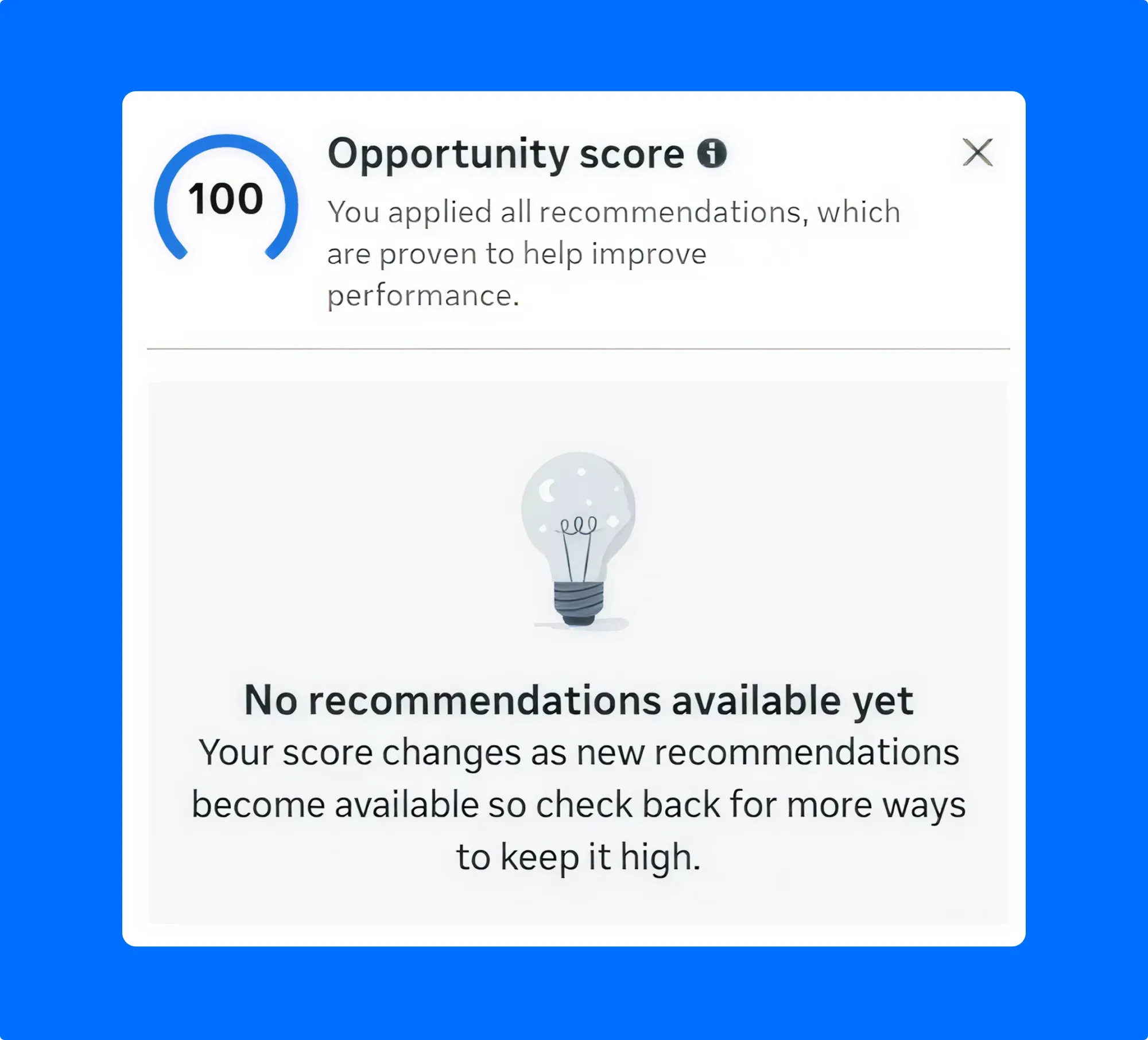
Opportunity score in Meta Ads Manager showing 100, indicating all recommendations have been applied and no new suggestions are available.

Understanding opportunity score ranges and what they mean

90–100 This is an excellent range. It means your account is highly optimized and you’ve followed Meta’s best practices. You’ve applied the recommendations, and your campaigns are structured for strong delivery.

60–89 Your campaigns are working well, but they could be optimized further. There might be small gaps in parameters like audience overlap, automation, or another aspect.

30–59 Your setup works, but it has inefficiencies that make it harder for the algorithm to deliver your ad. For example, your placements might be too narrow, your targeting might be fragmented, or your conversion tracking might be inconsistent.

0–29 Campaigns in this range have significant gaps—restricted targeting, missing tracking, or technical errors that prevent them from effective learning. The algorithm doesn’t have enough reliable data to learn what’s working and what’s not.

Common misconceptions about opportunity score

A high score means high performance.

When you see a 95% opportunity score, your first instinct may be to associate it with your ad performance. But it’s not quite that simple.

Even if your ad adheres to all of Meta’s best practices and you’ve implemented all their suggestions, it may still struggle to drive conversions if you haven’t perfected your offer, product–market fit, or messaging.

Meta says: “Opportunity score (including a high score) itself does not reflect your actual or future performance. Should you choose to apply all or some of the recommendations, then the applied recommendations can help improve performance over time but this isn’t guaranteed. Actual performance depends on many factors such as market dynamics. Opportunity score is in development and may evolve.” (Source: Business Help Center)

A low score equals bad campaigns.

Following the same logic, a low opportunity score doesn’t mean your campaign is “bad.”

For example, if you’re intentionally narrowing your audience or running experimental campaigns that don’t align with Meta’s automation logic, your score might drop, even if your ROAS is solid.

You need to apply every recommendation. 

You don’t. Meta’s suggestions are broad, and not all of them will make sense for your business. Sometimes, ignoring a recommendation you think doesn’t fit with your long-term objectives could be the right move.

The opportunity score is best used as a health check for your campaigns, not a tool you fully rely on.

Opportunity score within Meta’s performance ecosystem

Opportunity score doesn’t exist independently. It’s part of a broader ecosystem that Meta’s been building. Its aim is to help advertisers rely more on automation and less on manual checks. 

How opportunity score fits with other Meta metrics & Advantage+

Metrics like ROAS, CPA, CTR, and CPM give you insight into how well your ads are performing based on cost, efficiency, and audience engagement. Opportunity score, on the other hand, doesn’t measure revenue or engagement—it measures how “algorithm-friendly” your setup is.

Meta has tested this at scale. Advertisers who act on opportunity score recommendations often see a 5% median decrease in cost per result. But again, that may be correlation.
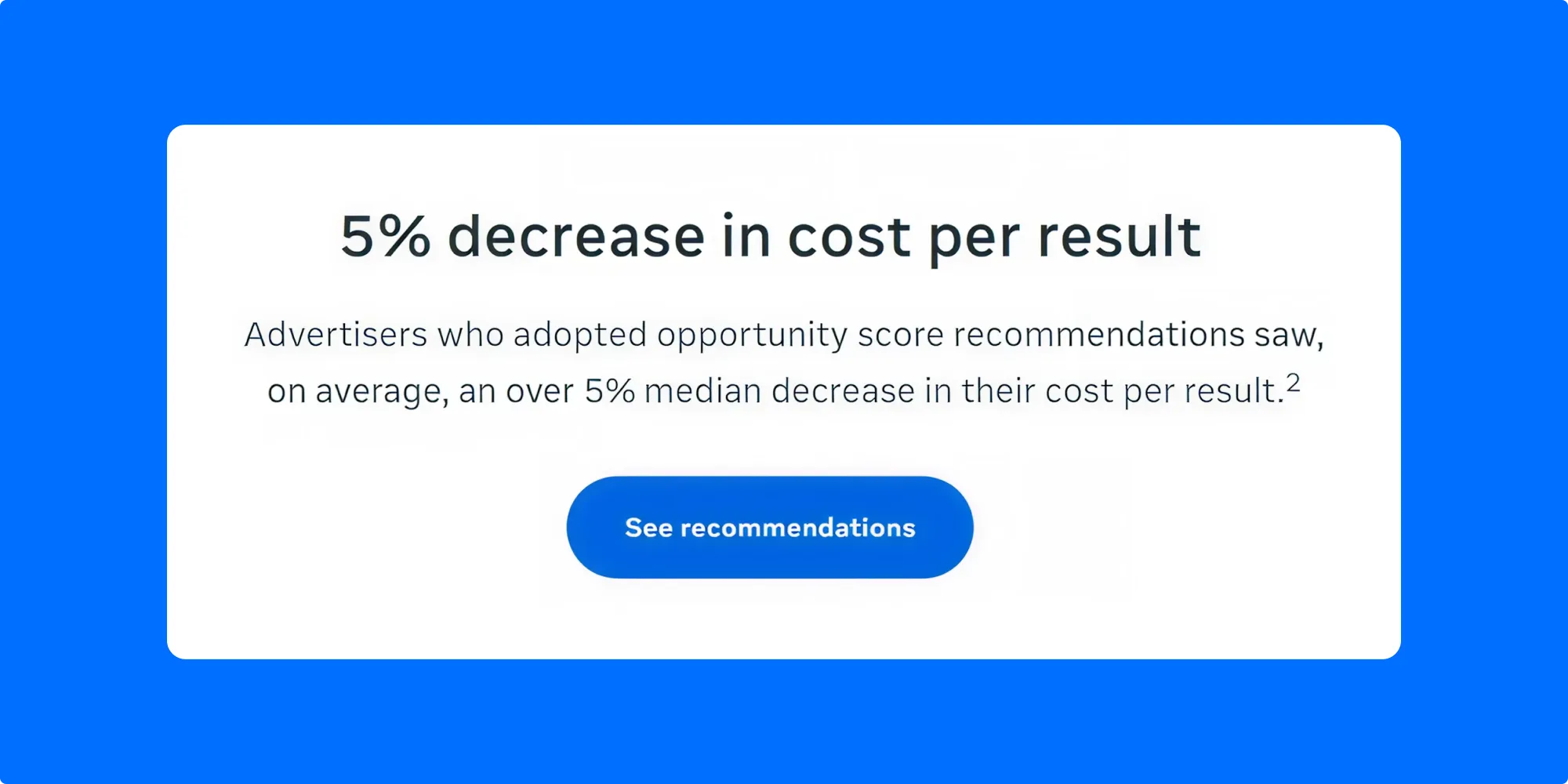
Meta Ads Manager message highlighting a 5% decrease in cost per result for advertisers who adopted opportunity score recommendations

Opportunity score doesn’t predict performance. It’s designed to work alongside other traditional metrics—not replace them. For example, you’ll still need to monitor ROAS and conversions for a full picture of performance.

Integration with Advantage+

Most of the actions that increase your opportunity score are tied to Advantage+ features—and that’s no coincidence. Meta’s algorithm prioritizes these tools because they let its machine learning system work with more flexibility and data.
You’ll often see recommendations like:

  • Advantage+ placements allow Meta’s AI to find the best places for your ads. 
  • Advantage+ audience lets Meta find new potential customers beyond those targeted by you.
  • Advantage+ campaign budget gives the system full control over budget allocation.

How opportunity score connects to creative score and quality ranking

Creative score tells you how engaging your ad assets are and how well they fit across placements. Quality ranking compares your ad’s overall experience to others competing for the same audience.

Meanwhile, quality score looks under the hood. It measures how your setup helps or limits Meta’s system from delivering those creatives efficiently. 

Together, these metrics build the full picture you need as an advertiser:

  • Creative and quality score tell you how people respond to your ads.
  • Opportunity score shows how well the system can deliver those ads in the first place.

If your creative and quality scores are strong but your opportunity score is low, your structure is probably holding you back. And if your setup is great, but your creative score is weak, your audience may not be connecting with the content.

Opportunity score as part of Meta’s Performance 5 framework

Opportunity score ties directly into Meta’s Performance 5 framework—the five principles Meta says drive high performance across its platforms:

  1. Account simplification: Meta recommends keeping things simple—structuring your campaigns so the system can learn quickly and deliver efficiently. Every time you launch a new ad set or make an edit, that ad returns to the learning phase. Because of this, Meta suggests allocating less than 20% of your budget to learning at any given time. Tools like Advantage+ sales campaigns automate the process.
  1. Creators for direct response: Creators are no longer just influencers. They also impact purchase decisions. Branded partnership ads (previously called branded content ads) allow brands to use creator-made content directly as ads, which can feel more personal and relatable. According to Meta, advertisers who tried this strategy saw a significant lift in sales and lower CPA.
  1. Creative diversification: People get tired of seeing the same ad over and over. It’s what leads to ad fatigue. To avoid this, Meta suggests two solutions:
    Creative format. Diversifying ad formats (like Reels and UGC-style clips)
    Creative concept
    . Incorporating new messages and tones in your ads
  1. Conversions API quality check: The Conversions API brings Meta closer to your marketing data, ensuring what it receives is reliable and clean. Two factors matter most:
    Redundant event setups. Running the Pixel and the Conversions API together gives Meta more reliable event signals.
    Event Match Quality score
    . A higher EMQ score means your events are more likely to match up with real Meta accounts.
  1. Business results validation: Meta doesn’t want you to rely on last-click attribution because it overlooks impression-based impact and cross-device behavior. Instead, Meta recommends using Conversion Lift—a more accurate measurement method that shows the real impact your ads have on sales, not just what the user clicked last.

Each of these pillars influences your opportunity score. For a higher score and efficient ad delivery, try to align your campaigns with this framework.
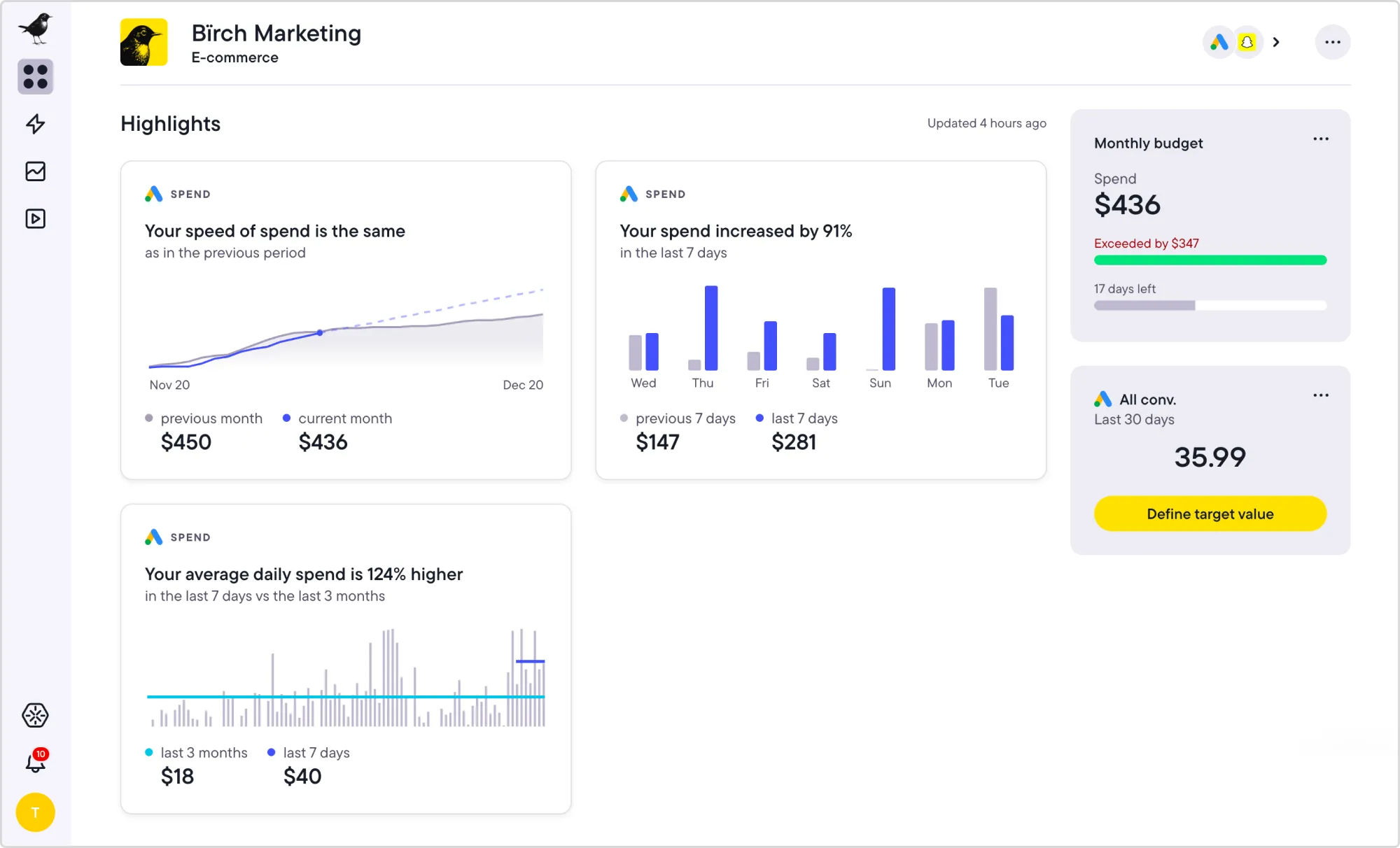
💡Pro tip: Use Bïrch to pull your opportunity score, ROAS, CPA, and creative data into one dashboard—no more tab-switching. Bïrch shows how changes in your setup affect performance in real time, helping you spot patterns you’d miss in Ads Manager. It’s the fastest way to track opportunity score at scale and automate your reporting.

Meta opportunity score deep dive

Opportunity score works like a signal, but the real value comes from understanding the recommendations behind it—and knowing how to turn them into your next actionable steps.

Using the score to guide campaign optimization

Let’s say your score is 63. You open the breakdown and see:

  • Audience overlap detected between 3 ad sets (+20 potential points) 
  • Advantage+ placements not enabled (+10 potential points) 
  • Pixel missing from checkout page (+8 potential points)

As you apply these recommendations, your score updates in real time. However, this doesn’t mean your campaign performance will instantly improve. The score simply reflects how closely your campaigns follow Meta’s best practices.

When not to optimize for the score alone

While it’s tempting to chase that perfect 100, it’s not always smart. A higher score means you’re following Meta’s guidelines strictly—but you can’t guarantee that this is what your audience wants.

In some cases, you might ignore recommendations intentionally:

  • You’re running a niche targeting strategy that works for you, even if it’s not broad.
  • You’re running regional campaigns that require different creatives or localized targeting.
  • You’re in a testing phase. You want to see what works before you let automation take over.

Meta’s ad performance scoring framework: a structured approach
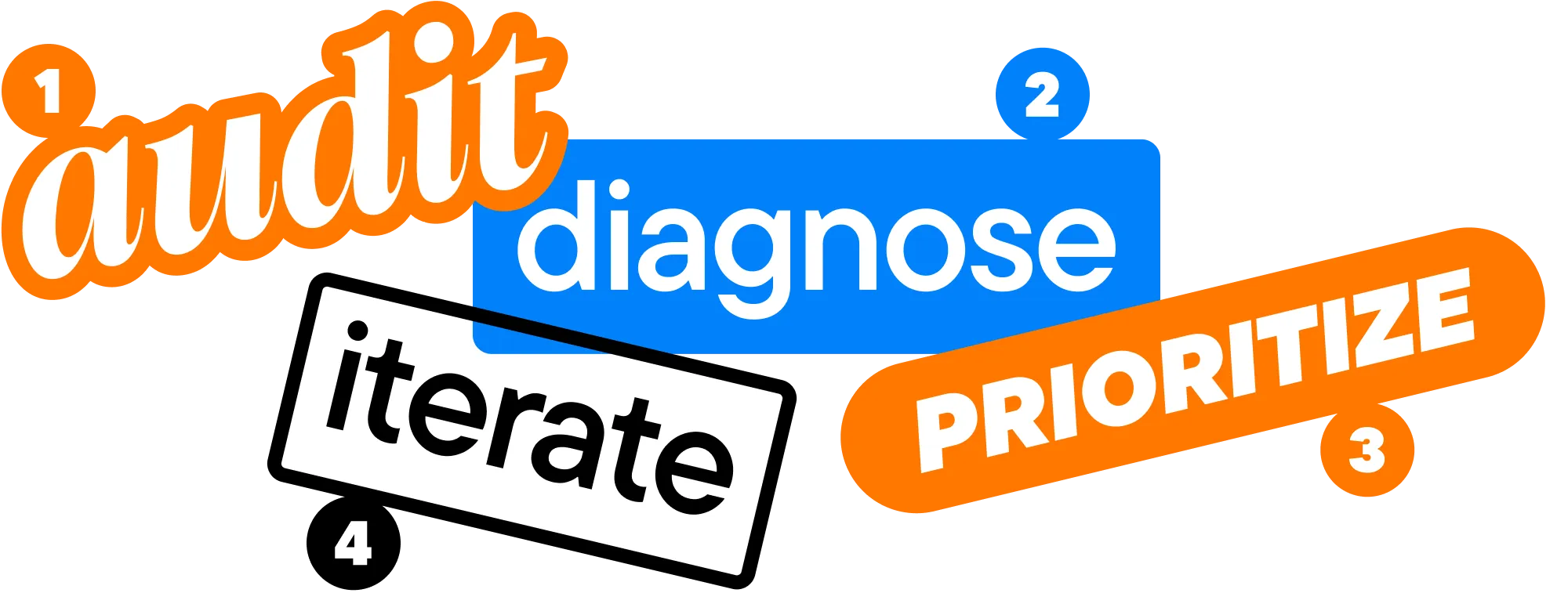
Audit: assess your current scores

Auditing starts by looking at your current opportunity score at the account, campaign, and ad-set levels to identify patterns. Are certain campaigns constantly scoring lower? Are certain issues appearing over and over?

The goal of the auditing step is to see the full picture before you start making changes.

Diagnose: identify weak areas in campaign setup

Once you know which campaigns have low scores, the next step is figuring out why.

Go through each recommendation and determine whether it’s a technical issue, a structural issue, or simply an intentional choice.

Ask yourself:

  • Does this issue directly impact delivery and cost? 
  • Is it something I can realistically fix right now?
  • Does this recommendation align with how my business or funnel actually works?

Prioritize: choose what to optimize first

Fixes that include data accuracy and delivery efficiency are usually best implemented first. 

Here are some examples: 

  • Setting up or improving the Conversions API and Pixel
  • Reducing audience overlap.
  • Fixing budget distribution issues

Iterate: test, measure, and refine over time

You don’t have to fix everything in a day. Your score will update as your campaign evolves—so think of it like an ongoing learning loop.

Make one or two key changes and let them run for a few days to reveal their impact on cost per result, conversions, and stability.

If performance improves, keep the change. If it doesn’t, try a different fix. Over time, this cycle will help you separate and prioritize what truly drives performance from what just raises your opportunity score.

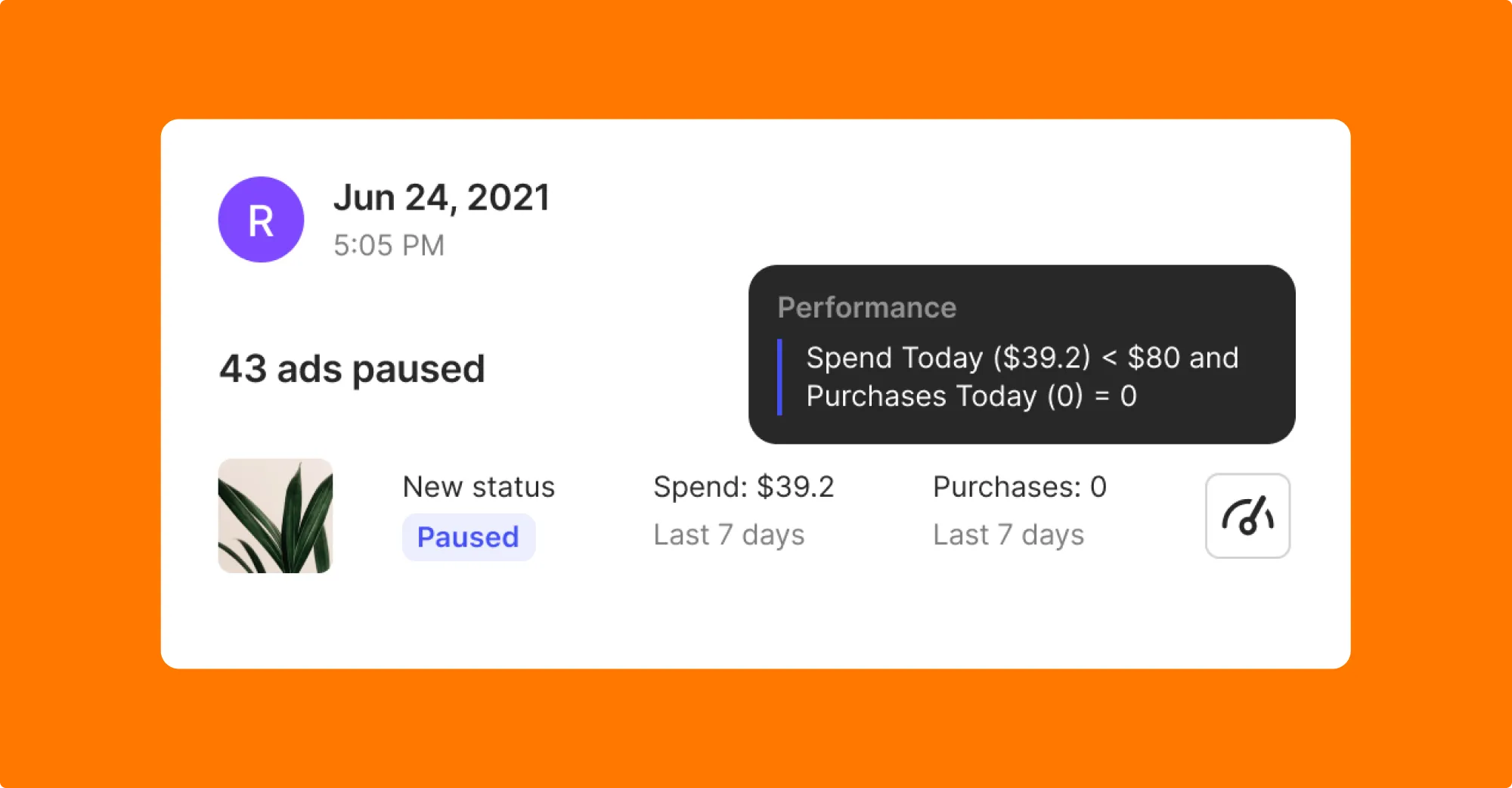
And because iteration creates a lot of moving parts, tracking every shift manually can be time-consuming. Meta’s automation can handle the repetitive work—but you still need a clear view of what’s actually changing.

That’s where Bïrch fits in. It ties your performance data together across channels, automates key reports and alerts, and logs your automation outcomes so you can see when a change really made a difference.
Future-proofing your Meta ads strategy

Opportunity score is likely just the beginning. Meta already uses similar models for creative quality and delivery ranking, and it’s safe to assume they will roll out more diagnostic signals in the near future.

We’re expecting a move toward unified “health indicators” that blend data quality, creative strength, and campaign setup.

A solid data foundation will help you stay ahead. AI can’t optimize what it doesn’t understand—so check that your Conversions API, pixel tracking, and custom events are sending clean, consistent signals.

From there, keep feeding the system variety to learn from. Automation performs best when it has strong inputs and multiple options—so keep testing new creatives, formats, and placements.

Automation isn’t a substitute for human strategy, and the opportunity score is a guide—not a predictor. Performance still depends on the decisions you make around creative, structure, and intent. Meta’s system can optimize delivery, but it’s your strategy that determines the direction.

Explore Bïrch with a 14-day free trial

FAQs

Meta introduced the 0–100 opportunity score metric to help advertisers understand how well their campaigns are set up to perform.

But it’s more than just another metric to keep track of.

As Meta pushes automation deeper into placements, targeting, and campaign delivery, advertisers are seeing a growing gap between the levers they used to manage and what Meta believes will drive the best results. Opportunity score was introduced to bridge that gap.

In this guide, we’ll break down what opportunity score is, how it’s calculated, when it matters (and when it doesn’t), and how you can use it to make your optimizations smarter.

Key takeaways

  • Opportunity score shows how closely your campaigns align with Meta’s best practices—not how well they are performing.
  • The score updates in real time based on how many recommendations you apply and their impact.
  • Opportunity score works alongside ROAS, CPA, and conversion data—adding context that helps explain why your results look the way they do.
  • Advantage+ features like placements, audience, and campaign budget have the biggest influence on your score.
  • Bïrch lets you track all your key metrics in one place—and keep an eye on how automations affect (or don’t affect) your campaigns.

Navigating the Meta opportunity score: your algorithm-driven compass

Opportunity score is Meta’s way of telling you how “healthy” your ad setup is.

It’s a 0–100 score that looks at your campaigns and checks how closely they follow Meta’s best practices. Think of these as rules the algorithm uses to predict which ads will deliver better results.

Unlike metrics like ROAS and CTR, opportunity score doesn’t measure results—but it does measure readiness.

How the score is calculated

Meta hasn’t shared the full formula for how the opportunity score is calculated, but here’s what we know from early tests: Your opportunity score is built around a list of personalized recommendations, each carrying a different point value based on how much impact Meta thinks it could have on your account. 

Meta says: “Your score is based on how many Meta Ads Manager recommendations you apply, and those recommendations are ranked based on estimated performance impact.” (Source: Business Help Center)

As you apply changes, your account collects new data, and the system recalculates your scores automatically.

Where to find opportunity score in Ads Manager

You can find the opportunity score in Account Overview within Meta Ads Manager. It’s displayed as a percentage at the top of the page, and you can also see it on the campaign and ad-set levels.

If you hover over it, you’ll see recommendations for boosting your score; for example, Enable Advantage+ placements, or Fix audience overlap.

When the opportunity score is 100, there are no recommendations available.

Opportunity score in Meta Ads Manager showing 100, indicating all recommendations have been applied and no new suggestions are available.

Understanding opportunity score ranges and what they mean

90–100 This is an excellent range. It means your account is highly optimized and you’ve followed Meta’s best practices. You’ve applied the recommendations, and your campaigns are structured for strong delivery.

60–89 Your campaigns are working well, but they could be optimized further. There might be small gaps in parameters like audience overlap, automation, or another aspect.

30–59 Your setup works, but it has inefficiencies that make it harder for the algorithm to deliver your ad. For example, your placements might be too narrow, your targeting might be fragmented, or your conversion tracking might be inconsistent.

0–29 Campaigns in this range have significant gaps—restricted targeting, missing tracking, or technical errors that prevent them from effective learning. The algorithm doesn’t have enough reliable data to learn what’s working and what’s not.

Common misconceptions about opportunity score

A high score means high performance.

When you see a 95% opportunity score, your first instinct may be to associate it with your ad performance. But it’s not quite that simple.

Even if your ad adheres to all of Meta’s best practices and you’ve implemented all their suggestions, it may still struggle to drive conversions if you haven’t perfected your offer, product–market fit, or messaging.

Meta says: “Opportunity score (including a high score) itself does not reflect your actual or future performance. Should you choose to apply all or some of the recommendations, then the applied recommendations can help improve performance over time but this isn’t guaranteed. Actual performance depends on many factors such as market dynamics. Opportunity score is in development and may evolve.” (Source: Business Help Center)

A low score equals bad campaigns.

Following the same logic, a low opportunity score doesn’t mean your campaign is “bad.”

For example, if you’re intentionally narrowing your audience or running experimental campaigns that don’t align with Meta’s automation logic, your score might drop, even if your ROAS is solid.

You need to apply every recommendation. 

You don’t. Meta’s suggestions are broad, and not all of them will make sense for your business. Sometimes, ignoring a recommendation you think doesn’t fit with your long-term objectives could be the right move.

The opportunity score is best used as a health check for your campaigns, not a tool you fully rely on.

Opportunity score within Meta’s performance ecosystem

Opportunity score doesn’t exist independently. It’s part of a broader ecosystem that Meta’s been building. Its aim is to help advertisers rely more on automation and less on manual checks. 

How opportunity score fits with other Meta metrics & Advantage+

Metrics like ROAS, CPA, CTR, and CPM give you insight into how well your ads are performing based on cost, efficiency, and audience engagement. Opportunity score, on the other hand, doesn’t measure revenue or engagement—it measures how “algorithm-friendly” your setup is.

Meta has tested this at scale. Advertisers who act on opportunity score recommendations often see a 5% median decrease in cost per result. But again, that may be correlation.

Meta Ads Manager message highlighting a 5% decrease in cost per result for advertisers who adopted opportunity score recommendations

Opportunity score doesn’t predict performance. It’s designed to work alongside other traditional metrics—not replace them. For example, you’ll still need to monitor ROAS and conversions for a full picture of performance.

Integration with Advantage+

Most of the actions that increase your opportunity score are tied to Advantage+ features—and that’s no coincidence. Meta’s algorithm prioritizes these tools because they let its machine learning system work with more flexibility and data.

You’ll often see recommendations like:

  • Advantage+ placements allow Meta’s AI to find the best places for your ads. 
  • Advantage+ audience lets Meta find new potential customers beyond those targeted by you.
  • Advantage+ campaign budget gives the system full control over budget allocation.

How opportunity score connects to creative score and quality ranking

Creative score tells you how engaging your ad assets are and how well they fit across placements. Quality ranking compares your ad’s overall experience to others competing for the same audience.

Meanwhile, quality score looks under the hood. It measures how your setup helps or limits Meta’s system from delivering those creatives efficiently. 

Together, these metrics build the full picture you need as an advertiser:

  • Creative and quality score tell you how people respond to your ads.
  • Opportunity score shows how well the system can deliver those ads in the first place.

If your creative and quality scores are strong but your opportunity score is low, your structure is probably holding you back. And if your setup is great, but your creative score is weak, your audience may not be connecting with the content.

Opportunity score as part of Meta’s Performance 5 framework

Opportunity score ties directly into Meta’s Performance 5 framework—the five principles Meta says drive high performance across its platforms:

  1. Account simplification: Meta recommends keeping things simple—structuring your campaigns so the system can learn quickly and deliver efficiently. Every time you launch a new ad set or make an edit, that ad returns to the learning phase. Because of this, Meta suggests allocating less than 20% of your budget to learning at any given time. Tools like Advantage+ sales campaigns automate the process.
  1. Creators for direct response: Creators are no longer just influencers. They also impact purchase decisions. Branded partnership ads (previously called branded content ads) allow brands to use creator-made content directly as ads, which can feel more personal and relatable. According to Meta, advertisers who tried this strategy saw a significant lift in sales and lower CPA.
  1. Creative diversification: People get tired of seeing the same ad over and over. It’s what leads to ad fatigue. To avoid this, Meta suggests two solutions:
    Creative format. Diversifying ad formats (like Reels and UGC-style clips)
    Creative concept
    . Incorporating new messages and tones in your ads
  1. Conversions API quality check: The Conversions API brings Meta closer to your marketing data, ensuring what it receives is reliable and clean. Two factors matter most:
    Redundant event setups. Running the Pixel and the Conversions API together gives Meta more reliable event signals.
    Event Match Quality score
    . A higher EMQ score means your events are more likely to match up with real Meta accounts.
  1. Business results validation: Meta doesn’t want you to rely on last-click attribution because it overlooks impression-based impact and cross-device behavior. Instead, Meta recommends using Conversion Lift—a more accurate measurement method that shows the real impact your ads have on sales, not just what the user clicked last.

Each of these pillars influences your opportunity score. For a higher score and efficient ad delivery, try to align your campaigns with this framework.

💡Pro tip: Use Bïrch to pull your opportunity score, ROAS, CPA, and creative data into one dashboard—no more tab-switching. Bïrch shows how changes in your setup affect performance in real time, helping you spot patterns you’d miss in Ads Manager. It’s the fastest way to track opportunity score at scale and automate your reporting.

Meta opportunity score deep dive

Opportunity score works like a signal, but the real value comes from understanding the recommendations behind it—and knowing how to turn them into your next actionable steps.

Using the score to guide campaign optimization

Let’s say your score is 63. You open the breakdown and see:

  • Audience overlap detected between 3 ad sets (+20 potential points) 
  • Advantage+ placements not enabled (+10 potential points) 
  • Pixel missing from checkout page (+8 potential points)

As you apply these recommendations, your score updates in real time. However, this doesn’t mean your campaign performance will instantly improve. The score simply reflects how closely your campaigns follow Meta’s best practices.

When not to optimize for the score alone

While it’s tempting to chase that perfect 100, it’s not always smart. A higher score means you’re following Meta’s guidelines strictly—but you can’t guarantee that this is what your audience wants.

In some cases, you might ignore recommendations intentionally:

  • You’re running a niche targeting strategy that works for you, even if it’s not broad.
  • You’re running regional campaigns that require different creatives or localized targeting.
  • You’re in a testing phase. You want to see what works before you let automation take over.

Meta’s ad performance scoring framework: a structured approach

Audit: assess your current scores

Auditing starts by looking at your current opportunity score at the account, campaign, and ad-set levels to identify patterns. Are certain campaigns constantly scoring lower? Are certain issues appearing over and over?

The goal of the auditing step is to see the full picture before you start making changes.

Diagnose: identify weak areas in campaign setup

Once you know which campaigns have low scores, the next step is figuring out why.

Go through each recommendation and determine whether it’s a technical issue, a structural issue, or simply an intentional choice.

Ask yourself:

  • Does this issue directly impact delivery and cost? 
  • Is it something I can realistically fix right now?
  • Does this recommendation align with how my business or funnel actually works?

Prioritize: choose what to optimize first

Fixes that include data accuracy and delivery efficiency are usually best implemented first. 

Here are some examples: 

  • Setting up or improving the Conversions API and Pixel
  • Reducing audience overlap.
  • Fixing budget distribution issues

Iterate: test, measure, and refine over time

You don’t have to fix everything in a day. Your score will update as your campaign evolves—so think of it like an ongoing learning loop.

Make one or two key changes and let them run for a few days to reveal their impact on cost per result, conversions, and stability.

If performance improves, keep the change. If it doesn’t, try a different fix. Over time, this cycle will help you separate and prioritize what truly drives performance from what just raises your opportunity score.

And because iteration creates a lot of moving parts, tracking every shift manually can be time-consuming. Meta’s automation can handle the repetitive work—but you still need a clear view of what’s actually changing.

That’s where Bïrch fits in. It ties your performance data together across channels, automates key reports and alerts, and logs your automation outcomes so you can see when a change really made a difference.

Future-proofing your Meta ads strategy

Opportunity score is likely just the beginning. Meta already uses similar models for creative quality and delivery ranking, and it’s safe to assume they will roll out more diagnostic signals in the near future.

We’re expecting a move toward unified “health indicators” that blend data quality, creative strength, and campaign setup.

A solid data foundation will help you stay ahead. AI can’t optimize what it doesn’t understand—so check that your Conversions API, pixel tracking, and custom events are sending clean, consistent signals.

From there, keep feeding the system variety to learn from. Automation performs best when it has strong inputs and multiple options—so keep testing new creatives, formats, and placements.

Automation isn’t a substitute for human strategy, and the opportunity score is a guide—not a predictor. Performance still depends on the decisions you make around creative, structure, and intent. Meta’s system can optimize delivery, but it’s your strategy that determines the direction.

Explore Bïrch with a 14-day free trial

FAQs

What exactly is Meta’s opportunity score?

Meta opportunity score is a 0–100 rating that shows how well your campaigns are set up according to Meta’s best practices.

How is the opportunity score calculated?

Meta hasn’t shared a formula yet, but each recommendation inside Ads Manager carries a different point value depending on how impactful it is thought to be for your account. The more relevant recommendations you apply, the higher your score.

Does a high opportunity score mean my ads are performing well?

Not necessarily. A high opportunity score means you’re following Meta’s recommendations—but the campaign’s performance still depends on your offer, audience, and creative.

How does opportunity score connect to Advantage+?

Most recommendations that increase your score are related to Advantage+ features like placements, campaign budget, and audiences, which help Meta’s AI learn faster.

Can I track opportunity score outside of Ads Manager?

Yes. Platforms like Bïrch let you connect multiple ad accounts and track opportunity scores alongside metrics like ROAS, CPA, and conversion rate—all in one dashboard. This helps you see not only your setup optimization but how it actually impacts performance across Meta, Google, TikTok, and other platforms.

Sara Alimehmeti
is a content writer with five years of experience publishing content for the Business, Marketing, and Travel domains. She specialises in writing articles, blogs, and social media posts that help brands communicate their voice and stay engaged with the audience.

Get started with Bïrch product

14
days free trial
Cancel anytime
No credit card required