The authenticity edge, science and strategy behind the evolution of Meta Partnership Ads
Explore the key changes at the heart of Meta Partnership Ads updates over the last 2 years. Including incredibly useful 2025 updates to signal stacking and the Meta Partnerships Hub.
We’re all a bit strange, aren’t we? Our satisfaction algorithms as consumers make no sense.
You can spend weeks polishing a “studio quality” ad with perfect lighting, exquisite copy and photoglorious models, only to have it outperformed by a grainy Android video of someone using your product while on a hoverboard. (Sorry Android, I actually love you).
We’re not just seeing a trend, we’re seeing ground zero change in advertising authenticity.
Clearly this is something Meta has paid attention to, and it’s what’s at the heart of Meta’s evolution of “Branded Content Ads” into Partnership Ads. This isn't just a rebrand or a UI update. It is a fundamental shift in how the platform allows you to scale authenticity. They are giving us the infrastructure to turn that grainy Android video into your account’s best performing asset.
Here is what you need to know about these developments, the data behind them, and how to use Partnership Ads without losing your sanity to a black hole of influencer permissions.
Key takeaways
The shift: Partnership Ads allow you to run ads from a creator’s handle (or a double header) to scale collaborations, replacing the previously clunky “Branded Content” flow.
The workflow: The new Partnership Ads Hub centralizes permissions and creative discovery, using AI to recommend content that is already performing well organically.
The strategy: Success means speaking the “Language of Reels.” Entertaining, digestible, and relatable content rather than polished TV-style spots.
What are Meta Partnership Ads? (and how are they different from Branded Content Ads?)
Previously, if you wanted to run an ad through a creator's handle, you had to navigate to the “Branded Content” tool. It worked, but it was often rigid and required a lot of back-and-forth for permissions with the creators.
Partnership Ads are the more flexible, scalable evolution of that tool. They allow advertisers to amplify content from a creator or partner’s handle to scale collaborations. These updates started to materialise late 2023 when Meta changed the name of this ad type and provided a native solution for dark posting (where a brand could run ads from a creator’s handle without the ad appearing on the creator’s organic feed).
Throughout 2024 and 2025, Meta has integrated AI into Partnership Ads, notably introducing signal stacking, meaning the ad algorithm can use both the creator and the advertiser handles to determine where ads are shown. It essentially “borrows” the creator's relevance score to help your ad find the right audience.
The most distinct visual change in Partnership Ads came in June 2025 when Meta started to allow Partnership Ads with single headers (the banner at the top of the ad).
You now have two powerful options:
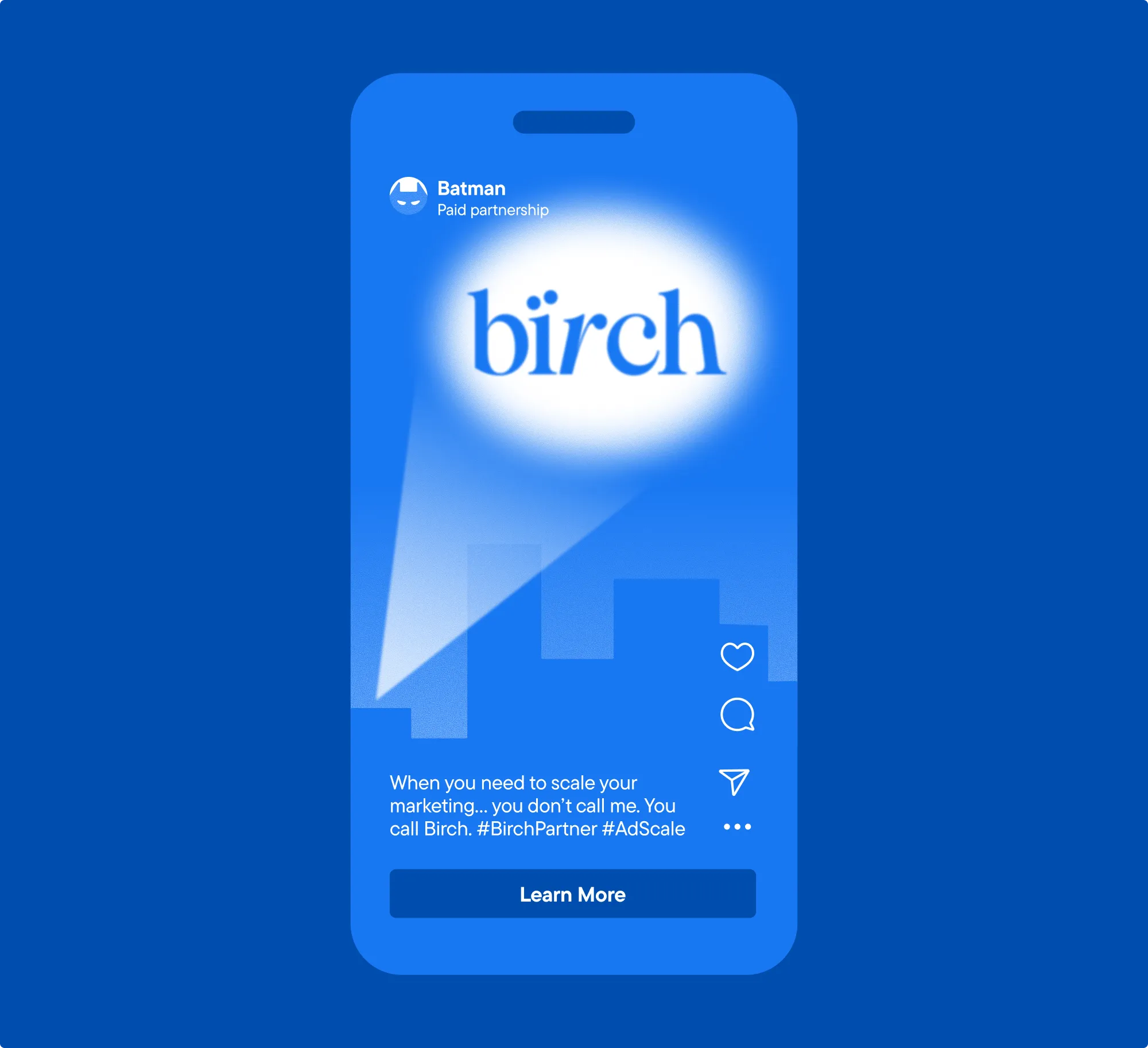
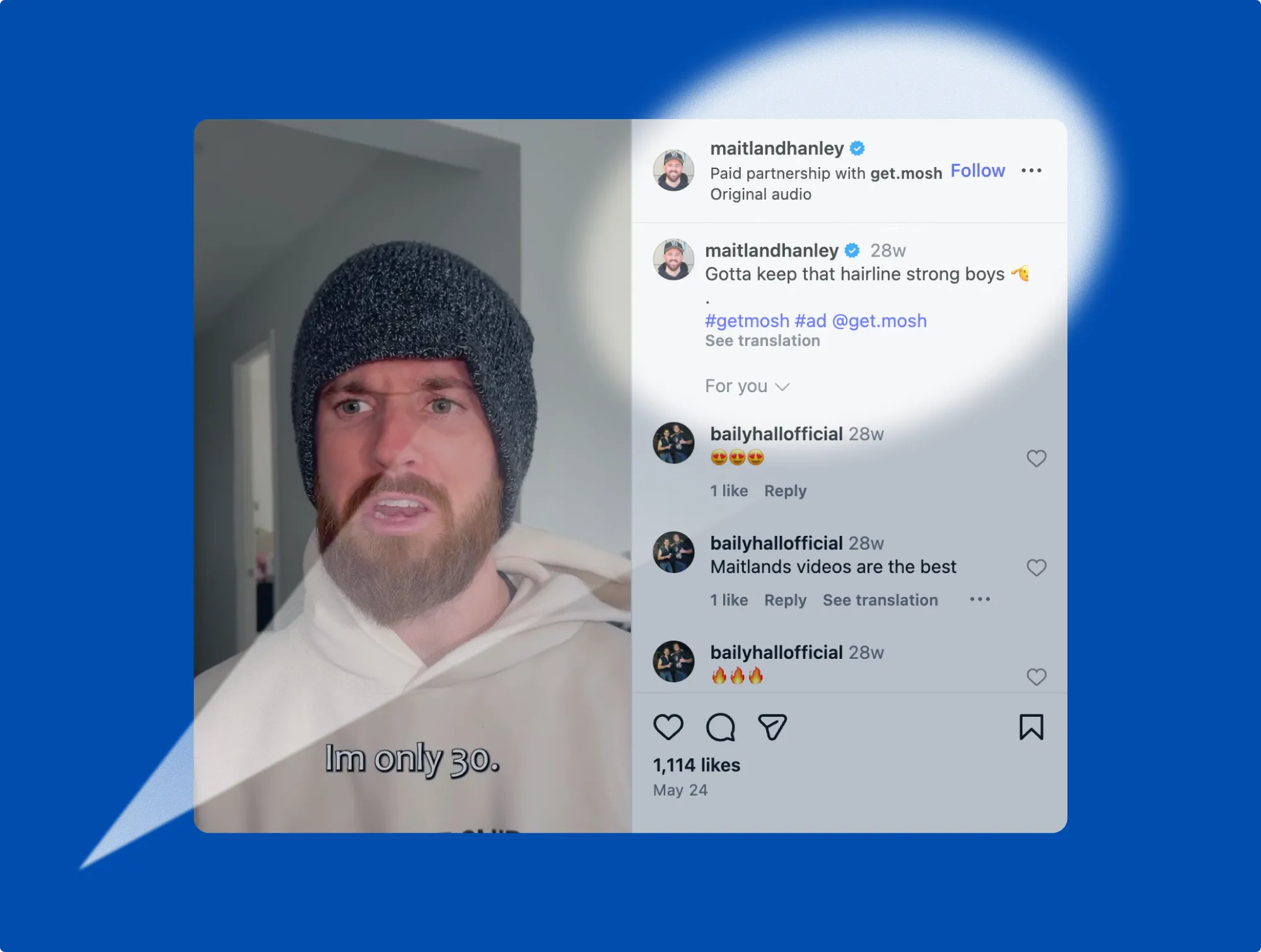
Dual Header: The ad appears with both your brand name and the creator’s handle (e.g., Birch with Batman). This creates an immediate visual association between your brand and the trusted voice.
Single Header: The ad appears entirely from the creator’s handle (e.g., Batman), but is sponsored by you. This often looks and feels completely native to the feed.
Why the updates?
Meta isn’t making these updates just for the purpose of improving collaborative user experience. Their focus on developing Partnership Ads is a result of changes to short-form content consumption habits.
The data in this section of the article was originally shared at Meta Marketing Summit by Meta in Berlin, June 2025.
1. The “Reels” Factor
We often talk about “meeting customers where they are.” Right now, they are watching Reels.
>50% of time spent on Instagram is on Reels.
To win in this placement, you cannot speak the “Language of Ads.” You need to speak what Meta calls the “Language of Reels.” Content that is comedic, mesmerizing, or thought-provoking. It must entertain first and sell second.
According to Meta’s internal data, adding Reels ads that include the creative essentials and at least one additional creative element (human presence, text overlay, lo-fi content, or a ‘hook’ in the first few seconds) to business-as-usual campaigns led to a:
16% improvement in CPR.
13% higher ROAS.
29% higher conversion rate.
11% higher reach across Reels, Feed and Stories.
2. The Trust Gap
Traditional ads are suffering from a trust deficit. In contrast, creator content acts as a bridge.
76% of Gen Z are open to hearing about brands via a content creator.
3 in 4 social media users prefer creator content over “traditional” ads.
Crucially, this trust converts. 71% of consumersmake a purchase within a couple of days after seeing creator content.
By moving to Partnership Ads, Meta is giving you a direct line to leverage this trust. The data from their studies is hard to ignore. Reportedly, including Partnership Ads in your campaigns can lead to a 19% reduction in CPAs and a 13% increase in click through rate.
Strategic fundamentals: how to run these ads right
It is easy to think of this as just influencer marketing, but from a performance perspective, it benefits from paying attention to these specific Partnership Ads Hub strategies.
1. Actually use the Partnership Ads Hub
The new workflow in Ads Manager (under All Tools > Partnership Ads Hub) is designed to be your command center. No need to go back-and-forth with creators about permissions via email!
The most powerful new feature here is the “Recommended” tab. Meta’s AI analyzes content that is tagging your brand and suggests posts that are already performing well organically. This is your low-hanging fruit. If a post is already getting organic traction, putting ad spend behind it via a Partnership Ad is a pretty safe bet.
2. Embrace “Limitless Diversification”
A common mistake is brands focusing too much on one “hero” influencer and running that same creative into the ground.
The data suggests a “diverse micro-moments” approach works better. This means working with a variety of creators with different demographics, styles to capture different perspectives of your product. You aren't looking for one perfect ad, you're looking for a library of authentic voices.
3. Dynamic Identity
One of the most helpful recent updates is the Dynamic Identity option. You can allow Meta’s AI to dynamically choose whether to show the “Single Header” (creator only) or “Double Header” (brand and creator) based on what it predicts will perform best for that specific viewer. It removes the guesswork of “will this person trust me or the influencer more?”
Partnership Ads in the wild
Here are three brands that have used Partnership Ads to aid everything from targeted brand awareness to increased conversion rates.
“Limitless Diversification”: H&M
The Strategy: H&M moved away from just using traditional fashion shoots and embraced “limitless diversification.” They worked with creators to produce Reels that showed summer wear in diverse, real-life contexts such as beach days, city walks, and vacation moments.
The Result: By layering these Partnership Ads on top of their usual campaigns, they achieved a 2X incremental ROAS and a 94% improvement in cost per person reached.
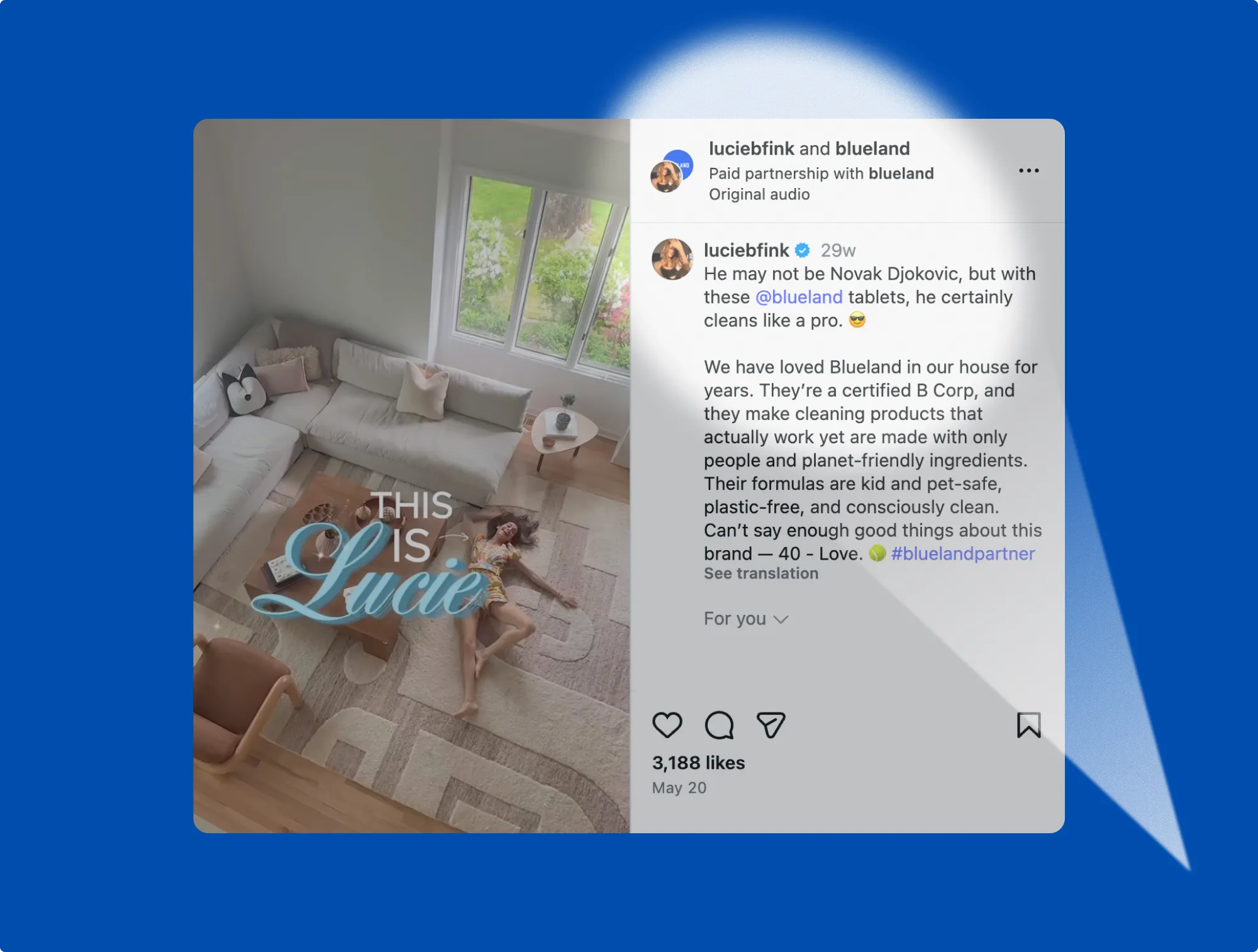
Stacking Influence: Blueland
The Strategy: Instead of betting on one expensive celebrity, eco-friendly brand Blueland went for volume and authenticity. They partnered with 211 micro-influencers over a three-month period in 2025 to post content demonstrating their products in everyday use. Each post used the “Paid Partnership” label, flooding the feed with genuine, relatable testimonials rather than polished studio ads.
The Result: The campaign delivered a massive 13:1 return on investment (1300% ROI). For every $1 spent, they saw $13 in revenue, driving approximately $129,000 in sales. The collective power of these micro-voices also contributed to a 4.7X increase in monthly Amazon sales during the campaign period.
The Result: The campaign drove 50,000 unique page views and 5,500 clicks directly from the Partnership Ads on Facebook. They also reported a 53% lower cost per lead and 44% lower customer acquisition cost when running creator led Partnership Ads plus its usual ad creative, compared to using its usual creative alone.
The transition to Partnership Ads is a signal that the era of “brand-first” advertising is yielding to “people-first” storytelling. The tools are there, the data is clear. The only question left is: are you ready to relinquish some creative control to our almighty creators?
We’re all a bit strange, aren’t we? Our satisfaction algorithms as consumers make no sense.
You can spend weeks polishing a “studio quality” ad with perfect lighting, exquisite copy and photoglorious models, only to have it outperformed by a grainy Android video of someone using your product while on a hoverboard. (Sorry Android, I actually love you).
We’re not just seeing a trend, we’re seeing ground zero change in advertising authenticity.
Clearly this is something Meta has paid attention to, and it’s what’s at the heart of Meta’s evolution of “Branded Content Ads” into Partnership Ads. This isn't just a rebrand or a UI update. It is a fundamental shift in how the platform allows you to scale authenticity. They are giving us the infrastructure to turn that grainy Android video into your account’s best performing asset.
Here is what you need to know about these developments, the data behind them, and how to use Partnership Ads without losing your sanity to a black hole of influencer permissions.
Key takeaways
The shift: Partnership Ads allow you to run ads from a creator’s handle (or a double header) to scale collaborations, replacing the previously clunky “Branded Content” flow.
The workflow: The new Partnership Ads Hub centralizes permissions and creative discovery, using AI to recommend content that is already performing well organically.
The strategy: Success means speaking the “Language of Reels.” Entertaining, digestible, and relatable content rather than polished TV-style spots.
What are Meta Partnership Ads? (and how are they different from Branded Content Ads?)
Previously, if you wanted to run an ad through a creator's handle, you had to navigate to the “Branded Content” tool. It worked, but it was often rigid and required a lot of back-and-forth for permissions with the creators.
Partnership Ads are the more flexible, scalable evolution of that tool. They allow advertisers to amplify content from a creator or partner’s handle to scale collaborations. These updates started to materialise late 2023 when Meta changed the name of this ad type and provided a native solution for dark posting (where a brand could run ads from a creator’s handle without the ad appearing on the creator’s organic feed).
Throughout 2024 and 2025, Meta has integrated AI into Partnership Ads, notably introducing signal stacking, meaning the ad algorithm can use both the creator and the advertiser handles to determine where ads are shown. It essentially “borrows” the creator's relevance score to help your ad find the right audience.
The most distinct visual change in Partnership Ads came in June 2025 when Meta started to allow Partnership Ads with single headers (the banner at the top of the ad).
You now have two powerful options:
Dual Header: The ad appears with both your brand name and the creator’s handle (e.g., Birch with Batman). This creates an immediate visual association between your brand and the trusted voice.
Single Header: The ad appears entirely from the creator’s handle (e.g., Batman), but is sponsored by you. This often looks and feels completely native to the feed.
Why the updates?
Meta isn’t making these updates just for the purpose of improving collaborative user experience. Their focus on developing Partnership Ads is a result of changes to short-form content consumption habits.
The data in this section of the article was originally shared at Meta Marketing Summit by Meta in Berlin, June 2025.
1. The “Reels” Factor
We often talk about “meeting customers where they are.” Right now, they are watching Reels.
>50% of time spent on Instagram is on Reels.
To win in this placement, you cannot speak the “Language of Ads.” You need to speak what Meta calls the “Language of Reels.” Content that is comedic, mesmerizing, or thought-provoking. It must entertain first and sell second.
According to Meta’s internal data, adding Reels ads that include the creative essentials and at least one additional creative element (human presence, text overlay, lo-fi content, or a ‘hook’ in the first few seconds) to business-as-usual campaigns led to a:
16% improvement in CPR.
13% higher ROAS.
29% higher conversion rate.
11% higher reach across Reels, Feed and Stories.
2. The Trust Gap
Traditional ads are suffering from a trust deficit. In contrast, creator content acts as a bridge.
76% of Gen Z are open to hearing about brands via a content creator.
3 in 4 social media users prefer creator content over “traditional” ads.
Crucially, this trust converts. 71% of consumersmake a purchase within a couple of days after seeing creator content.
By moving to Partnership Ads, Meta is giving you a direct line to leverage this trust. The data from their studies is hard to ignore. Reportedly, including Partnership Ads in your campaigns can lead to a 19% reduction in CPAs and a 13% increase in click through rate.
Strategic fundamentals: how to run these ads right
It is easy to think of this as just influencer marketing, but from a performance perspective, it benefits from paying attention to these specific Partnership Ads Hub strategies.
1. Actually use the Partnership Ads Hub
The new workflow in Ads Manager (under All Tools > Partnership Ads Hub) is designed to be your command center. No need to go back-and-forth with creators about permissions via email!
The most powerful new feature here is the “Recommended” tab. Meta’s AI analyzes content that is tagging your brand and suggests posts that are already performing well organically. This is your low-hanging fruit. If a post is already getting organic traction, putting ad spend behind it via a Partnership Ad is a pretty safe bet.
2. Embrace “Limitless Diversification”
A common mistake is brands focusing too much on one “hero” influencer and running that same creative into the ground.
The data suggests a “diverse micro-moments” approach works better. This means working with a variety of creators with different demographics, styles to capture different perspectives of your product. You aren't looking for one perfect ad, you're looking for a library of authentic voices.
3. Dynamic Identity
One of the most helpful recent updates is the Dynamic Identity option. You can allow Meta’s AI to dynamically choose whether to show the “Single Header” (creator only) or “Double Header” (brand and creator) based on what it predicts will perform best for that specific viewer. It removes the guesswork of “will this person trust me or the influencer more?”
Partnership Ads in the wild
Here are three brands that have used Partnership Ads to aid everything from targeted brand awareness to increased conversion rates.
“Limitless Diversification”: H&M
The Strategy: H&M moved away from just using traditional fashion shoots and embraced “limitless diversification.” They worked with creators to produce Reels that showed summer wear in diverse, real-life contexts such as beach days, city walks, and vacation moments.
The Result: By layering these Partnership Ads on top of their usual campaigns, they achieved a 2X incremental ROAS and a 94% improvement in cost per person reached.
Stacking Influence: Blueland
The Strategy: Instead of betting on one expensive celebrity, eco-friendly brand Blueland went for volume and authenticity. They partnered with 211 micro-influencers over a three-month period in 2025 to post content demonstrating their products in everyday use. Each post used the “Paid Partnership” label, flooding the feed with genuine, relatable testimonials rather than polished studio ads.
The Result: The campaign delivered a massive 13:1 return on investment (1300% ROI). For every $1 spent, they saw $13 in revenue, driving approximately $129,000 in sales. The collective power of these micro-voices also contributed to a 4.7X increase in monthly Amazon sales during the campaign period.
The Result: The campaign drove 50,000 unique page views and 5,500 clicks directly from the Partnership Ads on Facebook. They also reported a 53% lower cost per lead and 44% lower customer acquisition cost when running creator led Partnership Ads plus its usual ad creative, compared to using its usual creative alone.
The transition to Partnership Ads is a signal that the era of “brand-first” advertising is yielding to “people-first” storytelling. The tools are there, the data is clear. The only question left is: are you ready to relinquish some creative control to our almighty creators?
Whether you use the single header or dual identity (co-branded) ad options in Meta Partnership Ads, both options allow you to leverage the shared reach of both accounts to improve the reach and optimization of ads!
What is the difference between “Whitelisting” and “Partnership Ads?”
“Whitelisting” is the older industry term that describes being able to post an ad without it appearing on a creator’s organic feed. Partnership Ads is Meta's official, updated infrastructure. It is more secure, requires less manual permission work (no sharing passwords!), and provides better data transparency for brands, creators and consumers.
Do I need the creator's login details for Partnership Ads?
No. You can use the Partnership Ads Hub in Ads Manager to request the permissions you need, or the creator can generate a “Partnership Ad Code” from their end to grant you access safely.
Can I use Partnership Ads for static images?
Yes, you can. However, given that >50% of time spent on Instagram is on Reels, video assets currently offer the highest potential for engagement and performance improvements.
Does the “Paid Partnership” label hurt performance?
Data from Meta suggests otherwise. The transparency actually builds trust. The “authenticity edge” comes from the user knowing the creator is endorsing the brand, rather than the brand trying to “trick” them into watching an ad.
Are Android videos really that bad?
I wouldn’t know, I refuse to watch them. I’m just joking I loooooovveee my Pixel and I don’t know why I say things like this.
Scott Colenutt
Scott is an experienced marketer, copywriter, podcaster and consultant with expertise spanning everything from performance marketing and UX to data analytics and AI strategy. He loves exploring the intricacies of marketing and turning complex, technical subjects into user friendly content.