Want to keep your Google Ads costs under control? Try Automated Rules in Birch.
Before spending a single dollar on your Google Ads, you want to know one important thing: how much will it cost you?
It’s the most reasonable question, but there’s no one-size-fits-all answer. Google Ads cost depends on many factors, including your industry, pricing model, and campaign strategy.
However, you can use reliable benchmarks as a reference point to understand what’s typical, assess your performance, and make informed adjustments.
To give you a complete picture of how Google Ads budgeting works, this guide covers all pricing models, campaign types, and recent industry benchmarks, including levers that actually drive costs up or down.
If you want to go deeper on advanced Google Ads strategy, explore our Google Ads certification guide.
How Google Ads pricing actually works
Google Ads are auction-based. You set a budget and place a bid. When someone triggers a search, Google decides which ads to show from all advertisers competing for that query.
The winner isn’t simply whoever bids the most. Google also factors in your Quality Score, a diagnostic tool that measures how relevant your ad, keyword, and landing page are compared to other advertisers.
Your bid and Quality Score combined are what determine your Ad Rank, which decides whether your ad shows and where.
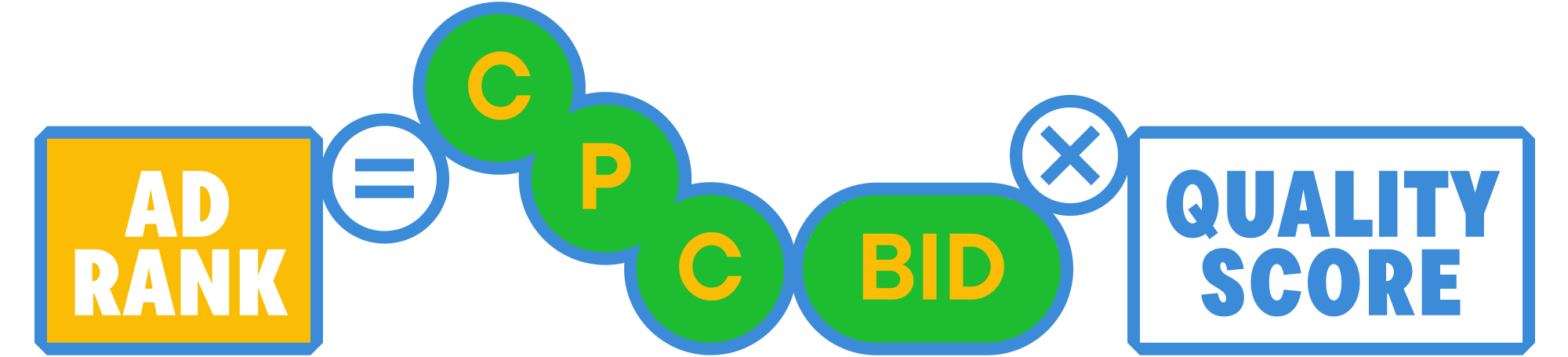
This is why two advertisers targeting the exact same keyword can end up paying very different amounts. An advertiser with a high Quality Score can outrank someone spending more than them simply because their ad is more relevant to what the user is looking for.
At the same time, there’s also a difference between what you bid and what you actually pay. Google uses what’s called a second-price auction. You don’t pay your full bid—you only pay enough to beat the advertiser below you. So if you bid $5 and the next competitor’s effective bid is $3, you pay $3.01, not $5.
Google Ads pricing models explained
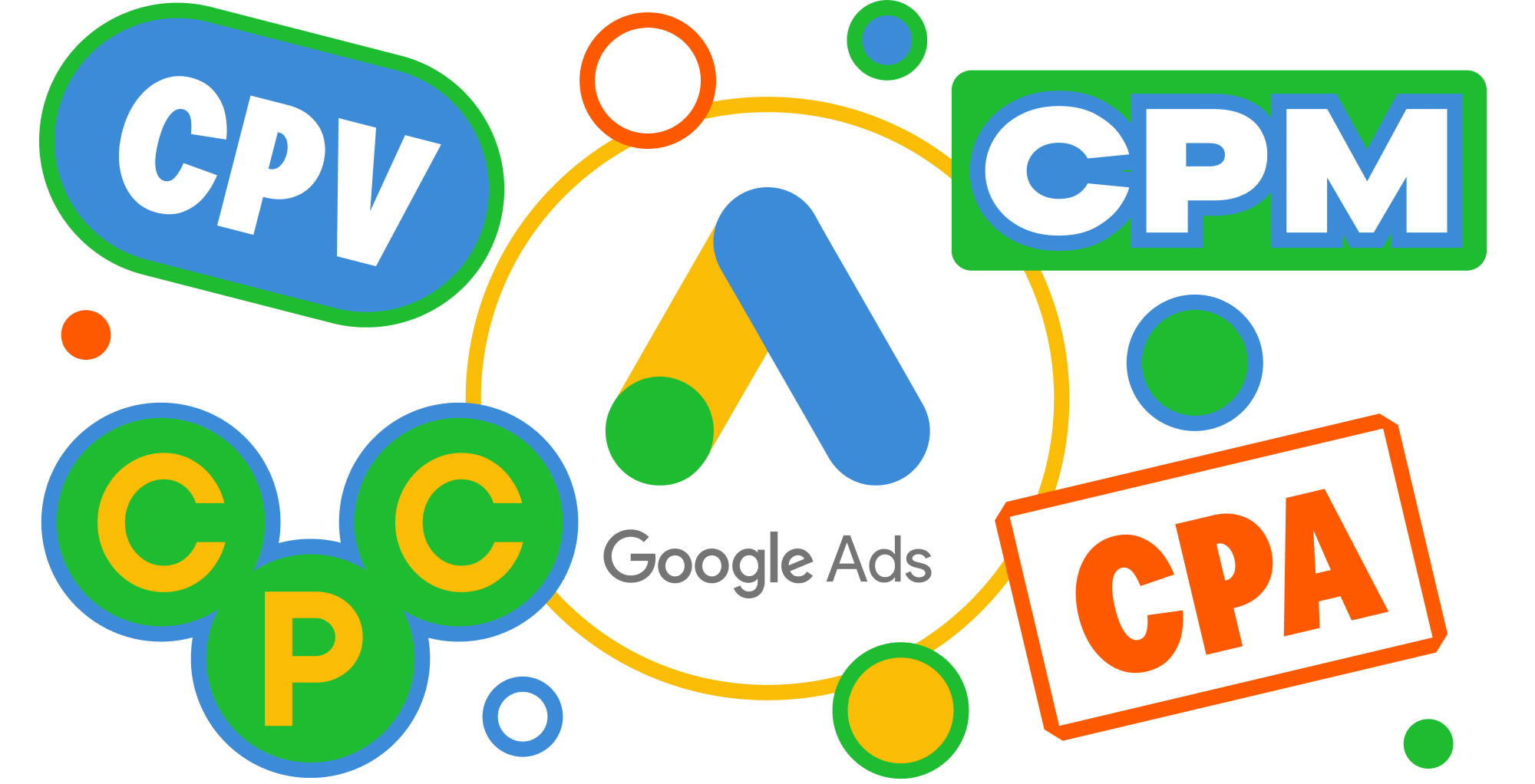
Google Ads supports four core pricing models:
CPC (cost per click)
CPC is the dominant pricing model for Search campaigns, Shopping ads, and most Display campaigns.
You pay only when someone clicks your ad, and you can receive impressions for free. This makes CPC the preferred model when your goal is traffic with measurable intent.
CPM (cost per 1,000 impressions)
CPM pricing means you pay for reach. You’re charged per 1,000 times your ad is shown, regardless of whether anyone clicks.
This pricing model appears in Display Network campaigns and YouTube video campaigns where the goal is visibility, awareness, and retargeting.
CPV (cost per view)
CPV is specific to YouTube video campaigns.
You’re charged when a viewer watches a defined portion of your ad (typically 30 seconds for skippable in-stream ads, or the full ad if it’s shorter than 30 seconds). You’re only charged if a viewer doesn’t skip your ad within the first five seconds or engages with it by clicking.
CPA (cost per action)
CPA is more of a bidding strategy. With Target CPA bidding, you tell Google what you want to pay per conversion and let Google’s auction algorithm optimize bids across your campaigns to hit that target. You still pay per click, but the algorithm adjusts bids up or down based on signals that predict conversion likelihood.
Additional note: Performance Max campaigns combine Search, Display, YouTube, Shopping, Gmail, and Maps into a single AI-driven campaign. There’s no single pricing model. Google’s algorithm allocates spend automatically across all placements based on your conversion goals, asset quality, and the historical data in your account.
Google Ads costs by campaign type
Below is a comprehensive breakdown of how different campaign types impact Google Ads costs.
Search ads
Search ads are the most intent-driven campaign type in Google Ads and typically the most expensive.
When someone searches for the keyword you’re targeting, they’re actively looking for something. That means advertisers are willing to pay more to show up.
According to WordStream Google Ads Benchmark 2025:
- Average CPC: $5.26 (legal services highest; arts & entertainment lowest)
- Average CTR: 6.66% (higher in arts & entertainment; lower in dental and legal)
- Average CVR: 7.52% (highest in automotive; lowest in finance and insurance)
- Average CPL: $70.11 (legal highest at ~$132; auto repair lowest at ~$29)
Display ads
Display ads appear across Google’s network of 2 million+ websites, apps, and Gmail placements. The audience is large, and they’re browsing rather than searching for keywords.
That’s why Display ads cost less. It also works best for specific goals like building awareness with new audiences and re-engaging people who have already interacted with your brand.
According to Store Growers’ Google Ads Benchmark for 2026:
- Average CPC: $0.63 (e-commerce at $0.45 lowest; consumer services at $0.81 highest)
- Average CTR: 0.46% overall (B2B lowest; real estate highest at 1.08%)
- Average CVR: 0.57% (3.34% dating and personals; 0.43% home goods)
- Average CPA: $48.96 (technology at $133.52; auto at $33.52)
Shopping ads
Shopping ads are CPC-based and built specifically for e-commerce.
Instead of keyword-triggered text ads, Shopping shows product images, prices, and titles directly in search results so users know what they’re clicking before they click.
Costs vary by product category and competition level. According to Store Growers’ Ads Benchmark for 2026, here’s what Shopping ads look like on average:
- Average CPC: $0.66
- Average CTR: 0.86%
- Average CVR: 1.91%
- Average CPA: $38.87
YouTube/Video ads
YouTube pricing depends entirely on the ad format—specifically, whether it’s skippable or not.
Skippable formats charge per view (CPV). Non-skippable formats charge per 1,000 impressions (CPM). That distinction has a significant impact on cost and how you measure performance.
Store Growers published these YouTube Ads Benchmarks for 2026, so you can use them to compare your costs:
- Skippable in-stream (CPV): $0.05–0.10
- Non-skippable in-stream: runs ~$6–10 per 1,000 impressions
- YouTube Shorts CPM: $4 average
- Average view rate (all formats): 31.9%
Performance Max
Performance Max runs across Search, Display, YouTube, Shopping, Gmail, and Maps in a single campaign.
Google’s algorithm allocates spend automatically across all placements based on your conversion goals, asset quality, and the historical data in your account.
App campaigns
App campaigns optimize for installs (cost per install) or in-app actions, running automatically across Search, Google Play, YouTube, Discover, and Display. Google controls all placement decisions, so creative quality is one of the few levers advertisers can directly influence.
CPI varies widely depending on app category, location, and how much a loyal user is worth to the business:
- Average CPI: $2.65–3.50, depending on targeting and placement
- Meta Platforms (Instagram, Facebook): approximately $3.75 on Facebook and slightly higher on Instagram, reflecting its younger, more engaged audience
- TikTok: cost-effective for reaching Gen Z users with an average CPI of $2.88

What drives Google Ads costs up or down?
Industry significantly affects Google Ads pricing. Some verticals are structurally expensive because the economics justify it. Legal, finance, insurance, and healthcare, for example, all see high CPCs because the value of a single converted customer is high, and advertisers are competing for the same queries.
The single biggest cost lever you directly control is Quality Score. Google rates every ad on a scale of 1–10 based on:
- Keyword relevancy
- Landing page quality
- Your expected click-through rate
The higher your score, the less you pay for the same placement.
Bidding strategy and targeting decisions also shape how costs behave. With manual bidding, you set a maximum amount you’re willing to pay per click. You can also let Google’s algorithm decide with smart bidding. This can work well when your account has enough conversion data to learn from.
Also consider the breadth of your targeting. Broader targeting typically lowers average CPC because you’re spread across a larger query pool. However, it often reduces conversion quality. Narrowing your targeting does the opposite. You’ll pay more per click, but the people clicking are more likely to convert.
Broad targeting makes sense when you’re building awareness. Opt for tighter targeting when you’re trying to drive conversions.
Costs also fluctuate depending on context, including where the user is, what device they are using, and when they are searching.
Seasonality adds another layer of variation, affecting costs in predictable ways. Understanding seasonal cost fluctuations helps you plan ahead.
According to Focus Digital’s industry report, advertisers can expect higher CPCs in April and May as competition increases around peak holiday season. September is consistently one of the most competitive months as advertisers prepare for Q4 holiday campaigns. February tends to be one of the quieter and most cost-efficient months for non-seasonal businesses.
How much should you budget for Google Ads?
There’s no universal minimum for how much you should budget for Google Ads, but it helps to take some factors into account.
Most advertisers blur the distinction between learning spend and scaling spend.
The test budget is what you spend to collect enough conversion data to know what’s working and what’s not. A practical threshold is 30–50 conversions before drawing conclusions about what to scale or pause.
Scaling budget comes once you have a CPA you can work with and a campaign structure that’s been proven. Smart bidding needs enough daily budget to function. Google’s general guidance is to set the daily budget at approximately 2–3x your Target CPA, so the algorithm can participate in enough auctions to optimize.
How much you need to start also depends on where you are as an advertiser. Newer advertisers need enough budget to collect conversion data in competitive industries. Too little spend means data trickles in too slowly to be useful.
Established advertisers are better off working backward from their target CPA and monthly lead goals. If you know what a conversion costs and how many you need, the budget calculates itself.
It’s worth noting that you set a daily budget, but Google manages spend across the month. It may spend up to 2x your daily budget on high-demand days and less on slower ones, balancing this over time.
If your campaign often runs out of budget mid-afternoon, it’s usually a sign you need to increase it. If you’re running multiple campaign types, put the most budget where intent is highest. Search first, Shopping next for e-commerce, then Display and YouTube for awareness and retargeting. Add Performance Max once you have enough conversion data for it to learn from.
Google Ads benchmarks 2026: CTR, CPC, conversion rate, and CPA by industry
Use these benchmarks to compare CTR, CPC, CR, and CPA against different industries, and see how you can improve your own campaigns.
Average CTR by industry: Search and Display
| Industry | Search network CTR | Display network CTR |
|---|---|---|
| Advocacy | 4.41% | 0.59% |
| Auto | 4.00% | 0.60% |
| B2B | 2.41% | 0.46% |
| Consumer services | 2.41% | 0.51% |
| E-commerce | 2.69% | 0.51% |
| Education | 3.78% | 0.53% |
| Finance and insurance | 2.91% | 0.52% |
| Health and medical | 3.27% | 0.59% |
| Real estate | 3.71% | 1.08% |
Average CPC by industry: Search
| Industry | Average CPC |
|---|---|
| Advocacy | $1.43 |
| Auto | $2.46 |
| B2B | $3.33 |
| Consumer services | $6.40 |
| E-commerce | $1.16 |
| Education | $2.40 |
| Finance and insurance | $3.44 |
| Health and medical | $2.62 |
| Real estate | $2.37 |
| Technology | $3.80 |
| Travel and hospitality | $1.53 |
Average conversion rate by industry
| Industry | Average CR |
|---|---|
| Advocacy | 1.96% |
| Auto | 6.03% |
| B2B | 3.04% |
| Consumer services | 6.64% |
| E-commerce | 2.81% |
| Education | 3.39% |
| Finance and insurance | 5.10% |
| Health and medical | 3.36% |
| Real estate | 2.47% |
| Technology | 2.92% |
| Travel and hospitality | 3.55% |
Average CPA by industry
| Industry | Average CPA/CPL |
|---|---|
| Advocacy | $96.55 |
| Auto | $33.52 |
| B2B | $116.13 |
| Consumer services | $90.70 |
| E-commerce | $45.27 |
| Education | $72.70 |
| Finance and insurance | $81.93 |
| Health and medical | $78.09 |
| Real estate | $116.61 |
| Technology | $133.52 |
| Travel and hospitality | $44.73 |
Source for all data mentioned above: State Growers Google Ads 2026 Benchmark
Remember that benchmarks are reference ranges. Use them to compare your performance, identify gaps, and guide optimization decisions. To summarize:
- If your CTR is well below the industry average, your ad copy or keyword–ad alignment likely needs attention.
- If CTR is solid but the conversion rate is weak, the problem is typically the landing page, not the campaign.
- If CTR and conversion rate are both strong but CPA is high, look at keyword intent. You may be buying research clicks instead of targeting purchase-ready queries.
- If your CPC is above your industry rate, Quality Score is probably the right place to look.
How to get more from your Google Ads budget
Improving your Google Ads performance often comes down to tightening the fundamentals.
One of the highest-leverage areas is Quality Score. You can improve it by tightening the relevance between your keywords and ad headlines, making sure your landing page delivers what the ad promises, and removing keywords that don’t belong in an ad group.
It’s also important to control where your ads appear. Negative keywords stop your ad from appearing in irrelevant searches, so you’re not paying for clicks that are unlikely to convert.
Want to learn deeper tactics from a paid search pro? Check out “Inside Paid Search with Inna Leiter” for real-world strategies.
At the same time, bids should reflect how performance varies. If your mobile conversion rate is lower than for desktop, you’re probably overpaying for mobile clicks. The same applies to location and time. If some regions convert worse than others or your campaigns convert best at a particular time of day, adjust your bids accordingly.
As campaigns scale, the challenge becomes keeping up with performance changes. Keeping up with multiple campaigns at once increases the risk that things will slip. A CPA could creep too high. A budget could run out too early. A top performer might not be scaled.
That’s exactly what Birch’s Google Ads automation is built for.
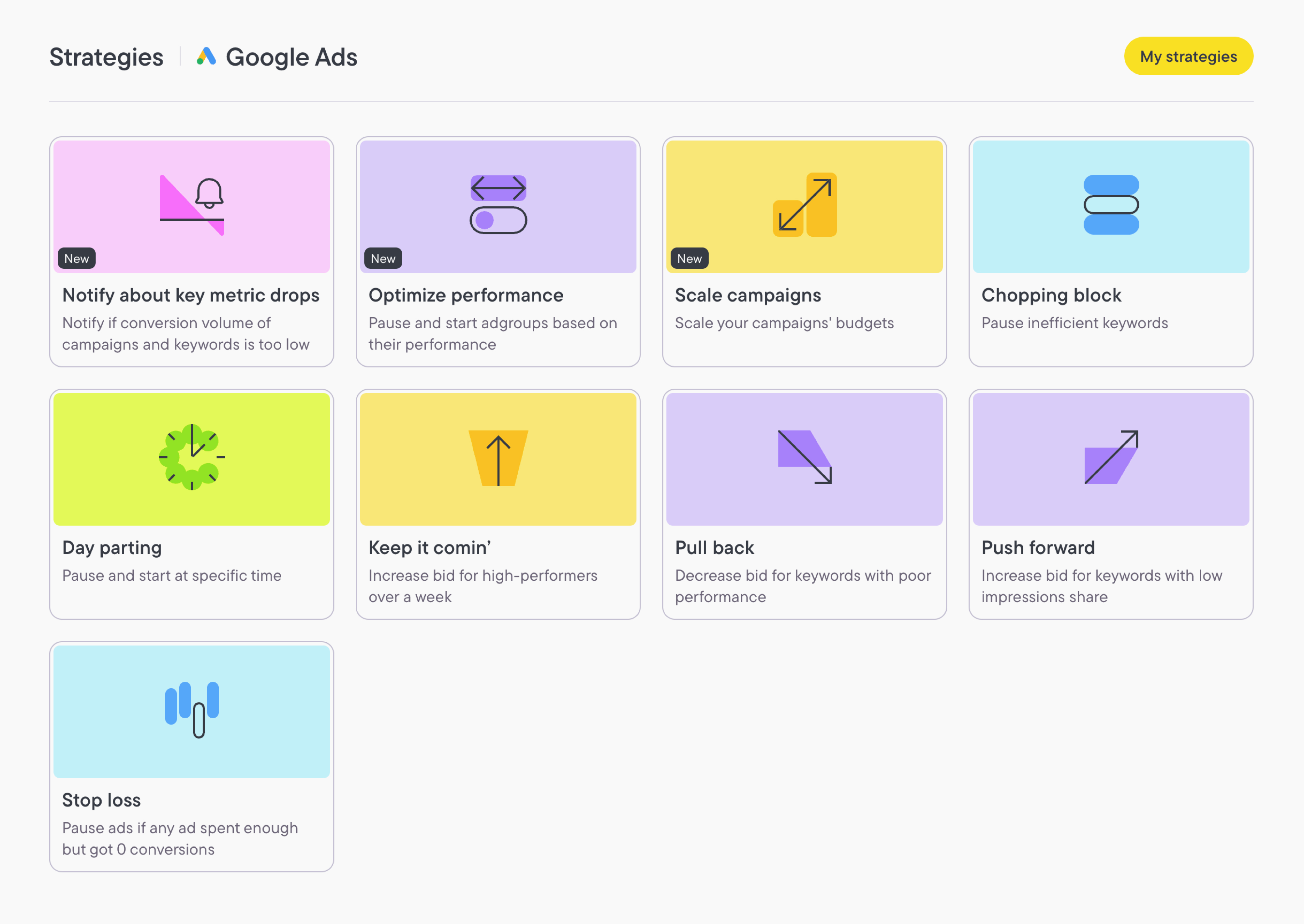
With Birch, you can build automations for campaigns, ad groups, ads, and keywords across Search, Display, Shopping, and multichannel ads, all through a drag-and-drop interface.
Automated Rules let you set conditions that trigger actions automatically, so your campaigns respond to performance data in real time rather than waiting for your next check-in.
Keep your Google Ads costs under control
Google Ads costs are a function of industry economics, customer lifecycle, and campaign strategies. To get maximum return from your investment, you need to first understand what’s driving your costs and manage those variables with discipline.
Treat the benchmark data in this guide as your starting point. Track your performance against these benchmarks as campaigns scale to identify what’s working and where to improve.
Keeping up with all this manually becomes increasingly difficult. Performance shifts, budgets drift, and opportunities to scale can be missed.
Automation fills that gap by pausing underperformers before they drain budget, scaling winners at the right moment, and applying adjustments based on real data rather than a once-a-week check-in.
Run smarter Google Ads campaigns with Birch.
Key takeaways
- Google Ads operates on an auction basis. Together, your bid and Quality Score determine if your ad shows and where.
- You rarely pay your full bid. Google’s second-price auction means you only pay just enough to beat the next advertiser.
- Average CPC on Search is $5.26, but ranges from $1.16 in e-commerce to $6.40 in consumer services. Industry is the biggest cost driver.
- Display ads average $0.63 CPC, and Shopping ads average $0.66.
- YouTube skippable ads cost $0.05–0.10 per view. Non-skippable formats run $6–10 CPM.
- There’s no minimum budget, but Google recommends setting your daily budget at 2–3x your target CPA, so the algorithm has enough room to optimize.
- Automation reduces wasted spend. As campaigns scale, tools like Birch help you act on performance data in real time, preventing budget drift and capturing opportunities to scale.