AI Overviews have changed how paid search works. Google now interprets the query, summarizes the intent, and occupies the most valuable space on the SERP before traditional ads and organic results compete for attention.
Visibility now depends on where the ad sits in relation to AI-generated answers.
For performance marketers, this shift affects the fundamentals. Informational queries are answered directly, reducing click volume. High-intent terms are becoming more competitive as spend consolidates. Impression share metrics tell an incomplete story because attention is redistributed inside the page. Even position #1 can deliver less incremental value when it sits beneath an AI summary.
Google has expanded ads into and around AI Overviews, and integration is increasing. This environment rewards advertisers who restructure their keyword strategy, adjust bidding logic, and monitor performance at the query level. In contrast, those who assume historical benchmarks still apply may not get the results they are aiming for.
This guide walks you through what to adjust inside your account to protect and grow ROI.
Key takeaways:
- Ad position alone no longer determines exposure. Placement relative to the AI summary influences click probability and performance.
- When AI summaries answer informational queries directly on the SERP, fewer users need to click. More budget and competition concentrate around keywords that are closer to a purchase decision.
- Stable impressions can mask declining CTR when ads render below AI summaries. This means query-level intent analysis becomes essential.
- As spend consolidates into converting terms, CPC volatility increases in competitive verticals.
- Shopping placements and ads embedded in AI summaries rely heavily on feed quality, structured data, and strong creative.
- Intent segmentation, disciplined budget allocation, and automated monitoring protect performance as AI-driven layouts expand.
Where ads actually appear in AI Overviews
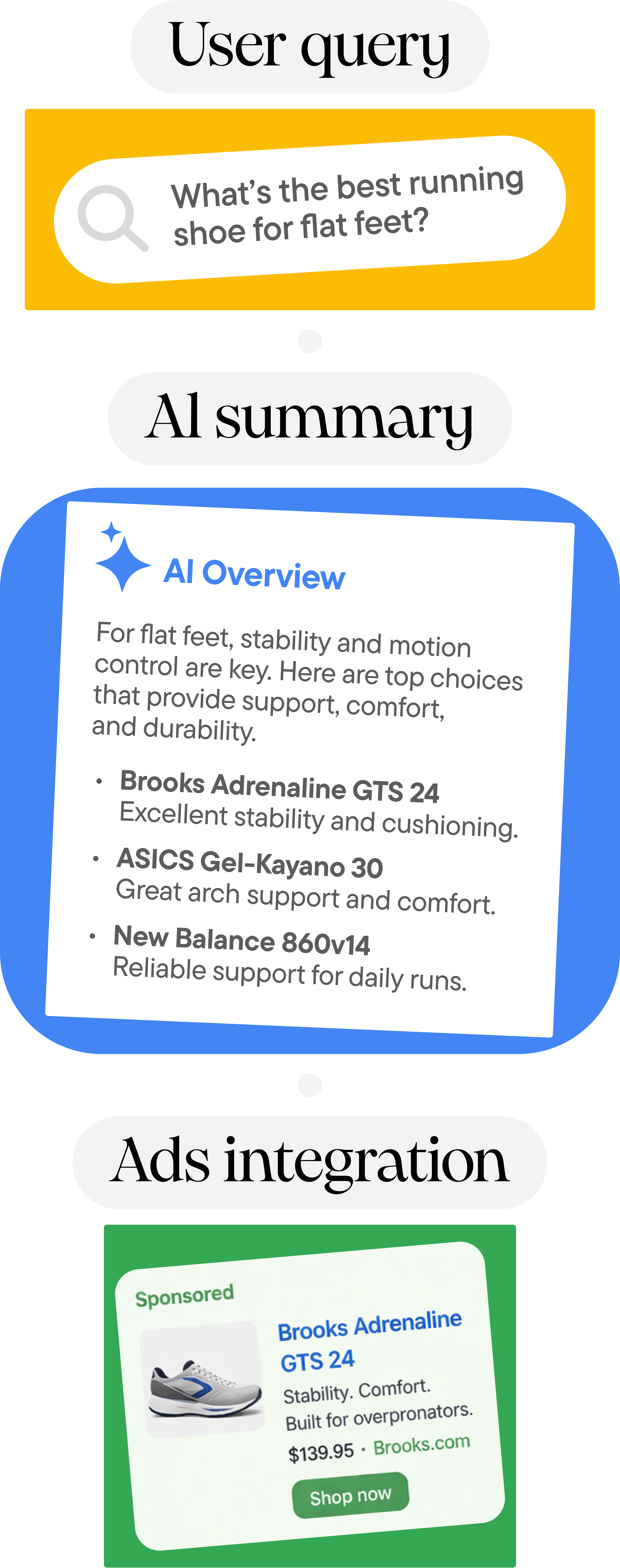
AI Overviews split the SERP into three paid environments: above the summary, embedded within the summary, and below the summary. Each placement has a different visibility weight and different performance implications.

Three primary ad formats are currently surfacing:
- Standard text search ads: Render either above or below the AI summary, depending on intent.
- Shopping ads and product listing units: Increasingly embedded within the AI-generated answer itself.
- Contextual sponsored links: In some cases, these appear alongside cited sources inside the summary.
Each format behaves differently in terms of auction dynamics and click behavior.
Text ads continue to be position-sensitive. Shopping placements depend heavily on feed quality and asset depth. Contextual placements rely on how Google clusters commercial intent within broader queries.
The layout is dynamic and primarily driven by intent classification:
- High-commercial and transactional queries: Ads often appear above the AI summary. Google prioritizes searches with clear purchase intent, which concentrates competition in the first visible ad slot.
- Informational or mixed-intent queries: The AI Overview often appears first. Paid ads follow underneath. In these cases, the summary captures most of the initial attention before users reach the paid listings.
- Embedded placements: Some searches generate product cards or sponsored recommendations directly inside the AI summary. For example, “best CRM for ecommerce brands” may produce a comparison list where a sponsored platform appears within the AI-generated answer. In these cases, exposure depends more on how Google interprets the query context than on traditional ad rank.
Industry reporting and official updates from Google confirm that these formats are still expanding.
Position metrics alone no longer give you a clear picture of exposure. If ads appear below the AI summary, users have to scroll to see them. That makes query intent more important, because it determines where ads appear and which keywords attract the most competition.
Two keywords with similar CPCs and impression share can have different outcomes depending on where ads render relative to the AI summary.
Ads appearing beneath the AI block rely heavily on scroll behavior.
The more the summary directly satisfies the user’s needs, the more exposure declines. In many accounts, this shows up as stable impression volume but declining CTR. Auctions remain competitive while the pool of engaged users shrinks, which can push effective CPC higher.
In this placement, creative quality becomes more important. Extensions, strong asset coverage, and differentiated copy help ads stand out when they appear below the summary.
How AI Overviews have changed ad visibility
AI Overviews changed the economics of attention on the SERP, and that shift shows up in performance data.
Before AI summaries occupied premium space, ad rank translated into a predictable click share. Informational queries scaled traffic. Mid-funnel keywords fed remarketing pools. Position one reliably delivered incremental volume.
Now, placement relative to the AI block and the summary’s comprehensiveness determine exposure.
This pattern is consistent across mature accounts. Impression levels may remain stable while CTR compresses on informational and mixed-intent queries. High-commercial clusters absorb more competitive pressure as advertisers consolidate spend into keywords that still convert reliably. Demand concentrates into fewer, higher-intent queries.
Keran Smith, Co-Founder and Chief Marketing Officer at LYFE Marketing, describes the same dynamic in live accounts, noting “increased visibility but fewer click-throughs,” with informational queries most affected when AI Overviews appear.
Cost inflation follows that concentration. As exploratory traffic declines, budget shifts toward revenue-dense auctions. Competition intensifies inside those clusters, raising CPC. Informational terms continue entering auctions but generate fewer engaged sessions, increasing effective CPC.
Impact varies by intent mix. Accounts that are heavily dependent on educational or research-stage traffic tend to feel the pressure first.
This is common in SaaS, B2B, and lead-generation campaigns. E-commerce and local service advertisers often see more stability, particularly when campaigns capture high-intent product searches or rely on strong shopping feeds.
As Himanshu Agarwal, Co-Founder at Zenius Ventures, notes, AI Overviews also reshape the visual hierarchy of results pages: “The Overview tends to push paid ads lower in the scroll depth and satisfies informational curiosity instantly,” which contributes to the CTR declines many advertisers are observing.
Search behavior is shifting from exploration to decision-stage filtering. Traffic becomes less evenly distributed, and performance depends on the quality of intent rather than impression volume.
When AI answers replace clicks: the real impact
You see the impact most clearly when the AI summary fully answers the user’s question.
When users receive comparisons, recommendations, and contextual explanations directly on the SERP, fewer sessions move into the research phase. Click volume contracts—but the upside is that the remaining traffic is more qualified.
This reshapes funnel math. Top-of-funnel contribution shrinks. Bottom-funnel auctions intensify. Conversion rates on surviving clicks may improve, but the total opportunity narrows.
Historical CTR benchmarks become less useful as click distribution shifts. Impression share alone also tells you less about actual performance. Accounts built around scale need to focus more on high-intent clusters, while advertisers focused on efficiency should expect stronger competition on keywords that drive real conversions.
AI Overviews restructure the distribution of demand. Operators who adjust early are able to stay in control of their cost structure and budget allocation.
Google’s stated strategy
Google positions AI Overviews as the next phase of search evolution. In its official documentation and Ads updates, Google frames AI summaries as a way to help users make decisions faster while creating new commercial entry points for advertisers.
Sponsored product cards, contextual placements, and shopping integrations inside AI answers are presented as extensions of existing Search and Shopping campaigns. Ads are integrated into the AI experience.
This direction protects revenue density as traditional organic listings lose visual dominance. It also lets Google interpret broader queries through AI-driven intent clustering and surface ads aligned with that inferred intent. Monetization now sits inside the summarized answer.
Google recommends aiming for broad keyword coverage across intent stages and relying on Smart Bidding to capture AI-interpreted demand. The company is also placing more emphasis on asset quality—extensions, structured data, and optimized product feeds—because contextual placements depend on strong inputs.
Shopping campaigns and Performance Max are central to this shift. Both align naturally with AI-shaped results because they combine automation, feed data, and cross-surface delivery.
The strategic signal is consistent: success depends less on rigid keyword micromanagement and more on high-quality signals that the system can distribute dynamically.
What to expect in 2026
AI Overview coverage is likely to expand in 2026 to include more mixed-intent and mid-funnel queries, increasing the share of impressions driven by AI-generated layouts.
Ad formats embedded within summaries will likely evolve, placing greater weight on feed quality, structured data, and contextual alignment. Exposure may depend less on static rank and more on how well campaigns align with AI-interpreted intent.
As exploratory traffic is increasingly answered directly on the SERP, auction pressure will concentrate further around revenue-dense keywords. Bottom-funnel terms may absorb more budget, which could increase CPC volatility, especially in margin-sensitive industries.
Measurement may become more complex as layouts vary more from query to query. Query-level intent segmentation and placement-aware analysis will become increasingly important for performance teams managing meaningful spend.
As AI integration continues to widen, structure and automation will play a larger role in helping you maintain stable performance.
Optimization strategies that actually work
You don’t need to abandon search to adapt to AI Overviews—but you will likely need to restructure how you prioritize keywords, allocate budget, and measure performance.
The accounts that maintain efficiency in this environment share one trait: they optimize by intent layer and placement sensitivity, not by legacy benchmarks.
Strategy 1: Overhaul your keyword strategy
The first step is a visibility audit.
Review informational and mixed-intent queries that now trigger AI summaries. Identify which of those queries are fully answered on the SERP and which still require the user to click to complete the task. When the AI Overview directly resolves the core question, traffic potential declines regardless of ad rank.
You don’t need to pause all informational keywords, but it’s a good idea to distinguish between queries that generate curiosity and queries that generate continuation.
Long-tail and niche queries often have stronger click behavior because AI summaries are less comprehensive in specialized contexts.
Specific problem statements, comparison modifiers, and constraint-based searches (“for startups under 10 employees,” “for high-risk industries,” “for EU compliance”) often still generate clicks.
Keyword strategy in the AI Overview era shifts from chasing more search volume to focusing on higher-intent queries.
Strategy 2: Adjust bidding and budget allocation
Placements have become more sensitive. When ads render above the AI summary, they capture disproportionate attention. When they appear below it, users have to scroll before they see them.
That reality changes bidding logic.
Keywords that consistently appear above the AI summary often justify more aggressive bidding because they still capture the most attention. Informational queries that appear below the summary may require lower bids or tighter budgets.
As a result, more budget should go toward keywords with clear buying intent and reliable conversions. This often results in a tighter, more bottom-heavy portfolio.
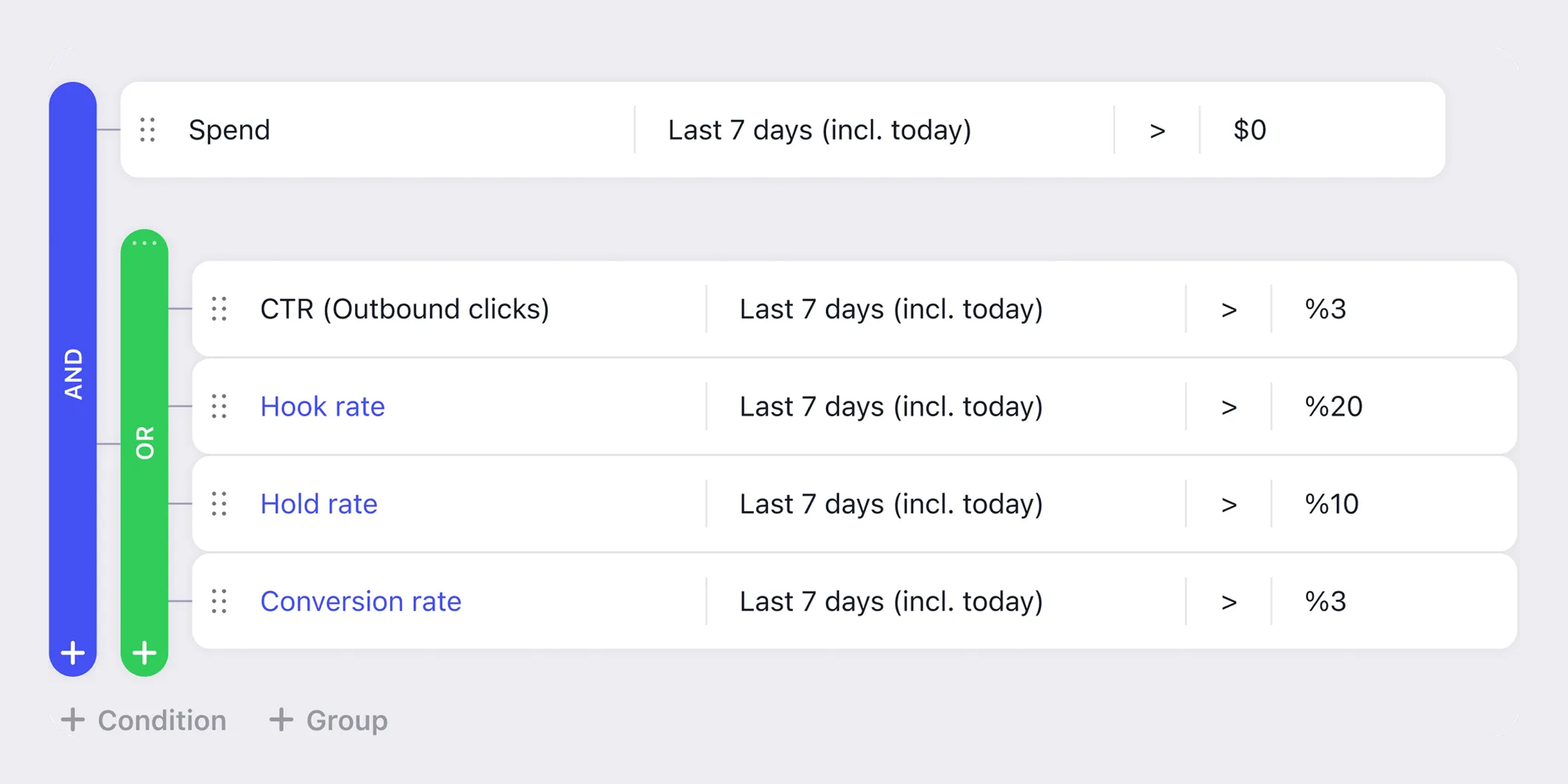
This makes automation critical. With Bïrch, you can implement rule-based bid adjustments tied to top impression share thresholds, automatically shift budget when CTR falls beyond defined limits, and trigger alerts when conversion rates drift outside acceptable ranges.
Instead of reacting weeks later to blended CPA changes, you can respond earlier by acting on performance signals as they appear.
Strategy 3: Optimize ad formats and assets
In an AI-shaped SERP, assets carry more weight.
Extensions increase occupied space and reinforce differentiation, especially when ads appear below the summary. Sitelinks, callouts, structured snippets, and price extensions improve visibility density and help users decide whether to click.
Shopping campaigns deserve particular attention. Embedded product units inside AI summaries rely heavily on feed quality. Titles, structured attributes, imagery, and categorization influence whether products appear in those placements.
This is where performance becomes more sensitive to message precision and asset depth. The copy must immediately persuade the user to click. Specific value propositions, clear differentiation, and tightly aligned intent matching carry more weight than broad category claims.
Optimization now involves more than headline testing. The strength of the full set of ad assets matters.
Strategy 4: Restructure campaigns by intent
Legacy campaign structures often mix informational, commercial, and transactional queries under the same bidding strategy. AI Overviews show us why that model is inefficient.
When you separate campaigns by intent cluster, you can stay in control of bid aggressiveness and budget tolerance. Transactional clusters can justify higher bids and tighter CPA targets. Informational clusters require more cautious spending and clearer contribution tracking.
Performance Max can complement this structure when you feed it strong signals and clean segmentation. Automation should always be aligned with intent clarity.

Bïrch supports this segmentation by enabling bid logic and budget controls tied to custom metrics. You can create intent-level performance views and deploy adjustments automatically when specific clusters underperform.
Strategy 5: Upgrade measurement and monitoring
AI Overviews increase the gap between impressions and meaningful visibility. Monitoring CTR becomes essential because impression share alone doesn’t always reflect how visible ads really are.
Conversion rate also becomes more important. As traffic volume contracts and click intent strengthens, quality often matters more than quantity. Even with fewer sessions, revenue targets may still be achievable if those clicks are more qualified.
Lost impression share continues to be a useful diagnostic, particularly on high-commercial clusters where placement above the summary can drive a large share of attention.

Closer monitoring helps teams spot performance changes earlier. Bïrch’s reporting layer enables intent-level CTR tracking, impression share monitoring across priority campaigns, and automated alerts when KPIs drift past defined thresholds.
In this environment, performance teams need closer monitoring and faster adjustments to campaign structure.
It’s time to adapt
AI now mediates intent before your ad enters the auction. Visibility depends on placement relative to the summary and on how Google structures the query experience.
Advertisers who segment campaigns by intent, concentrate budget on high-value keywords, and monitor performance closely are more likely to maintain strong results. Teams that rely on slower optimization cycles may find it harder to maintain efficiency as attention on the results page becomes more limited.
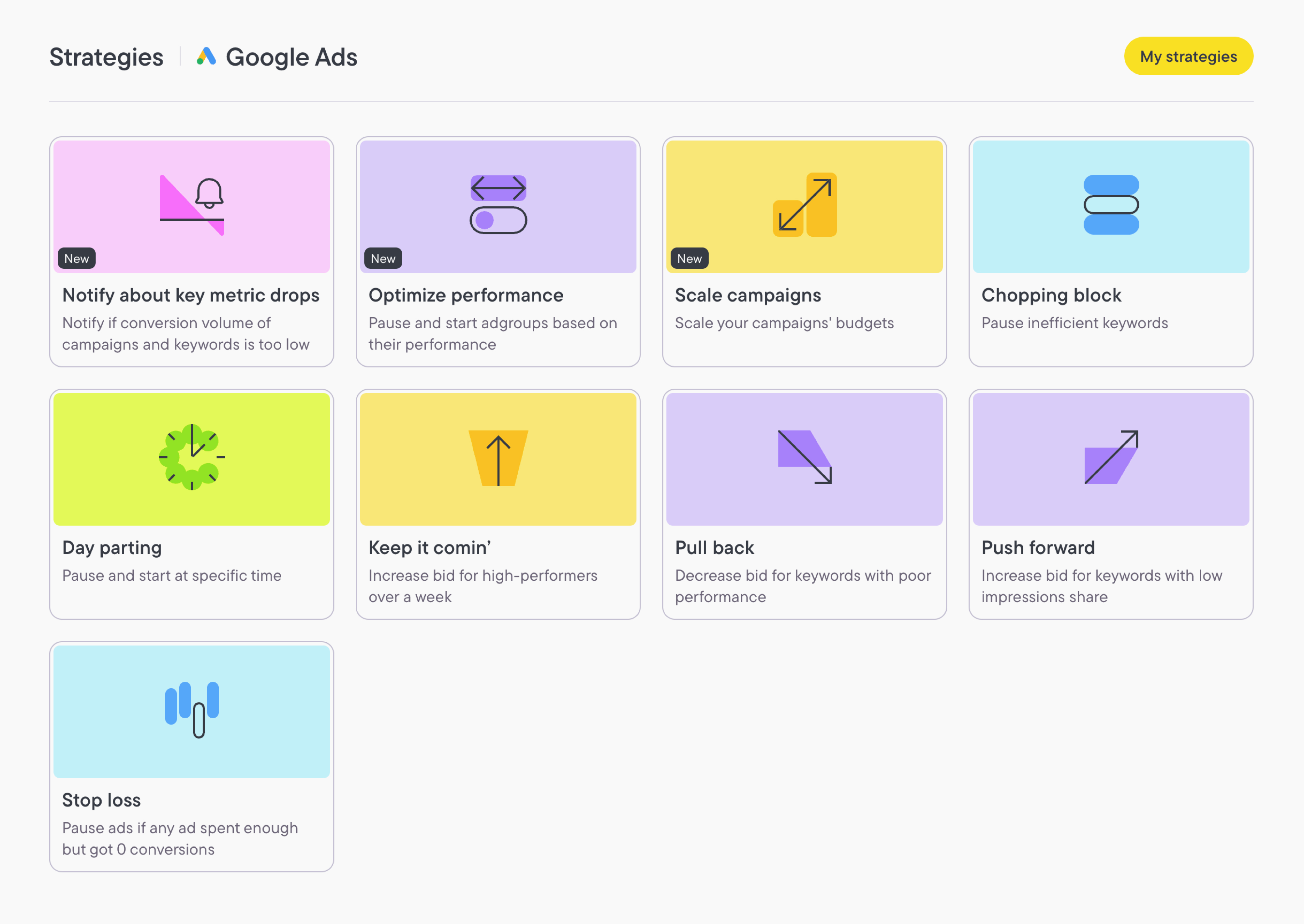
Bïrch gives you structural leverage. With automated rules, custom metrics, and real-time alerts, you can detect intent-level shifts and adjust bids before blended performance falls.
AI is reshaping the page. The right systems let you reshape your response.
FAQs
AI Overviews have changed how paid search works. Google now interprets the query, summarizes the intent, and occupies the most valuable space on the SERP before traditional ads and organic results compete for attention.
Visibility now depends on where the ad sits in relation to AI-generated answers.
For performance marketers, this shift affects the fundamentals. Informational queries are answered directly, reducing click volume. High-intent terms are becoming more competitive as spend consolidates. Impression share metrics tell an incomplete story because attention is redistributed inside the page. Even position #1 can deliver less incremental value when it sits beneath an AI summary.
Google has expanded ads into and around AI Overviews, and integration is increasing. This environment rewards advertisers who restructure their keyword strategy, adjust bidding logic, and monitor performance at the query level. In contrast, those who assume historical benchmarks still apply may not get the results they are aiming for.
This guide walks you through what to adjust inside your account to protect and grow ROI.
Key takeaways:
- Ad position alone no longer determines exposure. Placement relative to the AI summary influences click probability and performance.
- When AI summaries answer informational queries directly on the SERP, fewer users need to click. More budget and competition concentrate around keywords that are closer to a purchase decision.
- Stable impressions can mask declining CTR when ads render below AI summaries. This means query-level intent analysis becomes essential.
- As spend consolidates into converting terms, CPC volatility increases in competitive verticals.
- Shopping placements and ads embedded in AI summaries rely heavily on feed quality, structured data, and strong creative.
- Intent segmentation, disciplined budget allocation, and automated monitoring protect performance as AI-driven layouts expand.
Where ads actually appear in AI Overviews
AI Overviews split the SERP into three paid environments: above the summary, embedded within the summary, and below the summary. Each placement has a different visibility weight and different performance implications.

Three primary ad formats are currently surfacing:
- Standard text search ads: Render either above or below the AI summary, depending on intent.
- Shopping ads and product listing units: Increasingly embedded within the AI-generated answer itself.
- Contextual sponsored links: In some cases, these appear alongside cited sources inside the summary.
Each format behaves differently in terms of auction dynamics and click behavior.
Text ads continue to be position-sensitive. Shopping placements depend heavily on feed quality and asset depth. Contextual placements rely on how Google clusters commercial intent within broader queries.
The layout is dynamic and primarily driven by intent classification:
- High-commercial and transactional queries: Ads often appear above the AI summary. Google prioritizes searches with clear purchase intent, which concentrates competition in the first visible ad slot.
- Informational or mixed-intent queries: The AI Overview often appears first. Paid ads follow underneath. In these cases, the summary captures most of the initial attention before users reach the paid listings.
- Embedded placements: Some searches generate product cards or sponsored recommendations directly inside the AI summary. For example, “best CRM for ecommerce brands” may produce a comparison list where a sponsored platform appears within the AI-generated answer. In these cases, exposure depends more on how Google interprets the query context than on traditional ad rank.
Industry reporting and official updates from Google confirm that these formats are still expanding.
Position metrics alone no longer give you a clear picture of exposure. If ads appear below the AI summary, users have to scroll to see them. That makes query intent more important, because it determines where ads appear and which keywords attract the most competition.
Two keywords with similar CPCs and impression share can have different outcomes depending on where ads render relative to the AI summary.
Ads appearing beneath the AI block rely heavily on scroll behavior.
The more the summary directly satisfies the user’s needs, the more exposure declines. In many accounts, this shows up as stable impression volume but declining CTR. Auctions remain competitive while the pool of engaged users shrinks, which can push effective CPC higher.
In this placement, creative quality becomes more important. Extensions, strong asset coverage, and differentiated copy help ads stand out when they appear below the summary.
How AI Overviews have changed ad visibility
AI Overviews changed the economics of attention on the SERP, and that shift shows up in performance data.
Before AI summaries occupied premium space, ad rank translated into a predictable click share. Informational queries scaled traffic. Mid-funnel keywords fed remarketing pools. Position one reliably delivered incremental volume.
Now, placement relative to the AI block and the summary’s comprehensiveness determine exposure.
This pattern is consistent across mature accounts. Impression levels may remain stable while CTR compresses on informational and mixed-intent queries. High-commercial clusters absorb more competitive pressure as advertisers consolidate spend into keywords that still convert reliably. Demand concentrates into fewer, higher-intent queries.
Keran Smith, Co-Founder and Chief Marketing Officer at LYFE Marketing, describes the same dynamic in live accounts, noting “increased visibility but fewer click-throughs,” with informational queries most affected when AI Overviews appear.
Cost inflation follows that concentration. As exploratory traffic declines, budget shifts toward revenue-dense auctions. Competition intensifies inside those clusters, raising CPC. Informational terms continue entering auctions but generate fewer engaged sessions, increasing effective CPC.
Impact varies by intent mix. Accounts that are heavily dependent on educational or research-stage traffic tend to feel the pressure first.
This is common in SaaS, B2B, and lead-generation campaigns. E-commerce and local service advertisers often see more stability, particularly when campaigns capture high-intent product searches or rely on strong shopping feeds.
As Himanshu Agarwal, Co-Founder at Zenius Ventures, notes, AI Overviews also reshape the visual hierarchy of results pages: “The Overview tends to push paid ads lower in the scroll depth and satisfies informational curiosity instantly,” which contributes to the CTR declines many advertisers are observing.
Search behavior is shifting from exploration to decision-stage filtering. Traffic becomes less evenly distributed, and performance depends on the quality of intent rather than impression volume.
When AI answers replace clicks: the real impact
You see the impact most clearly when the AI summary fully answers the user’s question.
When users receive comparisons, recommendations, and contextual explanations directly on the SERP, fewer sessions move into the research phase. Click volume contracts—but the upside is that the remaining traffic is more qualified.
This reshapes funnel math. Top-of-funnel contribution shrinks. Bottom-funnel auctions intensify. Conversion rates on surviving clicks may improve, but the total opportunity narrows.
Historical CTR benchmarks become less useful as click distribution shifts. Impression share alone also tells you less about actual performance. Accounts built around scale need to focus more on high-intent clusters, while advertisers focused on efficiency should expect stronger competition on keywords that drive real conversions.
AI Overviews restructure the distribution of demand. Operators who adjust early are able to stay in control of their cost structure and budget allocation.
Google’s stated strategy
Google positions AI Overviews as the next phase of search evolution. In its official documentation and Ads updates, Google frames AI summaries as a way to help users make decisions faster while creating new commercial entry points for advertisers.
Sponsored product cards, contextual placements, and shopping integrations inside AI answers are presented as extensions of existing Search and Shopping campaigns. Ads are integrated into the AI experience.
This direction protects revenue density as traditional organic listings lose visual dominance. It also lets Google interpret broader queries through AI-driven intent clustering and surface ads aligned with that inferred intent. Monetization now sits inside the summarized answer.

Google recommends aiming for broad keyword coverage across intent stages and relying on Smart Bidding to capture AI-interpreted demand. The company is also placing more emphasis on asset quality—extensions, structured data, and optimized product feeds—because contextual placements depend on strong inputs.
Shopping campaigns and Performance Max are central to this shift. Both align naturally with AI-shaped results because they combine automation, feed data, and cross-surface delivery.
The strategic signal is consistent: success depends less on rigid keyword micromanagement and more on high-quality signals that the system can distribute dynamically.
What to expect in 2026
AI Overview coverage is likely to expand in 2026 to include more mixed-intent and mid-funnel queries, increasing the share of impressions driven by AI-generated layouts.
Ad formats embedded within summaries will likely evolve, placing greater weight on feed quality, structured data, and contextual alignment. Exposure may depend less on static rank and more on how well campaigns align with AI-interpreted intent.
As exploratory traffic is increasingly answered directly on the SERP, auction pressure will concentrate further around revenue-dense keywords. Bottom-funnel terms may absorb more budget, which could increase CPC volatility, especially in margin-sensitive industries.
Measurement may become more complex as layouts vary more from query to query. Query-level intent segmentation and placement-aware analysis will become increasingly important for performance teams managing meaningful spend.
As AI integration continues to widen, structure and automation will play a larger role in helping you maintain stable performance.
Optimization strategies that actually work
You don’t need to abandon search to adapt to AI Overviews—but you will likely need to restructure how you prioritize keywords, allocate budget, and measure performance.
The accounts that maintain efficiency in this environment share one trait: they optimize by intent layer and placement sensitivity, not by legacy benchmarks.
Strategy 1: Overhaul your keyword strategy
The first step is a visibility audit.
Review informational and mixed-intent queries that now trigger AI summaries. Identify which of those queries are fully answered on the SERP and which still require the user to click to complete the task. When the AI Overview directly resolves the core question, traffic potential declines regardless of ad rank.
You don’t need to pause all informational keywords, but it’s a good idea to distinguish between queries that generate curiosity and queries that generate continuation.
Long-tail and niche queries often have stronger click behavior because AI summaries are less comprehensive in specialized contexts.
Specific problem statements, comparison modifiers, and constraint-based searches (“for startups under 10 employees,” “for high-risk industries,” “for EU compliance”) often still generate clicks.
Keyword strategy in the AI Overview era shifts from chasing more search volume to focusing on higher-intent queries.
Strategy 2: Adjust bidding and budget allocation
Placements have become more sensitive. When ads render above the AI summary, they capture disproportionate attention. When they appear below it, users have to scroll before they see them.

That reality changes bidding logic.
Keywords that consistently appear above the AI summary often justify more aggressive bidding because they still capture the most attention. Informational queries that appear below the summary may require lower bids or tighter budgets.
As a result, more budget should go toward keywords with clear buying intent and reliable conversions. This often results in a tighter, more bottom-heavy portfolio.
This makes automation critical. With Bïrch, you can implement rule-based bid adjustments tied to top impression share thresholds, automatically shift budget when CTR falls beyond defined limits, and trigger alerts when conversion rates drift outside acceptable ranges.
Instead of reacting weeks later to blended CPA changes, you can respond earlier by acting on performance signals as they appear.
Strategy 3: Optimize ad formats and assets
In an AI-shaped SERP, assets carry more weight.
Extensions increase occupied space and reinforce differentiation, especially when ads appear below the summary. Sitelinks, callouts, structured snippets, and price extensions improve visibility density and help users decide whether to click.
Shopping campaigns deserve particular attention. Embedded product units inside AI summaries rely heavily on feed quality. Titles, structured attributes, imagery, and categorization influence whether products appear in those placements.
This is where performance becomes more sensitive to message precision and asset depth. The copy must immediately persuade the user to click. Specific value propositions, clear differentiation, and tightly aligned intent matching carry more weight than broad category claims.
Optimization now involves more than headline testing. The strength of the full set of ad assets matters.
Strategy 4: Restructure campaigns by intent
Legacy campaign structures often mix informational, commercial, and transactional queries under the same bidding strategy. AI Overviews show us why that model is inefficient.
When you separate campaigns by intent cluster, you can stay in control of bid aggressiveness and budget tolerance. Transactional clusters can justify higher bids and tighter CPA targets. Informational clusters require more cautious spending and clearer contribution tracking.
Performance Max can complement this structure when you feed it strong signals and clean segmentation. Automation should always be aligned with intent clarity.

Bïrch supports this segmentation by enabling bid logic and budget controls tied to custom metrics. You can create intent-level performance views and deploy adjustments automatically when specific clusters underperform.
Strategy 5: Upgrade measurement and monitoring
AI Overviews increase the gap between impressions and meaningful visibility. Monitoring CTR becomes essential because impression share alone doesn’t always reflect how visible ads really are.
Conversion rate also becomes more important. As traffic volume contracts and click intent strengthens, quality often matters more than quantity. Even with fewer sessions, revenue targets may still be achievable if those clicks are more qualified.
Lost impression share continues to be a useful diagnostic, particularly on high-commercial clusters where placement above the summary can drive a large share of attention.

Closer monitoring helps teams spot performance changes earlier. Bïrch’s reporting layer enables intent-level CTR tracking, impression share monitoring across priority campaigns, and automated alerts when KPIs drift past defined thresholds.
In this environment, performance teams need closer monitoring and faster adjustments to campaign structure.
It’s time to adapt
AI now mediates intent before your ad enters the auction. Visibility depends on placement relative to the summary and on how Google structures the query experience.
Advertisers who segment campaigns by intent, concentrate budget on high-value keywords, and monitor performance closely are more likely to maintain strong results. Teams that rely on slower optimization cycles may find it harder to maintain efficiency as attention on the results page becomes more limited.

Bïrch gives you structural leverage. With automated rules, custom metrics, and real-time alerts, you can detect intent-level shifts and adjust bids before blended performance falls.
AI is reshaping the page. The right systems let you reshape your response.
FAQs
Google Ads in AI Overviews are paid placements that appear above, within, or below Google’s AI-generated search summaries. These ads can include traditional text search ads, Shopping units, and contextual sponsored placements integrated directly into AI answers.
AI Overviews can reduce click volume for informational and mixed-intent queries when the AI summary directly satisfies user intent. Click behavior tends to be stronger with high-commercial and transactional queries, though competition often increases.
As informational traffic compresses, advertisers reallocate budget toward bottom-funnel and revenue-dense queries. This concentration intensifies competition and raises bid pressure in those auctions.
Where your ad sits on the page is still important, but in a different way. Placement above the AI summary carries more weight than an average position alone. When ads render below the summary, scroll depth influences visibility and CTR.
Focus on search intent rather than simply expanding keyword volume. Audit informational keywords that trigger AI summaries, prioritize long-tail and high-intent keywords, and segment campaigns by intent to control bidding and budget allocation.
All current rollout patterns indicate that AI overviews will be integrated more deeply across query categories and devices. Advertisers should expect AI-generated layouts to have more influence and adjust their structure accordingly.